Notice: تابع WP_Block_Type_Registry::register به طورنادرست فراخوانی شد. نامهای نوع بلوک نباید حروف بزرگ داشته باشند. لطفاً برای اطلاعات بیشتر، اشکال زدایی در وردپرس را مشاهده کنید. (این پیام در نگارش 5.0.0 افزوده شده است.) in /home/ethicsho/public_html/wp-includes/functions.php on line 5313
Warning: Use of undefined constant TDC_PATH_LEGACY - assumed 'TDC_PATH_LEGACY' (this will throw an Error in a future version of PHP) in /home/ethicsho/public_html/wp-content/plugins/td-composer/td-composer.php on line 109
Warning: Use of undefined constant TDSP_THEME_PATH - assumed 'TDSP_THEME_PATH' (this will throw an Error in a future version of PHP) in /home/ethicsho/public_html/wp-content/plugins/td-composer/td-composer.php on line 113 بایگانیهای 978-0-7914-6832-6 - خانه اخلاق پژوهان جوان Notice: Trying to access array offset on value of type bool in /home/ethicsho/public_html/wp-content/plugins/wp-ulike/inc/general-functions.php on line 807
“In this book, Mark C. Murphy argues that the central thesis of natural law jurisprudence – that law is backed by decisive reasons for compliance – sets the agenda for natural law political philosophy, which demonstrates how law gains its binding force by way of the common good of the political community. Murphy’s presentation in this book ranges over the central questions of natural law jurisprudence and political philosophy, including the formulation and defense of the natural law jurisprudential thesis, the nature of the common good, the connection between the promotion of the common good and requirement of obedience to law, and the justification of punishment.”–BOOK JACKET.
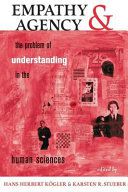
How do we, as interpreters and theorists in the human and social sciences, understand agency? What are the methods, models, and mediating theoretical frameworks that allow us to give a reliable and adequate account of beliefs, actions, and cultural practices? More specifically, how can we as interpretive analysts employ our own cognitive capacities so as to render the beliefs, intentions, and actions of other human beings intelligible? These are the leading questions that a group of well-established social philosophers explore in this volume in light of the most recent (and hotly debated) findings in cognitive science, developmental psychology, and philosophy of mind. In particular, the debate concerning simulation — whether agents interpret others by means of implicit theoretical assumptions, or whether they rather simulate their behavior by putting themselves in their shoes — has produced a wide set of important empirical and philosophical insights. This book takes up those insights and discusses their impact in the context of their most important paradigms in social methodology today.A systematic introduction pertaining to the understanding-explanation debate sets the stage, followed by eleven chapters representing the different approaches tot he field. The paradigms include Wittgensteinian, Davidsonian and Diltheyan approaches, hermeneutics and critical theory, game theory, naturalized epistemology, philosophy of history and twentieth-century social theory, as well as simulation approach proper. As stake are the relation between everyday and social-scientific interpretation, the role of empathy (or role-taking) in understanding human agency, the implications of attributing rationality in the course of interpretation, as well as the relation between rational and causal models in social explanation. The discussions cut across well-established disciplinary boundaries so that the book appeals to both analytic and hermeneutic traditions within philosophy. In addition, the book speaks to all who are engaged in interpreting or explaining human agency in the cultural and social sciences.
A volume of studies of utilitarianism considered both as a theory of personal morality and a theory of public choice. All but two of the papers have been commissioned especially for the volume, and between them they represent not only a wide range of arguments for and against utilitarianism but also a first-class selection of the most interesting and influential work in this very active area. There is also a substantial introduction by the two editors. The volume will constitute an important stimulus and point of reference for a wide range of philosophers, economists and social theorists.
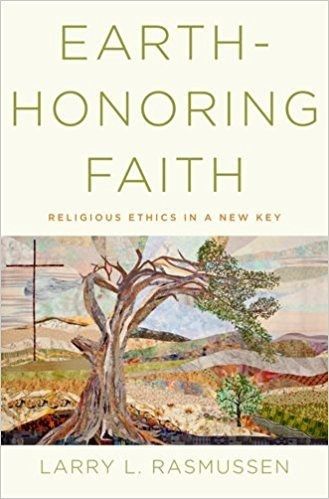
Grand Winner of the 2014 Nautilus Book Awards Thoughtful observers agree that the planetary crisis we now face-climate change; species extinction; the destruction of entire ecosystems; the urgent need for a more just economic-political order-is pushing human civilization to a radical turning point: change or perish. But precisely how to change remains an open question. In Earth-honoring Faith, Larry Rasmussen answers that question with a dramatically new way of thinking about human society, ethics, and the ongoing health of our planet. Rejecting the modern assumption that morality applies to human society alone, Rasmussen insists that we must derive a spiritual and ecological ethic that accounts for the well-being of all creation, as well as the primal elements upon which it depends: earth, air, fire, water, and sunlight. He argues that good science, necessary as it is, will not be enough to inspire fundamental change. We must draw on religious resources as well to make the difficult transition from an industrial-technological age obsessed with consumption to an ecological age that restores wise stewardship of all life. Earth-honoring Faith advocates an alliance of spirituality and ecology, in which the material requirements for planetary life are reconciled with deep traditions of spirituality across religions, traditions that include mysticism, sacramentalism, prophetic practices, asceticism, and the cultivation of wisdom. It is these shared spiritual practices that can produce a chorus of world faiths to counter the consumerism, utilitarianism, alienation, oppression, and folly that have pushed us to the brink. Written with passionate commitment and deep insight, Earth-honoring Faith reminds us that we must live in the present with the knowledge that the eyes of future generations will look back at us.
“In this fresh and comprehensive introduction to animal ethics, Lori Gruen weaves together poignant and provocative case studies with discussions of ethical theory, urging readers to engage critically and empathetically reflect on our treatment of other animals. In clear and accessible language, Gruen provides a survey of the issues central to human-animal relations and a reasoned new perspective on current key debates in the field. She analyses and explains a range of theoretical positions and poses challenging questions that directly encourage readers to hone their ethical reasoning skills and to develop a defensible position about their own practices. Her book will be an invaluable resource for students in a wide range of disciplines including ethics, environmental studies, veterinary science, women’s studies, and the emerging field of animal studies and is an engaging account of the subject for general readers with no prior background in philosophy”–
ما از اخلاق چه انتظاری داریم؟ این سوال شاید تاحدودی برای عموم مردم و یا متخصصان این رشته قابل پاسخ باشد؛ اینکه خوب بودن را به ما بیاموزد و در تنظیم روابط فردی م...

جشن کتاب تهران به ایستگاه سی و یکم رسیده است. حال و احوال نشر کتاب خوب نیست و باید فرهنگدوستان را به خرید و هدیه دادن کتاب ترغیب نمود. خانه اخلاقپژوهان جوان ب...

بنیاد کتابهای اخلاق اسلامی عمدتا پالایش جان از آلودگیها و آراستن آن به زیباییها است. اندیشه محوری این قبیل کتابها آن است که انسان فعلی آنی نیست که باید باشد...

-
0 Comments