Notice: تابع WP_Block_Type_Registry::register به طورنادرست فراخوانی شد. نامهای نوع بلوک نباید حروف بزرگ داشته باشند. لطفاً برای اطلاعات بیشتر، اشکال زدایی در وردپرس را مشاهده کنید. (این پیام در نگارش 5.0.0 افزوده شده است.) in /home/ethicsho/public_html/wp-includes/functions.php on line 5313
Warning: Use of undefined constant TDC_PATH_LEGACY - assumed 'TDC_PATH_LEGACY' (this will throw an Error in a future version of PHP) in /home/ethicsho/public_html/wp-content/plugins/td-composer/td-composer.php on line 109
Warning: Use of undefined constant TDSP_THEME_PATH - assumed 'TDSP_THEME_PATH' (this will throw an Error in a future version of PHP) in /home/ethicsho/public_html/wp-content/plugins/td-composer/td-composer.php on line 113 بایگانیهای 978-0-470-51624-9 - خانه اخلاق پژوهان جوان Notice: Trying to access array offset on value of type bool in /home/ethicsho/public_html/wp-content/plugins/wp-ulike/inc/general-functions.php on line 807
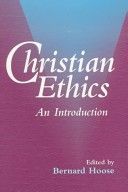
Currently, there is an upsurge of interest in the study of Christian ethics but much of what is written can appear confusing or beyond reach. In Christian Ethics, the first one-volume reference to include all the main themes in fundamental and applied moral theology, Bernard Hoose puts in understandable terms the state of moral theology today. At a time when many people fear that society has lost its way morally, he helps Christians make sense of the major issues that confront us all. Written by well-known ethicists in the English-speaking world, Christian Ethics is a comprehensive work of reference for students of moral theology. Scholars will value the excellent collection of essays and the range of scholarship they represent. The educated lay reader will also benefit from its highly readable text. Part one of the book deals with the fundamental themes in moral theology, including the role of the Bible, natural law, conscience, virtue, and the feminist contribution to Christian ethics. Part two is devoted to specific areas of applied or special ethics, under the headings of social ethics, interpersonal and sexual ethics, and medical ethics. Chapters in “Part 1: Basic Christian Ethics” are “The Bible and Christian Ethics,” by Tom Deidun; “Natural Law,” by Gerard J. Hughes; “Authority and Moral Teaching in a Catholic Christian Context,” by Joseph Selling; “Absolute Moral Norms,” by Charles E. Curran; “Virtue Ethics,” by James F. Keenan; “The Human Person,” by Joseph Selling; “Conscience,” by Richard M. Gula; “The Theory of the Fundamental Option and Moral Action,” by Thomas R. Kopfensteiner; “Feminist Ethics,” by Susan F. Parsons,” and “The Distinctiveness of Christian Morality,” by Vincent MacNamara. Chapters in “Part 2: Applied Ethics” are “Justice,” by Karen Lebacqz; “Property,” by Timothy J. Gorringe; “Morality and Law,” by Patrick Hannon; “The Punishment of Criminals,” by Bernard Hoose; “Peace, Violence and War,” by Richard G. Jones; “Sex, Sexuality, and Relationships,” by Gareth Moore; “Divorce and Remarriage,” by Kevin T. Kelly; “Truth and Lies,” by Bernard Hoose; “Euthanasia,” by Richard M. Gula; “Ethical Problems Arising from New Reproductive Techniques,” by Joyce Poole; “Organ Transplantation,” by David F. Kelly; and “Hypnosis and General Anaesthesia,” by Aureliano Pacciolla.
At the Roots of Christian Bioethics explores Professor H. Tristram Engelhardt, Jr.s pursuit for the decisive ground of the meaning of human existence and knowledge of appropriate moral choice. Engelhardt has been the most influential, cogent, but critical voice within bioethics of the past several decades. The essays in this volume compass epistemological, methodological and topical contributions to bioethics, political theory, and Christian theology. Each explores Engelhardts diagnosis of the contemporary social and cultural crisis, seeking to make sense of the decidedly post-Christian and often openly anti-Christian ethics that dominates public morality and politic policy.Each author investigates Engelhardts personal and tireless enquiry to secure ultimate moral foundations as well as to recognize the full implications of the results of his investigations: that Christian bioethics does not originate in human reason but in the command of God.
A comprehensive update of the best-selling first edition, this revitalized new text presents readers with a series of clear, well-written entries focusing on fifty of the most influential philosophers from the last two thousand years. Chosen to present the traditional mainstream of European philosophy, the text also provides a critical survey that meets the needs of readers seeking a broad basic understanding as well as a foundation for further philosophical enquiry. Encompassing a wide range of ancient, medieval and modern philosophers, features of the second edition include: new entries on Dewey, Collingwood, Popper, Quine, Merleau-Ponty, Ayer and Rawls a thorough revision of existing entries a complete update of the further reading section an expanded glossary the addition of an alphabetical table of contents and an index for ease of use. Authoritative and highly readable, this book is a vital reference tool for all those wishing to improve their understanding of some of the world’s most fascinating intellectual figures.
Legal Ethics employs a variety of techniques to breathe life into a topic that can be sometimes tedious to study. Readers will be attracted to current and classic case law, hypothetical situations, many real-life examples of lawyer and nonlawyer instances of misconduct and discussions of famous and infamous people as their situations relate to the topic. Examples of this material include a discussion of the disbarment proceedings against President Bill Clinton and F. Lee Bailey and news events involving Hillary Clinton, Bill Gates, Newt Gingrich, Patty Hearst and Timothy McVeigh. Supporting material features more than 70 legal ethics Web sites, a complete glossary and significant ethics codes designed for paralegal and legal assistants. The book also boasts an exceptional instructor’s manual featuring chapter outlines, teaching suggestions, full case briefs for all case law in the text, chapter review questions and complete test banks for each chapter. Benefits: • dozens of real-life examples and cases bring the topic of legal ethics to life • thorough explanations teach the reader the how’s and why’s of the material • fully supported citations enable readers to conduct their own research from the text • the many devices used to impart the material enhance the reader’s interest and retention
ما از اخلاق چه انتظاری داریم؟ این سوال شاید تاحدودی برای عموم مردم و یا متخصصان این رشته قابل پاسخ باشد؛ اینکه خوب بودن را به ما بیاموزد و در تنظیم روابط فردی م...

جشن کتاب تهران به ایستگاه سی و یکم رسیده است. حال و احوال نشر کتاب خوب نیست و باید فرهنگدوستان را به خرید و هدیه دادن کتاب ترغیب نمود. خانه اخلاقپژوهان جوان ب...

بنیاد کتابهای اخلاق اسلامی عمدتا پالایش جان از آلودگیها و آراستن آن به زیباییها است. اندیشه محوری این قبیل کتابها آن است که انسان فعلی آنی نیست که باید باشد...

-
0 Comments