Notice: تابع WP_Block_Type_Registry::register به طورنادرست فراخوانی شد. نامهای نوع بلوک نباید حروف بزرگ داشته باشند. لطفاً برای اطلاعات بیشتر، اشکال زدایی در وردپرس را مشاهده کنید. (این پیام در نگارش 5.0.0 افزوده شده است.) in /home/ethicsho/public_html/wp-includes/functions.php on line 5313
Warning: Use of undefined constant TDC_PATH_LEGACY - assumed 'TDC_PATH_LEGACY' (this will throw an Error in a future version of PHP) in /home/ethicsho/public_html/wp-content/plugins/td-composer/td-composer.php on line 109
Warning: Use of undefined constant TDSP_THEME_PATH - assumed 'TDSP_THEME_PATH' (this will throw an Error in a future version of PHP) in /home/ethicsho/public_html/wp-content/plugins/td-composer/td-composer.php on line 113 بایگانیهای 978-0-07-338661-4 - خانه اخلاق پژوهان جوان Notice: Trying to access array offset on value of type bool in /home/ethicsho/public_html/wp-content/plugins/wp-ulike/inc/general-functions.php on line 807
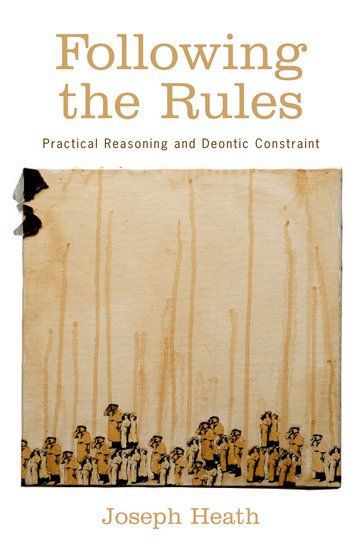
For centuries, philosophers have been puzzled by the fact that people often respect moral obligations as a matter of principle, setting aside considerations of self-interest. In more recent years, social scientists have been puzzled by the more general phenomenon of rule-following, the fact that people often abide by social norms even when doing so produces undesirable consequences. Experimental game theorists have demonstrated conclusively that the old-fashioned picture of “economic man,” constantly reoptimizing in order to maximize utility in all circumstances, cannot provide adequate foundations for a general theory of rational action. The dominant response, however, has been a slide toward irrationalism. If people are ignoring the consequences of their actions, it is claimed, it must be because they are making some sort of a mistake. In Following the Rules, Joseph Heath attempts to reverse this trend, by showing how rule-following can be understood as an essential element of rational action. The first step involves showing how rational choice theory can be modified to incorporate deontic constraint as a feature of rational deliberation. The second involves disarming the suspicion that there is something mysterious or irrational about the psychological states underlying rule-following. According to Heath, human rationality is a by-product of the so-called “language upgrade” that we receive as a consequence of the development of specific social practices. As a result, certain constitutive features of our social environment-such as the rule-governed structure of social life-migrate inwards, and become constitutive features of our psychological faculties. This in turn explains why there is an indissoluble bond between practical rationality and deontic constraint. In the end, what Heath offers is a naturalistic, evolutionary argument in favor of the traditional Kantian view that there is an internal connection between being a rational agent and feeling the force of one’s moral obligations.
People living in a pluralistic age are aware of diversity among themselves and consider it both natural and enriching for humankind. However, there are many disagreements that create ethical questions on the nature of human good, religion and public morality, and more. Joseph Runzo, with the help of a diverse group of contributors, skillfully deals with these ethical issues.
Alexander Skutch–world famous ornithologist, philosopher and author of over 30 books–believed that to build a satisfying moral edifice we need an ample and firm foundation. Moral Foundations brilliantly lays out for the reader the ways in which we are products of harmonization, a process that unites the crude elements of the world in harmonious patterns, A tour de force of analysis and critical thinking, Moral Foundations is also an important contribution to the study of ethics and philosophy.
What are the roots of human nature and what is wrong with the scientific picture of what and who we are? Was Thomas Hobbes right to say that human life is “solitary, poor, nasty, brutish, and short?” In this new work, biologist Mary Clark argues that the Western view of human nature is built around a highly atomistic and ideological framework that encourages us to think about the world and ourselves in the wrong way. Beginning with some of the problems that emerge from building “laws” of human nature upon “laws” of physics, Mary Clark tackles an astonishing array of problems: what role genes play in the development of the brain, how we generated the concepts of mind and meaning we accept today and what is wrong with them, to the way we think about the formation of individual and group identity, conflict resolution and the environment. Throughout the book, she critically scrutinizes many widely-held views, whether it is what Darwin actually said about adaptive fitness and survival, received models of human nature such as man the “warrior” or “hunter,” or whether it is right to think of emotions as an unfortunate legacy of our evolutionary heritage. Arguing for a more expansive view of science and human nature, she makes a strong case for the role of culture in constructing what and who we are without falling into the trap of relativism.
ما از اخلاق چه انتظاری داریم؟ این سوال شاید تاحدودی برای عموم مردم و یا متخصصان این رشته قابل پاسخ باشد؛ اینکه خوب بودن را به ما بیاموزد و در تنظیم روابط فردی م...

جشن کتاب تهران به ایستگاه سی و یکم رسیده است. حال و احوال نشر کتاب خوب نیست و باید فرهنگدوستان را به خرید و هدیه دادن کتاب ترغیب نمود. خانه اخلاقپژوهان جوان ب...

بنیاد کتابهای اخلاق اسلامی عمدتا پالایش جان از آلودگیها و آراستن آن به زیباییها است. اندیشه محوری این قبیل کتابها آن است که انسان فعلی آنی نیست که باید باشد...

-
0 Comments