Notice: تابع WP_Block_Type_Registry::register به طورنادرست فراخوانی شد. نامهای نوع بلوک نباید حروف بزرگ داشته باشند. لطفاً برای اطلاعات بیشتر، اشکال زدایی در وردپرس را مشاهده کنید. (این پیام در نگارش 5.0.0 افزوده شده است.) in /home/ethicsho/public_html/wp-includes/functions.php on line 5313
Warning: Use of undefined constant TDC_PATH_LEGACY - assumed 'TDC_PATH_LEGACY' (this will throw an Error in a future version of PHP) in /home/ethicsho/public_html/wp-content/plugins/td-composer/td-composer.php on line 109
Warning: Use of undefined constant TDSP_THEME_PATH - assumed 'TDSP_THEME_PATH' (this will throw an Error in a future version of PHP) in /home/ethicsho/public_html/wp-content/plugins/td-composer/td-composer.php on line 113 بایگانیهای 1844650154 - خانه اخلاق پژوهان جوان Notice: Trying to access array offset on value of type bool in /home/ethicsho/public_html/wp-content/plugins/wp-ulike/inc/general-functions.php on line 807
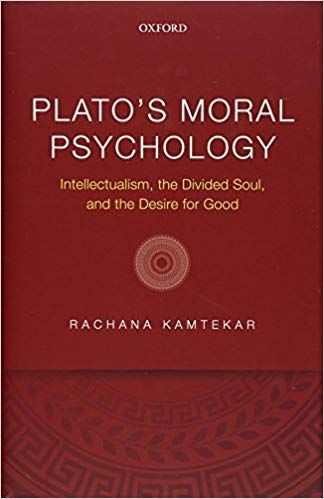
Plato’s Moral Psychology is concerned with Plato’s account of the soul and its impact on our living well or badly, virtuously or viciously. The core of Plato’s moral psychology is his account of human motivation, and Rachana Kamtekar argues that throughout the dialogues Plato maintains that human beings have a natural desire for our own good, and that actions and conditions contrary to this desire are involuntary (from which follows the ‘Socratic paradox’ that wrongdoing is involuntary). Our natural desire for our own good may be manifested in different ways: by our pursuit of what we calculate is best, but also by our pursuit of pleasant or fine things – pursuits which Plato assigns to distinct parts of the soul. Kamtekar develops a very different interpretation of Plato’s moral psychology from the mainstream interpretation, according to which Plato first proposes that human beings only do what we believe to be the best of the things we can do (‘Socratic intellectualism’) and then in the middle dialogues rejects this in favour of the view that the soul is divided into parts with some good-dependent and some good-independent motivations (‘the divided soul’).
Ethics, Love, and Faith in Kierkegaard collects essays from 13 leading scholars that center on key themes that characterize Kierkegaard’s philosophy of religion. With their unique focus on notions of the self, views on the command to love one’s neighbor, thoughts on melancholy and despair, and the articulation of religious vision, the essays in this volume cover the breadth and depth of Kierkegaard’s philosophical and religious writings. Poised at the intersection of Kierkegaard’s moral psychology and its religious significance, they offer vivid testimony to the ongoing power of his unique and fervent religious spirit. Students and scholars alike will find new light shed on questions that define Kierkegaard’s philosophy and religion today.
ما از اخلاق چه انتظاری داریم؟ این سوال شاید تاحدودی برای عموم مردم و یا متخصصان این رشته قابل پاسخ باشد؛ اینکه خوب بودن را به ما بیاموزد و در تنظیم روابط فردی م...

جشن کتاب تهران به ایستگاه سی و یکم رسیده است. حال و احوال نشر کتاب خوب نیست و باید فرهنگدوستان را به خرید و هدیه دادن کتاب ترغیب نمود. خانه اخلاقپژوهان جوان ب...

بنیاد کتابهای اخلاق اسلامی عمدتا پالایش جان از آلودگیها و آراستن آن به زیباییها است. اندیشه محوری این قبیل کتابها آن است که انسان فعلی آنی نیست که باید باشد...

-
0 Comments