Notice: تابع WP_Block_Type_Registry::register به طورنادرست فراخوانی شد. نامهای نوع بلوک نباید حروف بزرگ داشته باشند. لطفاً برای اطلاعات بیشتر، اشکال زدایی در وردپرس را مشاهده کنید. (این پیام در نگارش 5.0.0 افزوده شده است.) in /home/ethicsho/public_html/wp-includes/functions.php on line 5313
Warning: Use of undefined constant TDC_PATH_LEGACY - assumed 'TDC_PATH_LEGACY' (this will throw an Error in a future version of PHP) in /home/ethicsho/public_html/wp-content/plugins/td-composer/td-composer.php on line 109
Warning: Use of undefined constant TDSP_THEME_PATH - assumed 'TDSP_THEME_PATH' (this will throw an Error in a future version of PHP) in /home/ethicsho/public_html/wp-content/plugins/td-composer/td-composer.php on line 113 بایگانیهای 1570752400 - خانه اخلاق پژوهان جوان Notice: Trying to access array offset on value of type bool in /home/ethicsho/public_html/wp-content/plugins/wp-ulike/inc/general-functions.php on line 807
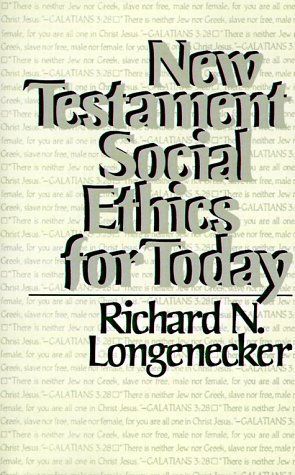
To Answer the Question of what role the New Testament should play in the formation and expression of Christian social morality today, Richard Longenecker here proposes a developmental hermeneutic, which distinguishes between “dedared principles” and “described practices” in the New Testament writings. With this distinction in mind; he focuses on the three couplets of Galatians 3:28 – “neither Jew nor Greek, slave nor free, male nor female” – showing how these matters were treated in early Christian thought and explaining their meaning for us today. In so doing, Longenecker lays a hermeneutical foundation for the much larger discussion of Christian social ethics. Book jacket.
How do the hard facts of political responsibility shape and constrain the demands of ethical life? That question lies at the heart of the problem of ‘dirty hands’ in public life. Those who exercise political power often feel they must act in ways that would otherwise be considered immoral: indeed, paradoxically, they sometimes feel that it would be immoral of them not to perform or condone such acts as killing or lying. John Parrish offers a wide-ranging account of how this important philosophical problem emerged and developed, tracing it – and its proposed solutions – from ancient Greece through the Enlightenment. His central argument is that many of our most familiar concepts and institutions – from Augustine’s interiorised ethics, to Hobbes’s sovereign state, to Adam Smith’s ‘invisible hand’, understanding of the modern commercial economy – were designed partly as responses to the ethical problem of dirty hands in public life.
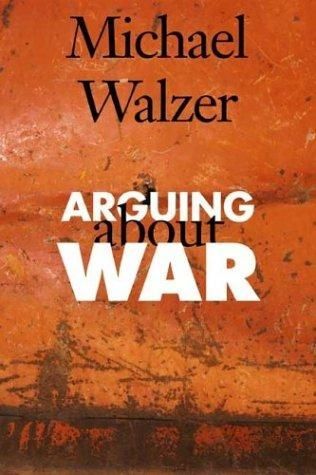
A provocative discussion of recent wars and the issues that surround them, written by a preeminent political theorist. Michael Walzer is one of the world’s most eminent philosophers on the subject of war and ethics. Now, for the first time since his classic Just and Unjust Wars was published almost three decades ago, this volume brings together his most provocative arguments about contemporary military conflicts and the ethical issues they raise. The essays in the book are divided into three sections. The first deals with issues such as humanitarian intervention, emergency ethics, and terrorism. The second consists of Walzer’s responses to particular wars, including the first Gulf War, Kosovo, Afghanistan, and Iraq. And the third presents an essay in which Walzer imagines a future in which war might play a less significant part in our lives. In his introduction, Walzer reveals how his thinking has changed over time. Written during a period of intense debate over the proper use of armed force, this book gets,to the heart of difficult problems and argues persuasively for a moral perspective on war.
At first sight, Karl Marx and Ludwig Wittgenstein may well seem to be as different from each other as it is possible for the ideas of two major intellectuals to be. Despite this standard conception, however, a small number of scholars have long suggested that there are deeper philosophical commonalities between Marx and Wittgenstein. They have argued that, once grasped, these commonalities can radically change and enrich understanding both of Marxism and of Wittgensteinian philosophy. This book develops and extends this unorthodox view, emphasizing the mutual enrichment that comes from bringing Marx’s and Wittgenstein’s ideas into dialogue with one another.
ما از اخلاق چه انتظاری داریم؟ این سوال شاید تاحدودی برای عموم مردم و یا متخصصان این رشته قابل پاسخ باشد؛ اینکه خوب بودن را به ما بیاموزد و در تنظیم روابط فردی م...

جشن کتاب تهران به ایستگاه سی و یکم رسیده است. حال و احوال نشر کتاب خوب نیست و باید فرهنگدوستان را به خرید و هدیه دادن کتاب ترغیب نمود. خانه اخلاقپژوهان جوان ب...

بنیاد کتابهای اخلاق اسلامی عمدتا پالایش جان از آلودگیها و آراستن آن به زیباییها است. اندیشه محوری این قبیل کتابها آن است که انسان فعلی آنی نیست که باید باشد...

-
0 Comments