Notice: تابع WP_Block_Type_Registry::register به طورنادرست فراخوانی شد. نامهای نوع بلوک نباید حروف بزرگ داشته باشند. لطفاً برای اطلاعات بیشتر، اشکال زدایی در وردپرس را مشاهده کنید. (این پیام در نگارش 5.0.0 افزوده شده است.) in /home/ethicsho/public_html/wp-includes/functions.php on line 5313
Warning: Use of undefined constant TDC_PATH_LEGACY - assumed 'TDC_PATH_LEGACY' (this will throw an Error in a future version of PHP) in /home/ethicsho/public_html/wp-content/plugins/td-composer/td-composer.php on line 109
Warning: Use of undefined constant TDSP_THEME_PATH - assumed 'TDSP_THEME_PATH' (this will throw an Error in a future version of PHP) in /home/ethicsho/public_html/wp-content/plugins/td-composer/td-composer.php on line 113 بایگانیهای 0671015125 - خانه اخلاق پژوهان جوان Notice: Trying to access array offset on value of type bool in /home/ethicsho/public_html/wp-content/plugins/wp-ulike/inc/general-functions.php on line 807
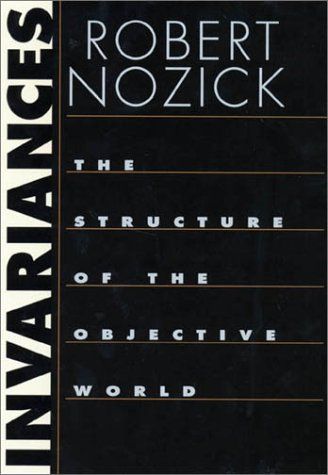
Excerpts from Robert Nozick’s “Invariances” Necessary truths are invariant across all possible worlds, contingent ones across only some. No wonder necessity lures philosophers. It is the flame, the philosopher the moth. Our intuitions that certain statements are necessary do not powerfully support this claim when natural selection would produce strong intuitions of their self-evidence, even were these statements (only) contingently true. Contemporary philosophers who give great weight to intuitions need to offer some account of why such intuitions are reliable and are to be trusted. Of course, if the purpose of such philosophy is merely to codify and systematize the intuitions that (for whatever reason) are held, then a philosophy built upon intuitions will need no further basis. And it will have no further validity. You might think that an insight into metaphysical impossibility could save the physicists much useless work by thereby excluding something as physically possible. Things seem to have worked in the opposite direction, though. Driven by a need to explain strange data, physicists formulate theories that countenance what previously was held to be metaphysically impossible. . . The physical tail wags the metaphysical dog. Why is there an objective world? Within evolutionary cosmology scientific laws might be viewed as the heritable structure of a universe, akin to what in biology would be an organism’s genetic endowment. . . Suppose that the reproductive process of a universe produces transformed offspring universes that differ from their parent. The greater the transformations that a law is invariant under, and the wider their number, the greater is that law’s heritability. The vast majority of the universes that exist through the processes of evolutionary cosmology, therefore, will exhibit laws that are invariant under a wide range of significant transformations. Such invariance, we have seen, is exactly what constitutes objectiveness. Evolutionary cosmology gives us objective worlds.
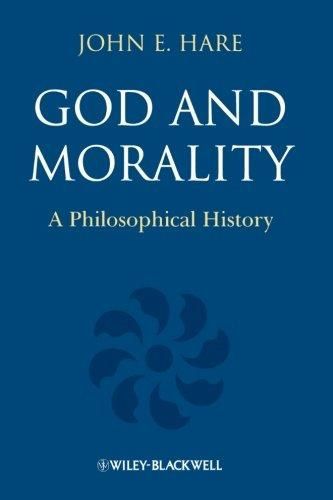
God and Morality evaluates the ethical theories of four principle philosophers, Aristotle, Duns Scotus, Kant, and R.M. Hare.Uses their thinking as the basis for telling the story of the history and development of ethical thought more broadlyFocuses specifically on their writings on virtue, will, duty, and consequenceConcentrates on the theistic beliefs to highlight continuity of philosophical thought
Is it rational to be moral? Can moral disputes be settled rationally? Which criteria determine what we have a good reason to do? In this innovative book, Logi Gunnarsson takes issue with the assumption made by many philosophers faced with the problem of reconciling moral norms with a scientific world view, namely that morality must be offered a non-moral justification based on a formal concept of rationality. He argues that the criteria for the rationality of an action are irreducibly substantive, rather than purely formal, and that assuming that morality must be given a non-moral justification amounts to a distortion of both rationality and morality. His discussion includes substantial critical engagement with major thinkers from two very different philosophical traditions, and is notable for its clear and succinct account of Habermas’ discourse ethics. It will appeal to anyone interested in practical reason and the rational credentials of morality.
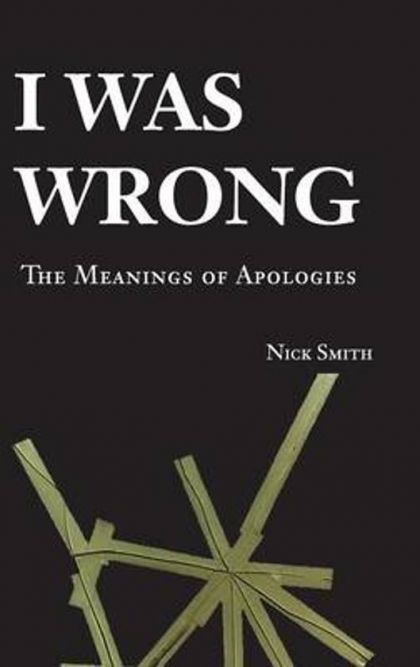
Apologies pervade our news headlines and our private affairs, but how should we evaluate these often vague and deceptive rituals? Discussing numerous examples from ancient and recent history, I Was Wrong: On The Meanings of Apologies argues that we suffer from considerable confusion about the moral meanings and social functions of these complex interactions. Rather than asking whether a speech act “is or is not” an apology, Smith offers a nuanced theory of apologetic meaning. Smith leads us with a clear voice though a series of rich philosophical and interdisciplinary questions, arguing that apologies have evolved from a confluence of diverse cultural and religious practices that do not translate easily into pluralistic secular discourse. After describing several varieties of apologies between individuals, Smith turns to collectives. Although apologies from corporations, governments, and other groups can be profoundly significant, Smith guides readers to appreciate the kinds of meaning that collective apologies often do not convey and warns of the dangers of collective acts of contrition that allow individual wrongdoers to obscure their personal blame. Dr. Smith is an assistant professor of philosophy at the University of New Hampshire. A graduate of Vassar College, he earned a law degree from SUNY at Buffalo and a Ph.D. in philosophy from Vanderbilt University. Before coming to UNH, he worked as a litigator for LeBoeuf, Lamb, Greene, and MacRae and as a judicial clerk for the Honorable R.L. Nygaard of the United States Court of Appeals for the Third Circuit. He specializes in the philosophy of Law, Politics, and Society and he writes on and teaches aesthetics. He is working with Cambridge University Press on the sequel to I Was Wrong, applying his framework for apologetic meanings to examples in criminal and civil law. His writings have appeared in journals such as Continental Philosophy Review, Social Theory and Practice, The Journal of Social Philosophy, Culture, Theory & Critique, The Rutgers Law Journal, and The Buffalo Law Review.
ما از اخلاق چه انتظاری داریم؟ این سوال شاید تاحدودی برای عموم مردم و یا متخصصان این رشته قابل پاسخ باشد؛ اینکه خوب بودن را به ما بیاموزد و در تنظیم روابط فردی م...

جشن کتاب تهران به ایستگاه سی و یکم رسیده است. حال و احوال نشر کتاب خوب نیست و باید فرهنگدوستان را به خرید و هدیه دادن کتاب ترغیب نمود. خانه اخلاقپژوهان جوان ب...

بنیاد کتابهای اخلاق اسلامی عمدتا پالایش جان از آلودگیها و آراستن آن به زیباییها است. اندیشه محوری این قبیل کتابها آن است که انسان فعلی آنی نیست که باید باشد...

-
0 Comments