Notice: تابع WP_Block_Type_Registry::register به طورنادرست فراخوانی شد. نامهای نوع بلوک نباید حروف بزرگ داشته باشند. لطفاً برای اطلاعات بیشتر، اشکال زدایی در وردپرس را مشاهده کنید. (این پیام در نگارش 5.0.0 افزوده شده است.) in /home/ethicsho/public_html/wp-includes/functions.php on line 5313
Warning: Use of undefined constant TDC_PATH_LEGACY - assumed 'TDC_PATH_LEGACY' (this will throw an Error in a future version of PHP) in /home/ethicsho/public_html/wp-content/plugins/td-composer/td-composer.php on line 109
Warning: Use of undefined constant TDSP_THEME_PATH - assumed 'TDSP_THEME_PATH' (this will throw an Error in a future version of PHP) in /home/ethicsho/public_html/wp-content/plugins/td-composer/td-composer.php on line 113 بایگانیهای 0631216839 - خانه اخلاق پژوهان جوان Notice: Trying to access array offset on value of type bool in /home/ethicsho/public_html/wp-content/plugins/wp-ulike/inc/general-functions.php on line 807
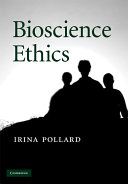
Bioscience ethics facilitates free and accurate information transfer from applied science to applied bioethics. Its major elements are: increased understanding of biological systems, responsible use of technology, and attuning ethnocentric debates to new scientific insights. Pioneered by Irina Pollard in 1994, bioscience ethics has become an internationally recognized discipline, interfacing science and bioethics within professional perspectives such as medical, legal, bio-engineering, and economics. Written for students and professionals alike, the fundamental feature of this book is its breadth, important because bioscience ethics interweaves many diverse subjects in the process of gathering specialist scientific knowledge for bioethical review. It contains chapters which embrace topics affecting human reproduction, end-of-life care and euthanasia, challenge human-dominated ecosystems, and review population growth, economic activity and warfare. A background section describes the evolution of ethical consciousness, explores the future, and proposes that the reworking of ethical boundaries can enhance mature decision-making in harmony with changing technology.
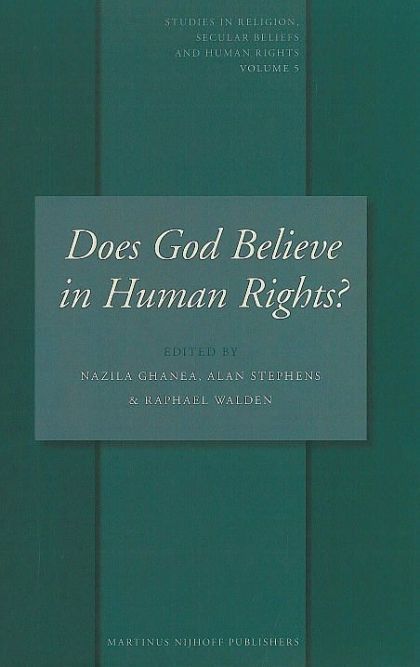
Where can religions find sources of legitimacy for human rights? How do, and how should, religious leaders and communities respond to human rights as defined in modern International Law? When religious precepts contradict human rights standards – for example in relation to freedom of expression or in relation to punishments – which should trump the other, and why? Can human rights and religious teachings be interpreted in a manner which brings reconciliation closer? Do the modern concept and system of human rights undermine the very vision of society that religions aim to impart? Is a reference to God in the discussion of human rights misplaced? Do human fallibilities with respect to interpretation, judicial reasoning and the understanding of human oneness and dignity provide the key to the undeniable and sometimes devastating conflicts that have arisen between, and within, religions and the human rights movement? In this volume, academics and lawyers tackle these most difficult questions head-on, with candour and creativity, and the collection is rendered unique by the further contributions of a remarkable range of other professionals, including senior religious leaders and representatives, journalists, diplomats and civil servants, both national and international. Most notably, the contributors do not shy away from the boldest question of all – summed up in the book’s title. The thoroughly edited and revised papers which make up this collection were originally prepared for a ground-breaking conference organised by the Clemens Nathan Research Centre, the University of London Institute of Commonwealth Studies and Martinus Nijhoff/Brill.
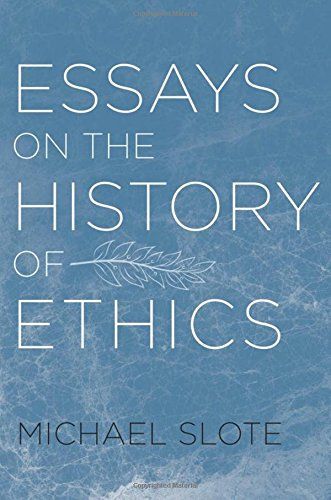
In Essays on the History of Ethics Michael Slote collects his essays that deal with aspects of both ancient and modern ethical thought and seek to point out conceptual/normative comparisons and contrasts among different views. Arranged in chronological order of the philosopher under discussion, the relationship between ancient ethical theory and modern moral philosophy is a major theme of several of the papers and, in particular, Plato, Aristotle, Hume, Kant, and/or utilitarianism feature centrally in (most of) the discussions. One essay seeks to show that there are three main ways to conceive the relationship between human well-being and virtue: one is dualistic a la Kant (they are disparate notions); one is the sort of reductionism familiar from the history of utilitarianismm; and one, not previously named by philosophers, is implicit in the approach the Stoics, Plato, and Aristotle take (in their different ways) to the topic of virtue and well-being. Slote names this third approach “elevationism” and argue that it is more promising than either reductionism or dualism. Two of the essays are narrowly focused on Hume’s ethics, and one seeks to show that even Kant’s opponents have reason to accept a number of important and original Kantian ideas. Finally, the two last essays in the volume talk about ethical thought during the last half of the twentieth century and the first few years of the twenty-first, arguing that the care ethics of Carol Gilligan and Nel Noddings has a distinctive and important contribution to make to ongoing ethical theorizing–and to our understanding of the history of ethics as well.
ما از اخلاق چه انتظاری داریم؟ این سوال شاید تاحدودی برای عموم مردم و یا متخصصان این رشته قابل پاسخ باشد؛ اینکه خوب بودن را به ما بیاموزد و در تنظیم روابط فردی م...

جشن کتاب تهران به ایستگاه سی و یکم رسیده است. حال و احوال نشر کتاب خوب نیست و باید فرهنگدوستان را به خرید و هدیه دادن کتاب ترغیب نمود. خانه اخلاقپژوهان جوان ب...

بنیاد کتابهای اخلاق اسلامی عمدتا پالایش جان از آلودگیها و آراستن آن به زیباییها است. اندیشه محوری این قبیل کتابها آن است که انسان فعلی آنی نیست که باید باشد...

-
0 Comments