Notice: تابع WP_Block_Type_Registry::register به طورنادرست فراخوانی شد. نامهای نوع بلوک نباید حروف بزرگ داشته باشند. لطفاً برای اطلاعات بیشتر، اشکال زدایی در وردپرس را مشاهده کنید. (این پیام در نگارش 5.0.0 افزوده شده است.) in /home/ethicsho/public_html/wp-includes/functions.php on line 5313
Warning: Use of undefined constant TDC_PATH_LEGACY - assumed 'TDC_PATH_LEGACY' (this will throw an Error in a future version of PHP) in /home/ethicsho/public_html/wp-content/plugins/td-composer/td-composer.php on line 109
Warning: Use of undefined constant TDSP_THEME_PATH - assumed 'TDSP_THEME_PATH' (this will throw an Error in a future version of PHP) in /home/ethicsho/public_html/wp-content/plugins/td-composer/td-composer.php on line 113 بایگانیهای 0584100663 - خانه اخلاق پژوهان جوان Notice: Trying to access array offset on value of type bool in /home/ethicsho/public_html/wp-content/plugins/wp-ulike/inc/general-functions.php on line 807
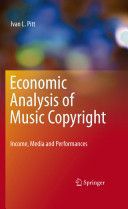
“Chris Anderson’s initial L̀ong Tail’ analysis was released in 2004 just as the wave of mergers and acquisitions was sweeping the music publishing and radio industries. Music industry executives began looking for Anderson’s L̀ong Tail’ effect and with it the implied redistribution of royalty income from popular songs to long dormant and forgotten works in their catalogs. These music publishers had hoped to further maximize the value of their copyright assets (lyrics and melody) in their existing music catalogs as the sale of compact disks diminished, and consumers switched their purchasing and listening habits to new digital formats in music technology such as the iPod.” “This book deals with the measurement of skewness, heavy tails and asymmetry in performance royalty income data in the music industry from an Economics of Art and Culture perspective. The book is divided into two parts. The first part is a general introduction to the many supply and demand economic factors that are related to music performance royalty payments. The second part is an applied econometrics section that provides modeling and in-depth analysis of income data from a songwriter, music publisher and blanket licensing perspective. The book will appeal to researchers and students in cultural economics, media and statistics as well as general readers and professionals in the music publishing industry.” “As a Senior Economist for the American Society of Composers, Authors, and Publishers (ASCAP) using both internal and licensed external proprietary data, the author found that the so-called s̀uperstar effects’ are still present in performance royalty income. Success is still concentrated on a relatively few copyright holders or members who can be grouped into h̀eavy tails’ of the empirical income distribution in a departure from Anderson’s L̀ong Tail’ analysis.”.
“What implications do recent empirical findings from the fields of biology, primatology, anthropology, psychology and history have for metaethical theories about moral objectivity? I defend the thesis that these findings detract from the plausibility of a realist account of moral objectivity but leave room for a more moderate, antirealist account of objectivity, framed in terms of stance-invariance. The dissertation consists of six articles written for publication in academic journals. In these articles I present two novel, empirically informed challenges to moral realism, and point out some shortcomings of existing challenges. One of the novel challenges builds on the second horn of Sharon Street’s ‘Darwinian Dilemma’, according to which moral realists are committed to an implausible evolutionary hypothesis, and extends this criticism to the historical realm. The other novel challenge is fuelled by theoretical and experimental work in moral psychology, and takes issue with the presumed advantages of moral realism in explaining the qualities of our moral experience. Apart from criticizing moral realism, I also develop and defend an alternative account of moral objectivity in antirealist terms and argue that it is as least as successful as a realist account in capturing the objectivist commitments of ordinary moral discourse.”– Page 14.
ما از اخلاق چه انتظاری داریم؟ این سوال شاید تاحدودی برای عموم مردم و یا متخصصان این رشته قابل پاسخ باشد؛ اینکه خوب بودن را به ما بیاموزد و در تنظیم روابط فردی م...

جشن کتاب تهران به ایستگاه سی و یکم رسیده است. حال و احوال نشر کتاب خوب نیست و باید فرهنگدوستان را به خرید و هدیه دادن کتاب ترغیب نمود. خانه اخلاقپژوهان جوان ب...

بنیاد کتابهای اخلاق اسلامی عمدتا پالایش جان از آلودگیها و آراستن آن به زیباییها است. اندیشه محوری این قبیل کتابها آن است که انسان فعلی آنی نیست که باید باشد...

-
0 Comments