Notice: تابع WP_Block_Type_Registry::register به طورنادرست فراخوانی شد. نامهای نوع بلوک نباید حروف بزرگ داشته باشند. لطفاً برای اطلاعات بیشتر، اشکال زدایی در وردپرس را مشاهده کنید. (این پیام در نگارش 5.0.0 افزوده شده است.) in /home/ethicsho/public_html/wp-includes/functions.php on line 5313
Warning: Use of undefined constant TDC_PATH_LEGACY - assumed 'TDC_PATH_LEGACY' (this will throw an Error in a future version of PHP) in /home/ethicsho/public_html/wp-content/plugins/td-composer/td-composer.php on line 109
Warning: Use of undefined constant TDSP_THEME_PATH - assumed 'TDSP_THEME_PATH' (this will throw an Error in a future version of PHP) in /home/ethicsho/public_html/wp-content/plugins/td-composer/td-composer.php on line 113 بایگانیهای 0375505660 - خانه اخلاق پژوهان جوان Notice: Trying to access array offset on value of type bool in /home/ethicsho/public_html/wp-content/plugins/wp-ulike/inc/general-functions.php on line 807
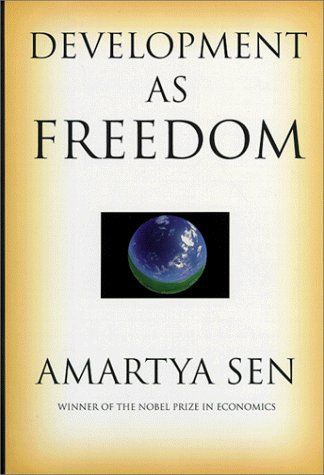
Development as Freedomis a general exposition of the economic ideas and analyses of Amartya Sen, winner of the 1998 Nobel Prize in Economic Science. This brilliant and indispensable treatise compellingly analyzes the nature of contemporary economic development from the perspective of human freedom. Freedom, Sen persuasively argues, is at once the ultimate goal of economic life and the most efficient means of realizing general welfare. It is a good to be enjoyed by the world’s entire population. Drawing on moral and political philosophy and technical economic analysis, this work gives the nonspecialist reader powerful access to Sen’s paradigm-altering vision and vividly shows how he, in the words of the Nobel Prize committee, has both “restored an ethical dimension to the discussion of economic problems” and “opened up new fields of study for subsequent generations of researchers.” To a world divided between those who fear the ruthlessness of the free market under prevailing conditions of global capitalism and those who fear the terror of authoritarian states that stifle indi- vidual liberty as well as initiative,Development as Freedompresents a necessary intellectual and moral framework of analysis and scrutiny. By rigorously addressing one of the largest questions of all–“What is the relation between our economic wealth and our ability to live as we would like?”–Sen allows economics once again, as it did in the time of Adam Smith, to address the social basis of individual well-being and freedom. He also confronts the human dilemma that “despite unprecedented increases in overall opulence, the contemporary world denies elementary freedoms to vast numbers–perhaps even the majority–of people.” This is a landmark work that shows how in individual human freedom–the exclusive possession, Sen shows, of no particular nation, region or historical, intellectual or religious tradition–lies the capacity for political participation, economic development and social progress.
Why should we be tolerant? What does it mean to “live and let live”? What ought to be tolerated and what not? Toleration: A Critical Introductionis a comprehensive and accessible philosophical introduction to toleration. The first part of the book clearly and coherently introduces and assesses the major theoretical accounts of toleration, examining toleration in light of challenges from skepticism, value pluralism and reasonableness. Catriona McKinnon also draws from those philosophers whose theories are central to toleration, from Locke and Mill to Rawls. In the second part of the book, McKinnon applies the theories of toleration to urgent contemporary problems such as female circumcision, the French headscarves affair, artistic freedom, pornography and censorship, and holocaust denial. Toleration: ACritical Introductionprovides a solid theoretical base to those who value toleration, whilst considering the challenges toleration faces in practice. It provides anideal starting point for those coming to the topic for the first time, and anyone interested in the challenges facing toleration today.
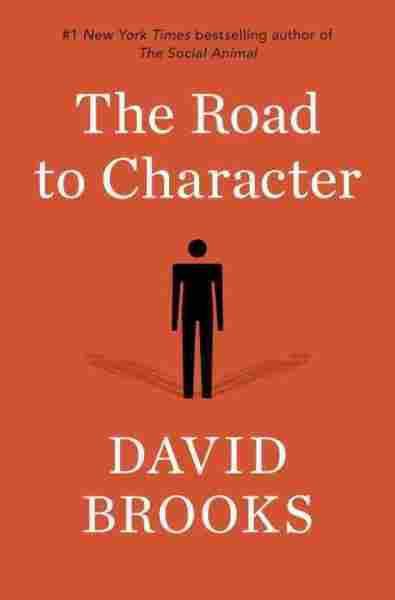
#۱ NEW YORK TIMES BESTSELLER • David Brooks challenges us to rebalance the scales between the focus on external success—“résumé virtues”—and our core principles. NAMED ONE OF THE BEST BOOKS OF THE YEAR BY THE ECONOMIST With the wisdom, humor, curiosity, and sharp insights that have brought millions of readers to his New York Times column and his previous bestsellers, David Brooks has consistently illuminated our daily lives in surprising and original ways. In The Social Animal, he explored the neuroscience of human connection and how we can flourish together. Now, in The Road to Character, he focuses on the deeper values that should inform our lives. Looking to some of the world’s greatest thinkers and inspiring leaders, Brooks explores how, through internal struggle and a sense of their own limitations, they have built a strong inner character. Labor activist Frances Perkins understood the need to suppress parts of herself so that she could be an instrument in a larger cause. Dwight Eisenhower organized his life not around impulsive self-expression but considered self-restraint. Dorothy Day, a devout Catholic convert and champion of the poor, learned as a young woman the vocabulary of simplicity and surrender. Civil rights pioneers A. Philip Randolph and Bayard Rustin learned reticence and the logic of self-discipline, the need to distrust oneself even while waging a noble crusade. Blending psychology, politics, spirituality, and confessional, The Road to Character provides an opportunity for us to rethink our priorities, and strive to build rich inner lives marked by humility and moral depth. “Joy,” David Brooks writes, “is a byproduct experienced by people who are aiming for something else. But it comes.”Praise for The Road to Character“A hyper-readable, lucid, often richly detailed human story.”—The New York Times Book Review “This profound and eloquent book is written with moral urgency and philosophical elegance.”—Andrew Solomon, author of Far from the Tree and The Noonday Demon “A powerful, haunting book that works its way beneath your skin.”—The Guardian“Original and eye-opening . . . Brooks is a normative version of Malcolm Gladwell, culling from a wide array of scientists and thinkers to weave an idea bigger than the sum of its parts.”—USA Today
“This book articulates the nature of truth as a cooperative activity between human beings and the natural world that is rooted in our endeavors to do justice to the nature of things”–Provided by publisher.
ما از اخلاق چه انتظاری داریم؟ این سوال شاید تاحدودی برای عموم مردم و یا متخصصان این رشته قابل پاسخ باشد؛ اینکه خوب بودن را به ما بیاموزد و در تنظیم روابط فردی م...

جشن کتاب تهران به ایستگاه سی و یکم رسیده است. حال و احوال نشر کتاب خوب نیست و باید فرهنگدوستان را به خرید و هدیه دادن کتاب ترغیب نمود. خانه اخلاقپژوهان جوان ب...

بنیاد کتابهای اخلاق اسلامی عمدتا پالایش جان از آلودگیها و آراستن آن به زیباییها است. اندیشه محوری این قبیل کتابها آن است که انسان فعلی آنی نیست که باید باشد...

-
0 Comments