Notice: تابع WP_Block_Type_Registry::register به طورنادرست فراخوانی شد. نامهای نوع بلوک نباید حروف بزرگ داشته باشند. لطفاً برای اطلاعات بیشتر، اشکال زدایی در وردپرس را مشاهده کنید. (این پیام در نگارش 5.0.0 افزوده شده است.) in /home/ethicsho/public_html/wp-includes/functions.php on line 5313
Warning: Use of undefined constant TDC_PATH_LEGACY - assumed 'TDC_PATH_LEGACY' (this will throw an Error in a future version of PHP) in /home/ethicsho/public_html/wp-content/plugins/td-composer/td-composer.php on line 109
Warning: Use of undefined constant TDSP_THEME_PATH - assumed 'TDSP_THEME_PATH' (this will throw an Error in a future version of PHP) in /home/ethicsho/public_html/wp-content/plugins/td-composer/td-composer.php on line 113 بایگانیهای 0-86597-432-2 - خانه اخلاق پژوهان جوان Notice: Trying to access array offset on value of type bool in /home/ethicsho/public_html/wp-content/plugins/wp-ulike/inc/general-functions.php on line 807
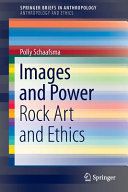
Ethics and Rock Art: Images and Power addresses the distinctive ways in which ethical considerations pertain to rock art research within the larger context of the archaeological ethical debate. Marks on stone, with their social and religious implications, give rise to distinctive ethical concerns within the scholarly enterprise as different perceptions between scholars and Native Americans are encountered in regard to worldviews, concepts of space, time, and in the interpretation of the imagery itself. This discourse addresses issues such as the conflicting paradigms of oral traditions and archaeological veracity, differing ideas about landscapes in which rock art occurs, the intrusion of “desired knowledge”, and how the past may be robbed by changing interpretations and values on both sides. Case studies are presented in regard to shamanism and war-related imagery. Also addressed are issues surrounding questions of art, aesthetics, and appropriation of imagery by outsiders. Overall, this discourse attempts to clarify points of contention between Euro-American scholars and Native Americans so that we can better recognize the origins of differences and thus promote better mutual understanding in these endeavors.
Online dating represents an amazing new way to meet people, but it requires technology skills in addition to social skills. “Truth, Lies, and Online Dating” shows you how you can effectively use your PC, digital camera, word processor and other PC-based tools to effectively market yourself and communicate who you are — and who you are looking for. It teaches the mechanics of online dating services and shows you how to put each service’s search engines to work to find the best dates. Learn how you can try services first without having to subscribe, and how to find dating sources that match your lifestyle. Finally, you’ll explores the darker side of online dating, learning how to spot people who may not be telling the truth about themselves and even using background check services to verify the identity of the person you are interested in.
Electrifying when first delivered in 1973, legendary in the years since, Dieter Henrich’s lectures on German Idealism were the first contact a major German philosopher had made with an American audience since the onset of World War II. They remain one of the most eloquent explanations and interpretations of classical German philosophy and of the way it relates to the concerns of contemporary philosophy. Thanks to the editorial work of David Pacini, the lectures appear here with annotations linking them to editions of the masterworks of German philosophy as they are now available.Henrich describes the movement that led from Kant to Hegel, beginning with an interpretation of the structure and tensions of Kant’s system. He locates the Kantian movement and revival of Spinoza, as sketched by F. H. Jacobi, in the intellectual conditions of the time and in the philosophical motivations of modern thought. Providing extensive analysis of the various versions of Fichte’s Science of Knowledge, Henrich brings into view a constellation of problems that illuminate the accomplishments of the founders of Romanticism, Novalis and Friedrich Schlegel, and of the poet Hlderlin’s original philosophy. He concludes with an interpretation of the basic design of Hegel’s system.
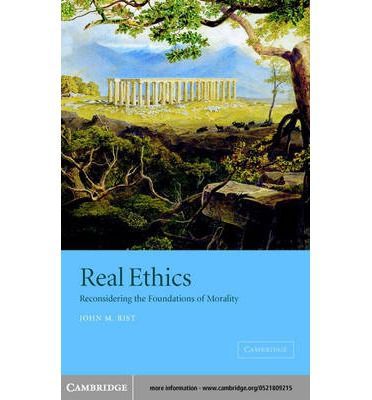
John Rist surveys the history of ethics from Plato to the present and offers a vigorous defence of an ethical theory based on a revised version of Platonic realism. In a wide-ranging discussion he examines well-known alternatives to Platonism, in particular–Epicurus, Hobbes, Hume and Kant, as well as contemporary “practical reasoners”. His accessible study is enhanced by a strong sense of philosophical history, and will be of interest to students and scholars of ethics.
ما از اخلاق چه انتظاری داریم؟ این سوال شاید تاحدودی برای عموم مردم و یا متخصصان این رشته قابل پاسخ باشد؛ اینکه خوب بودن را به ما بیاموزد و در تنظیم روابط فردی م...

جشن کتاب تهران به ایستگاه سی و یکم رسیده است. حال و احوال نشر کتاب خوب نیست و باید فرهنگدوستان را به خرید و هدیه دادن کتاب ترغیب نمود. خانه اخلاقپژوهان جوان ب...

بنیاد کتابهای اخلاق اسلامی عمدتا پالایش جان از آلودگیها و آراستن آن به زیباییها است. اندیشه محوری این قبیل کتابها آن است که انسان فعلی آنی نیست که باید باشد...

-
0 Comments