Notice: تابع WP_Block_Type_Registry::register به طورنادرست فراخوانی شد. نامهای نوع بلوک نباید حروف بزرگ داشته باشند. لطفاً برای اطلاعات بیشتر، اشکال زدایی در وردپرس را مشاهده کنید. (این پیام در نگارش 5.0.0 افزوده شده است.) in /home/ethicsho/public_html/wp-includes/functions.php on line 5313
Warning: Use of undefined constant TDC_PATH_LEGACY - assumed 'TDC_PATH_LEGACY' (this will throw an Error in a future version of PHP) in /home/ethicsho/public_html/wp-content/plugins/td-composer/td-composer.php on line 109
Warning: Use of undefined constant TDSP_THEME_PATH - assumed 'TDSP_THEME_PATH' (this will throw an Error in a future version of PHP) in /home/ethicsho/public_html/wp-content/plugins/td-composer/td-composer.php on line 113 بایگانیهای 0-691-12179-6 - خانه اخلاق پژوهان جوان Notice: Trying to access array offset on value of type bool in /home/ethicsho/public_html/wp-content/plugins/wp-ulike/inc/general-functions.php on line 807
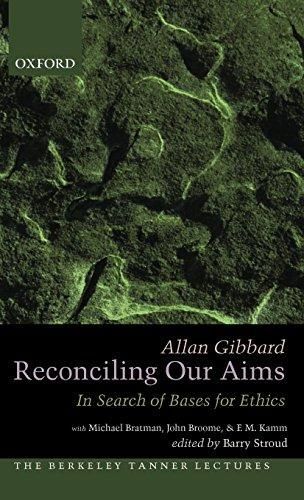
In these three Tanner lectures, distinguished ethical theorist Allan Gibbard explores the nature of normative thought and the bases of ethics. In the first lecture he explores the role of intuitions in moral thinking and offers a way of thinking about the intuitive method of moral inquiry that both places this activity within the natural world and makes sense of it as an indispensable part of our lives as planners. In the second and third lectures he takes up the kind of substantive ethical inquiry he has described in the first lecture, asking how we might live together on terms that none of us could reasonably reject. Since working at cross purposes loses fruits that might stem from cooperation, he argues, any consistent ethos that meets this test would be, in a crucial way, utilitarian. It would reconcile our individual aims to establish, in Kant’s phrase, a “kingdom of ends.” The volume also contains an introduction by Barry Stroud, the volume editor, critiques by Michael Bratman (Stanford University), John Broome (Oxford University), and F. M. Kamm (Harvard University), and Gibbard’s responses.
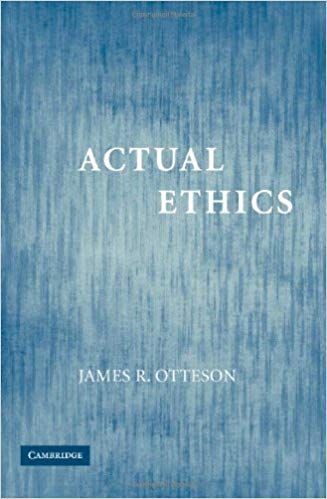
Actual Ethics offers a moral defense of the ‘classical liberal’ political tradition and applies it to several of today’s vexing moral and political issues. James Otteson argues that a Kantian conception of personhood and an Aristotelian conception of judgment are compatible and even complementary. He shows why they are morally attractive, and perhaps most controversially, when combined, they imply a limited, classical liberal political state. Otteson then addresses several contemporary problems – wealth and poverty, public education, animal welfare, and affirmative action – and shows how each can be plausibly addressed within the Kantian, Aristotelian and classical liberal framework. Written in clear, engaging, and jargon-free prose, Actual Ethics will give students and general audiences an overview of a powerful and rich moral and political tradition that they might not otherwise consider.
Epistemology, or “the theory of knowledge,” is concerned with how we know what we know, what justifies us in believing what we believe, and what standards of evidence we should use in seeking truths about the world and human experience. This comprehensive introduction to the field of epistemology explains the concepts and theories central to understanding knowledge. Along with covering the traditional topics of the discipline in detail, Epistemology explores emerging areas of research. The third edition features new sections on such topics as the nature of intuition, the skeptical challenge of rational disagreement, and “the value problem” – the range of questions concerning why knowledge and justified true belief have value beyond that of merely true belief. Updated and expanded, Epistemology remains a superb introduction to one of the most fundamental fields of philosophy. Special features of the third edition of Epistemology include: * a comprehensive survey of basic concepts, major theories, and emerging research in the field* enhanced treatment of key topics such as contextualism, perception (including perceptual content), scientific hypotheses, self-evidence and the a priori, testimony, understanding, and virtue epistemology* expanded discussion of the relation between epistemology and related fields, especially philosophy of mind, philosophy of science, and ethics * increased clarity and ease of understanding for an undergraduate audience* an updated list of key literature and annotated bibliography.
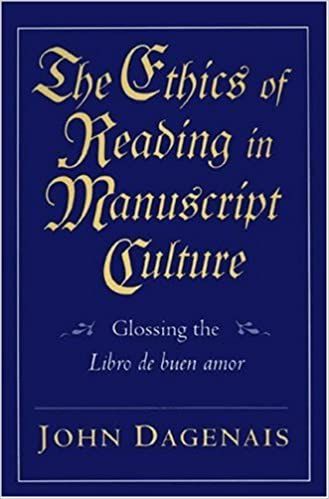
Taking the controversial fourteenth-century Libro de buen amor as his point of departure, John Dagenais maintains that many interpretive difficulties with this text have arisen simply because concepts such as “work” and “text,” which medievalists have tended to consider unproblematic, simply do not function in the medieval manuscript context.
ما از اخلاق چه انتظاری داریم؟ این سوال شاید تاحدودی برای عموم مردم و یا متخصصان این رشته قابل پاسخ باشد؛ اینکه خوب بودن را به ما بیاموزد و در تنظیم روابط فردی م...

جشن کتاب تهران به ایستگاه سی و یکم رسیده است. حال و احوال نشر کتاب خوب نیست و باید فرهنگدوستان را به خرید و هدیه دادن کتاب ترغیب نمود. خانه اخلاقپژوهان جوان ب...

بنیاد کتابهای اخلاق اسلامی عمدتا پالایش جان از آلودگیها و آراستن آن به زیباییها است. اندیشه محوری این قبیل کتابها آن است که انسان فعلی آنی نیست که باید باشد...

-
0 Comments