Notice: تابع WP_Block_Type_Registry::register به طورنادرست فراخوانی شد. نامهای نوع بلوک نباید حروف بزرگ داشته باشند. لطفاً برای اطلاعات بیشتر، اشکال زدایی در وردپرس را مشاهده کنید. (این پیام در نگارش 5.0.0 افزوده شده است.) in /home/ethicsho/public_html/wp-includes/functions.php on line 5313
Warning: Use of undefined constant TDC_PATH_LEGACY - assumed 'TDC_PATH_LEGACY' (this will throw an Error in a future version of PHP) in /home/ethicsho/public_html/wp-content/plugins/td-composer/td-composer.php on line 109
Warning: Use of undefined constant TDSP_THEME_PATH - assumed 'TDSP_THEME_PATH' (this will throw an Error in a future version of PHP) in /home/ethicsho/public_html/wp-content/plugins/td-composer/td-composer.php on line 113 بایگانیهای 0-631-22126-3 - خانه اخلاق پژوهان جوان Notice: Trying to access array offset on value of type bool in /home/ethicsho/public_html/wp-content/plugins/wp-ulike/inc/general-functions.php on line 807
“The concept of autonomy is one of Kant’s central legacies for contemporary moral thought. We often invoke autonomy as both a moral ideal and a human right, especially a right to determine oneself independently of foreign determinants; indeed, to violate a person’s autonomy is considered to be a serious moral offence. Yet while contemporary philosophy claims Kant as the originator of its notion of autonomy, Kant’s own conception of the term seems to differ in important respects from our present-day interpretation. Kant on Moral Autonomy brings together a distinguished group of scholars who explore the following questions: what is Kant’s conception of autonomy? What is its history and its influence on contemporary conceptions? And what is its moral significance? Their essays will be of interest both to scholars and students working on Kantian moral philosophy and to anyone interested in the subject of autonomy”–
“A magisterial work (that) culminates twenty-five years of thinking about the problems of free will. For those who believe both that robust free will cannot survive in a deterministic climate and that a viable free will need be scientifically respectable, Kane’s work may prove salvific.” — Mark Bernstein, University of Texas at San Antonio. In the past quarter-century, there has been a resurgence of interest in philosophical questions about free will. After a clear and broad-reaching survey of these recent debates, Robert Kane presents his own controversial view. Arguing persuasively for a traditional incompatibilist or libertarian conception of free will, Kane demonstrates that such a conception can be made intelligible without appeals to obscure or mysterious forms of agency and thus can be reconciled with a contemporary scientific picture of the world.
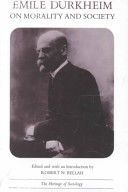
Emile Durkheim is best known in this country as a great sociologist and methodologist. Yet it was Durkheim’s reflections on morality and society that spoke most deeply of his vital concerns. In his informative introduction to this work, Robert N. Bellah describes Durkheim as moralist, philosopher, theologian, and prophet, as well as sociologist, and the selections in this volume are representative of these aspects of Durkheim’s many-faceted scholarship. The first two selections of the volume set the context for the development of Durkheim’s sociology of morality. Section I, “The French Tradition of Social Thought,” gives Durkheim’s picture of how his sociology is to be situated relative to the general French tradition. Section II, “Sociology and Social Action,” shows Durkheim grappling with moral and political issues in his society and indicates the immediate social context of his thinking. The remaining selections indicate some of the major substantive areas of Durkheim’s sociology of morality. Section III, taken from The Division of Labor in Society, demonstrates his basically evolutionary approach to the development of moral norms in society. Section IV, “The Learning of Morality,” gives examples of Durkheim’s work on socialization. Section V, “Social Creativity,” deals with the important question of how new moral norms arise in society.
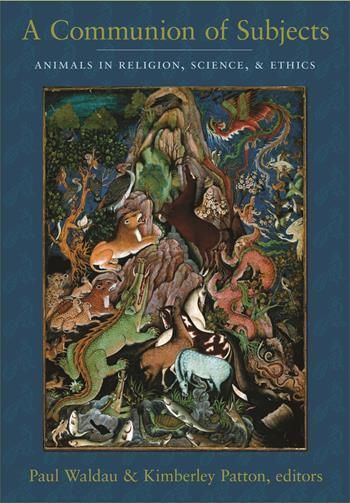
A Communion of Subjectsis the first comparative and interdisciplinary study of the conceptualization of animals in world religions. Scholars from a wide range of disciplines, including Thomas Berry (cultural history), Wendy Doniger (study of myth), Elizabeth Lawrence (veterinary medicine, ritual studies), Marc Bekoff (cognitive ethology), Marc Hauser (behavioral science), Steven Wise (animals and law), Peter Singer (animals and ethics), and Jane Goodall (primatology) consider how major religious traditions have incorporated animals into their belief systems, myths, rituals, and art. Their findings offer profound insights into humans’ relationships with animals and a deeper understanding of the social and ecological web in which we all live.Contributors examine Judaism, Christianity, Islam, Hinduism, Buddhism, Jainism, Daoism, Confucianism, African religions, traditions from ancient Egypt and early China, and Native American, indigenous Tibetan, and Australian Aboriginal traditions, among others. They explore issues such as animal consciousness, suffering, sacrifice, and stewardship in innovative methodological ways. They also address contemporary challenges relating to law, biotechnology, social justice, and the environment. By grappling with the nature and ideological features of various religious views, the contributors cast religious teachings and practices in a new light. They reveal how we either intentionally or inadvertently marginalize “others,” whether they are human or otherwise, reflecting on the ways in which we assign value to living beings.Though it is an ancient concern, the topic of “Religion and Animals” has yet to be systematically studied by modern scholars. This groundbreaking collection takes the first steps toward a meaningful analysis.
ما از اخلاق چه انتظاری داریم؟ این سوال شاید تاحدودی برای عموم مردم و یا متخصصان این رشته قابل پاسخ باشد؛ اینکه خوب بودن را به ما بیاموزد و در تنظیم روابط فردی م...

جشن کتاب تهران به ایستگاه سی و یکم رسیده است. حال و احوال نشر کتاب خوب نیست و باید فرهنگدوستان را به خرید و هدیه دادن کتاب ترغیب نمود. خانه اخلاقپژوهان جوان ب...

بنیاد کتابهای اخلاق اسلامی عمدتا پالایش جان از آلودگیها و آراستن آن به زیباییها است. اندیشه محوری این قبیل کتابها آن است که انسان فعلی آنی نیست که باید باشد...

-
0 Comments