Notice: تابع WP_Block_Type_Registry::register به طورنادرست فراخوانی شد. نامهای نوع بلوک نباید حروف بزرگ داشته باشند. لطفاً برای اطلاعات بیشتر، اشکال زدایی در وردپرس را مشاهده کنید. (این پیام در نگارش 5.0.0 افزوده شده است.) in /home/ethicsho/public_html/wp-includes/functions.php on line 5313
Warning: Use of undefined constant TDC_PATH_LEGACY - assumed 'TDC_PATH_LEGACY' (this will throw an Error in a future version of PHP) in /home/ethicsho/public_html/wp-content/plugins/td-composer/td-composer.php on line 109
Warning: Use of undefined constant TDSP_THEME_PATH - assumed 'TDSP_THEME_PATH' (this will throw an Error in a future version of PHP) in /home/ethicsho/public_html/wp-content/plugins/td-composer/td-composer.php on line 113 بایگانیهای 0 444 50639 X - خانه اخلاق پژوهان جوان Notice: Trying to access array offset on value of type bool in /home/ethicsho/public_html/wp-content/plugins/wp-ulike/inc/general-functions.php on line 807
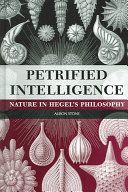
“Petrified Intelligence offers the first comprehensive treatment of Hegel’s “Philosophy of Nature, exploring its central place within his system, including its relation to his “Logic, Philosophy of Mind, and moral and political thought. It highlights the contemporary relevance of Hegel’s approach to nature, particularly with respect to environmental issues. Challenging the standard view that Hegel devalues nature relative to mind and culture, Alison Stone revels the deep concern to re-enchant the natural world that pervades his entire philosophical project. Written in clear and nontechnical language, the book also provides a critical introducing to Hegel’s metaphysics.
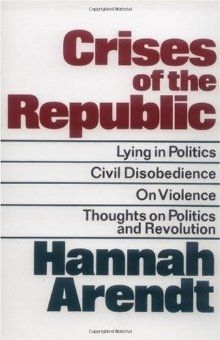
A collection of studies in which Arendt, from the standpoint of a political philosopher, views the crises of the 1960s and early 1970s as challenges to the american form of government. Index.
Emmanuel Levinas (1905-1995) was one of the foremost thinkers of the twentieth century. His work has influenced a wide range of intellectuals, from French thinkers such as Maurice Blanchot, Jacques Derrida, Luce Irigaray and Jean-Luc Marion, to American philosophers Stanley Cavell and Hillary Putnam.This set will be a useful resource for scholars working in the fields of literary theory, philosophy, Jewish studies, religion, political science and rhetoric.Titles also available in this series include, Karl Popper (November 2003, 4 Volumes, A475), and the forthcoming titles Edmund Husserl (2005, c.4 Volumes, c. A475) and Gottlob Frege (2005, c.4 Volumes, c. A475).
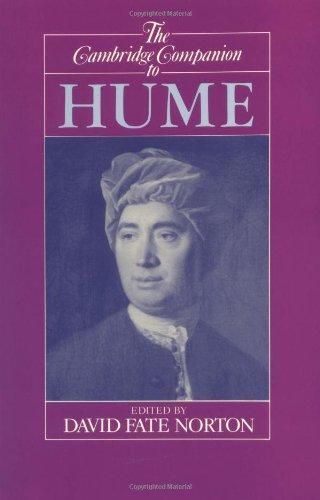
David Hume is, arguably, the most important philosopher ever to have written in English. Although best known for his contributions to epistemology, metaphysics, and the philosophy of religion, Hume also made substantial and influential contributions to psychology and the philosophy of mind, ethics, the philosophy of science, political and economic theory, political and social history, and to a lesser extent, aesthetic and literary theory. All facets of Hume’s output are discussed in this volume, the first genuinely comprehensive overview of his work. The picture that emerges is of a thinker, who, though critical to the point of skepticism, was nonetheless able to build on that skepticism a profoundly important, and still viable, constructive philosophy.
This book is about the gap between the moral demand on us and our natural capacities to meet it. John Hare starts with Kants statement of the moral demand and his acknowledgement of this gap. Hare then analyses Kants use of the resources of the Christian tradition to make sense of this gap,especially the notions of revelation, providence, and Gods grace. Kant reflects the traditional way of making sense of this gap, which is to invoke Gods assistance in bridging it. Hare goes on to examine various contemporary philosophers who do not use these resources. He considers three mainstrategies: exaggerating our natural capacities, diminishing the moral demand, and finding some naturalistic substitute for Gods assistance. He argues that these strategies do not work, and that we are therefore left with the gap and with the problem that it is unreasonable to demand of ourselves astandard which we cannot reach. In the final section of the book, Hare looks in more detail at the Christian doctrines of atonement, justification, and sanctification. He discusses Kierkegaards account of the relation between the ethical life and the Christian life, and ends by considering humanforgiveness, and the ways in which Gods forgiveness is both like and unlike our forgiveness of each other. The book is intended for those interested in both ethical theory and Christian theology.
ما از اخلاق چه انتظاری داریم؟ این سوال شاید تاحدودی برای عموم مردم و یا متخصصان این رشته قابل پاسخ باشد؛ اینکه خوب بودن را به ما بیاموزد و در تنظیم روابط فردی م...

جشن کتاب تهران به ایستگاه سی و یکم رسیده است. حال و احوال نشر کتاب خوب نیست و باید فرهنگدوستان را به خرید و هدیه دادن کتاب ترغیب نمود. خانه اخلاقپژوهان جوان ب...

بنیاد کتابهای اخلاق اسلامی عمدتا پالایش جان از آلودگیها و آراستن آن به زیباییها است. اندیشه محوری این قبیل کتابها آن است که انسان فعلی آنی نیست که باید باشد...

-
0 Comments