Notice: تابع WP_Block_Type_Registry::register به طورنادرست فراخوانی شد. نامهای نوع بلوک نباید حروف بزرگ داشته باشند. لطفاً برای اطلاعات بیشتر، اشکال زدایی در وردپرس را مشاهده کنید. (این پیام در نگارش 5.0.0 افزوده شده است.) in /home/ethicsho/public_html/wp-includes/functions.php on line 5313
Warning: Use of undefined constant TDC_PATH_LEGACY - assumed 'TDC_PATH_LEGACY' (this will throw an Error in a future version of PHP) in /home/ethicsho/public_html/wp-content/plugins/td-composer/td-composer.php on line 109
Warning: Use of undefined constant TDSP_THEME_PATH - assumed 'TDSP_THEME_PATH' (this will throw an Error in a future version of PHP) in /home/ethicsho/public_html/wp-content/plugins/td-composer/td-composer.php on line 113 بایگانیهای 0-226-17336-4 - خانه اخلاق پژوهان جوان Notice: Trying to access array offset on value of type bool in /home/ethicsho/public_html/wp-content/plugins/wp-ulike/inc/general-functions.php on line 807
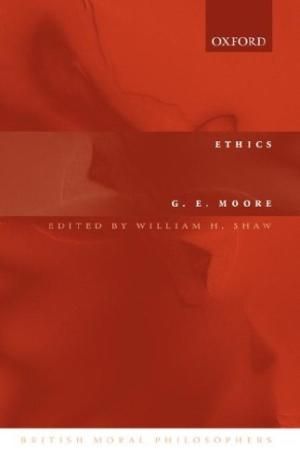
Short but philosophically rich, and written with impressive precision and intellectual candour, ‘Ethics’ is a minor classic which repays careful study. This edition includes Moore’s essay ‘The Nature of Moral Philosophy’ as well as editorial notes, an introduction, and a guide to further reading.
Is it rational to be moral? Can moral disputes be settled rationally? Which criteria determine what we have a good reason to do? In this innovative book, Logi Gunnarsson takes issue with the assumption made by many philosophers faced with the problem of reconciling moral norms with a scientific world view, namely that morality must be offered a non-moral justification based on a formal concept of rationality. He argues that the criteria for the rationality of an action are irreducibly substantive, rather than purely formal, and that assuming that morality must be given a non-moral justification amounts to a distortion of both rationality and morality. His discussion includes substantial critical engagement with major thinkers from two very different philosophical traditions, and is notable for its clear and succinct account of Habermas’ discourse ethics. It will appeal to anyone interested in practical reason and the rational credentials of morality.
John Rawls is the preeminent political philosopher of our time. His 1971 masterpiece, A Theory of Justice, permanently changed the landscape of moral political theory, revitalizing the normative study of social issues and taking stands about justice, ethics, rationality and philosophical method that continue to draw followers and critics today.In these five volumes, Henry S. Richardson and Paul Weithman draw together almost 90 of the most incisive and influential articles in that body of literature. The reprinted articles, many of them drawn from difficult-to-find sources, cover the gamut of controversies and conversations sparked by Rawls’s work and represent a wide range of philosophical points of view. The selection also includes articles that reflect Rawls’s reception in economics, law, and the social science more broadly.The publication of these five volumes will be welcomed by students and scholars of contemporary political philosophy, and by anyone interested in the most probing reactions to the premier political philosopher of our time.
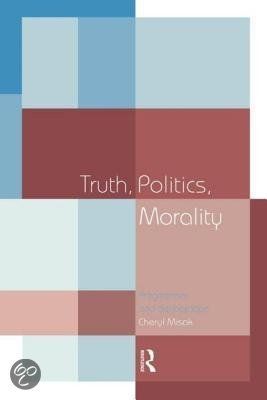
Can we criticize those who hold beliefs which are likely to be wrong? Or must we abandon notions of truth and objectivity and claim that certain beliefs are best for us while incompatible beliefs are best for others? Truth, Politics, Moralityaddresses this crucial issue and its implications for democracy by arguing that the notion of truth ought to be returned to the center of moral and political philosophy. Cheryl Misak persuasively makes a case for a certain kind of pragmatism in which a true belief is one that could not be improved by inquiry, nor defeated by experience or argument. Her compelling discussion makes sense of the idea that, despite conflict, pluralism, and the expression of difference, our moral and political beliefs aim at truth and can be subject to justified criticism.
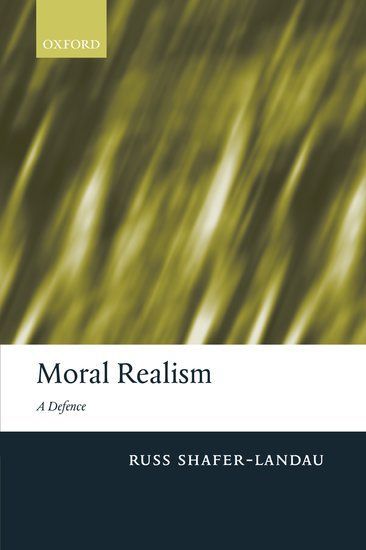
Moral Realism is a systematic defence of the idea that there are objective moral standards. Russ Shafer-Landau argues that there are moral principles that are true independently of what anyone, anywhere, happens to think of them. His central thesis, as well as the many novel supporting arguments used to defend it, will spark much controversy among those concerned with the foundations of ethics.
ما از اخلاق چه انتظاری داریم؟ این سوال شاید تاحدودی برای عموم مردم و یا متخصصان این رشته قابل پاسخ باشد؛ اینکه خوب بودن را به ما بیاموزد و در تنظیم روابط فردی م...

جشن کتاب تهران به ایستگاه سی و یکم رسیده است. حال و احوال نشر کتاب خوب نیست و باید فرهنگدوستان را به خرید و هدیه دادن کتاب ترغیب نمود. خانه اخلاقپژوهان جوان ب...

بنیاد کتابهای اخلاق اسلامی عمدتا پالایش جان از آلودگیها و آراستن آن به زیباییها است. اندیشه محوری این قبیل کتابها آن است که انسان فعلی آنی نیست که باید باشد...

-
0 Comments