Notice: تابع WP_Block_Type_Registry::register به طورنادرست فراخوانی شد. نامهای نوع بلوک نباید حروف بزرگ داشته باشند. لطفاً برای اطلاعات بیشتر، اشکال زدایی در وردپرس را مشاهده کنید. (این پیام در نگارش 5.0.0 افزوده شده است.) in /home/ethicsho/public_html/wp-includes/functions.php on line 5313
Warning: Use of undefined constant TDC_PATH_LEGACY - assumed 'TDC_PATH_LEGACY' (this will throw an Error in a future version of PHP) in /home/ethicsho/public_html/wp-content/plugins/td-composer/td-composer.php on line 109
Warning: Use of undefined constant TDSP_THEME_PATH - assumed 'TDSP_THEME_PATH' (this will throw an Error in a future version of PHP) in /home/ethicsho/public_html/wp-content/plugins/td-composer/td-composer.php on line 113 بایگانیهای 0-203-48067-8 - خانه اخلاق پژوهان جوان Notice: Trying to access array offset on value of type bool in /home/ethicsho/public_html/wp-content/plugins/wp-ulike/inc/general-functions.php on line 807
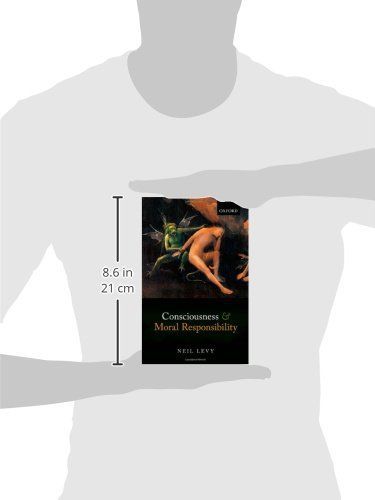
Neil Levy presents an original theory of freedom and responsibility. Cognitive neuroscience and psychology provide a great deal of evidence that our actions are often shaped by information of which we are not conscious; some psychologists have concluded that we are actually conscious of very few of the facts we respond to. But most people seem to assume that we need to be conscious of the facts we respond to in order to be responsible for what we do. Some thinkers have argued that this naive assumption is wrong, and we need not be conscious of these facts to be responsible, while others think it is correct and therefore we are never responsible. Levy argues that both views are wrong. He sets out and defends a particular account of consciousness-the global workspace view-and argues this account entails that consciousness plays an especially important role in action. We exercise sufficient control over the moral significance of our acts to be responsible for them only when we are conscious of the facts that give to our actions their moral character. Further, our actions are expressive of who we are as moral agents only when we are conscious of these same facts. There are therefore good reasons to think that the naive assumption, that consciousness is needed for moral responsibility, is in fact true. Levy suggests that this entails that people are responsible less often than we might have thought, but the consciousness condition does not entail that we are never morally responsible. — Provided by publisher.
While we would like to believe that forensic science professionals are intrinsically ethical by nature, the reality is that these individuals have moral compasses as varied as those of any individual you may know. They confront ethical dilemmas every day, some with clear-cut protocols and others that frequently have no definitive answers. Ethics and the Practice of Forensic Science explores the range of ethical issues facing those who work in the field and highlights the complicated nature of ethical decision-making in this complex arena.Ethics in the courtroom and the labWritten by one of the leading researchers in forensic ethics, the book provides data-driven examples of the behaviors ‘ both good and bad ‘ that shape the forensic profession. It provides real examples of ethical behavior combined with research to demonstrate how ethics works (and sometimes does not) in this richly interesting scientific field. The book begins by exploring philosophical approaches related to ethical decision-making. It examines the ethics of the criminal justice culture, ethical issues in the courtroom, and ethics in science and research. Next, the book shifts to a discussion of unethical behavior, and provides actual case studies spotlighting ethical breaches, including the O.J. Simpson case and other reported examples.Ethics codes in various organizationsThe book concludes with a discussion of the code of ethics. Appendices discuss research data on ethics in forensic science and provide ethics codes from various forensic science organizations. Offering a lively source of debate for professionals and academics, this volume provides a window on a topic that is frequently fraught with uncertainty.
This clear, well-organized overview of theoretical ethics employs a contemporary tone and framework. Multicultural coverage and attention to college students’ moral development help readers relate the material to their own experience and their own moral growth. Both scholarly and practical, this text aims to significantly improve students’ ability to make real-life moral decisions.
ما از اخلاق چه انتظاری داریم؟ این سوال شاید تاحدودی برای عموم مردم و یا متخصصان این رشته قابل پاسخ باشد؛ اینکه خوب بودن را به ما بیاموزد و در تنظیم روابط فردی م...

جشن کتاب تهران به ایستگاه سی و یکم رسیده است. حال و احوال نشر کتاب خوب نیست و باید فرهنگدوستان را به خرید و هدیه دادن کتاب ترغیب نمود. خانه اخلاقپژوهان جوان ب...

بنیاد کتابهای اخلاق اسلامی عمدتا پالایش جان از آلودگیها و آراستن آن به زیباییها است. اندیشه محوری این قبیل کتابها آن است که انسان فعلی آنی نیست که باید باشد...

-
0 Comments