Notice: تابع WP_Block_Type_Registry::register به طورنادرست فراخوانی شد. نامهای نوع بلوک نباید حروف بزرگ داشته باشند. لطفاً برای اطلاعات بیشتر، اشکال زدایی در وردپرس را مشاهده کنید. (این پیام در نگارش 5.0.0 افزوده شده است.) in /home/ethicsho/public_html/wp-includes/functions.php on line 5313
Warning: Use of undefined constant TDC_PATH_LEGACY - assumed 'TDC_PATH_LEGACY' (this will throw an Error in a future version of PHP) in /home/ethicsho/public_html/wp-content/plugins/td-composer/td-composer.php on line 109
Warning: Use of undefined constant TDSP_THEME_PATH - assumed 'TDSP_THEME_PATH' (this will throw an Error in a future version of PHP) in /home/ethicsho/public_html/wp-content/plugins/td-composer/td-composer.php on line 113 بایگانیهای 0-203-16588-8 - خانه اخلاق پژوهان جوان Notice: Trying to access array offset on value of type bool in /home/ethicsho/public_html/wp-content/plugins/wp-ulike/inc/general-functions.php on line 807
Nearly two centuries after declaring “the end of history,” Hegel remains a rich source of insights into our historical nature. The essays collected here interpret and develop those insights, while also challenging Hegel’s philosophical approach to comprehend present and future phenomena that he could neither experience nor imagine. They represent the very best in contemporary scholarship on Hegel and history, and collectively they address all of the important and disputed topics in the field: Hegel’s claim that history has an end, whether his philosophy of history is Eurocentric or racist, how elements of what he terms “subjective spirit” and “objective spirit” contribute to historical development, and the relationship between religion and his philosophy of history.
The Hegel Dictionary is a comprehensive and accessible guide to the world of G.W.F. Hegel, one of the most important and influential thinkers in the history of philosophy. Meticulously researched and extensively cross-referenced, this unique book provides a firm grounding in the central themes of Hegel’s thought. Students will discover a wealth of useful information and analysis. A-Z entries include clear definitions of key terms used in Hegel’s writings and detailed synopses of his major works. The Dictionary also includes entries on Hegel’s philosophical influences, such as Kant, Fichte, and Schelling, and those he influenced, including Marx. It covers everything that is essential to a sound understanding of Hegel’s philosophy, offering clear and accessible explanations of often complex terminology. The Hegel Dictionary is the ideal resource for anyone reading or studying Hegel or Modern European Philosophy more generally.
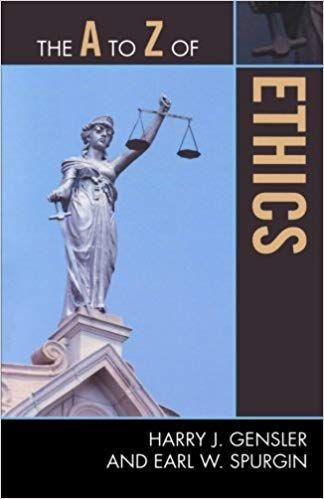
The A to Z of Ethics covers a broad range of topics, including theories, issues, and concepts; historical periods and historical figures; applied ethics; non-Western approaches; and related disciplines. Harry J. Gensler and Earl W. Spurgin tackle such issues as abortion, capital punishment, stem-cell research, and terrorism and explain such key theories as utilitarianism, natural law, social contract, and virtue ethics. This reference provides a complete overview of ethics through a detailed chronology, an introductory essay, a bibliography, and more than 200 cross-referenced dictionary entries, including bioethics, business ethics, Aristotle, Hobbes, autonomy, confidentiality, Confucius, and psychology.
How do the hard facts of political responsibility shape and constrain the demands of ethical life? That question lies at the heart of the problem of ‘dirty hands’ in public life. Those who exercise political power often feel they must act in ways that would otherwise be considered immoral: indeed, paradoxically, they sometimes feel that it would be immoral of them not to perform or condone such acts as killing or lying. John Parrish offers a wide-ranging account of how this important philosophical problem emerged and developed, tracing it – and its proposed solutions – from ancient Greece through the Enlightenment. His central argument is that many of our most familiar concepts and institutions – from Augustine’s interiorised ethics, to Hobbes’s sovereign state, to Adam Smith’s ‘invisible hand’, understanding of the modern commercial economy – were designed partly as responses to the ethical problem of dirty hands in public life.
ما از اخلاق چه انتظاری داریم؟ این سوال شاید تاحدودی برای عموم مردم و یا متخصصان این رشته قابل پاسخ باشد؛ اینکه خوب بودن را به ما بیاموزد و در تنظیم روابط فردی م...

جشن کتاب تهران به ایستگاه سی و یکم رسیده است. حال و احوال نشر کتاب خوب نیست و باید فرهنگدوستان را به خرید و هدیه دادن کتاب ترغیب نمود. خانه اخلاقپژوهان جوان ب...

بنیاد کتابهای اخلاق اسلامی عمدتا پالایش جان از آلودگیها و آراستن آن به زیباییها است. اندیشه محوری این قبیل کتابها آن است که انسان فعلی آنی نیست که باید باشد...

-
0 Comments