Notice: تابع WP_Block_Type_Registry::register به طورنادرست فراخوانی شد. نامهای نوع بلوک نباید حروف بزرگ داشته باشند. لطفاً برای اطلاعات بیشتر، اشکال زدایی در وردپرس را مشاهده کنید. (این پیام در نگارش 5.0.0 افزوده شده است.) in /home/ethicsho/public_html/wp-includes/functions.php on line 5313
Warning: Use of undefined constant TDC_PATH_LEGACY - assumed 'TDC_PATH_LEGACY' (this will throw an Error in a future version of PHP) in /home/ethicsho/public_html/wp-content/plugins/td-composer/td-composer.php on line 109
Warning: Use of undefined constant TDSP_THEME_PATH - assumed 'TDSP_THEME_PATH' (this will throw an Error in a future version of PHP) in /home/ethicsho/public_html/wp-content/plugins/td-composer/td-composer.php on line 113 بایگانیهای 0-203-02914-3 - خانه اخلاق پژوهان جوان Notice: Trying to access array offset on value of type bool in /home/ethicsho/public_html/wp-content/plugins/wp-ulike/inc/general-functions.php on line 807
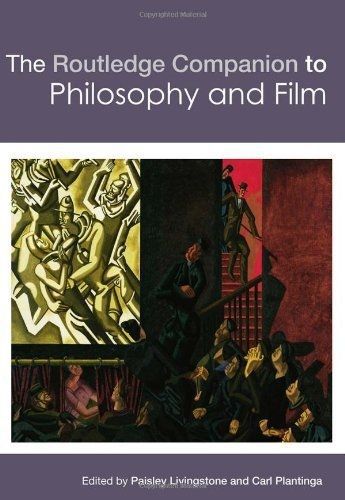
The Routledge Companion to Philosophy and Filmis the first comprehensive volume to explore the main themes, topics, thinkers and issues in philosophy and film. The Companionfeatures sixty specially commissioned chapters from international scholars and is divided into four clear parts: ⬢ issues and concepts ⬢ authors and trends ⬢ genres ⬢ film as philosophy. Part one is a comprehensive section examining key concepts, including chapters on acting, censorship, character, depiction, ethics, genre, interpretation, narrative, reception and spectatorship and style. Part two covers authors and scholars of film and significant theories Part three examines genres such as documentary, experimental cinema, horror, comedy and tragedy. Part four includes chapters on key directors such as Tarkovsky, Bergman and Terrence Malick and on particular films including Memento. Each chapter includes a section of annotated further reading and is cross-referenced to related entries. The Routledge Companion to Philosophy and Filmis essential reading for anyone interested in philosophy of film, aesthetics and film and cinema studies.
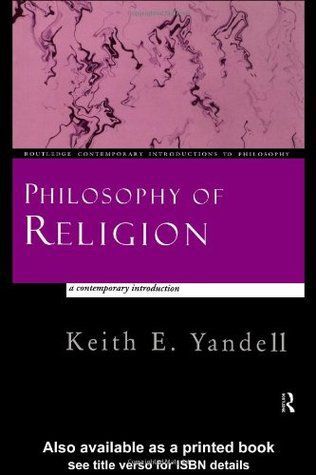
Philosophy of Religion provides an account of the central issues and viewpoints in the philosophy of religion but also shows how such issues can be rationally assessed and in what ways competing views can be rationally assessed. It includes major philosophical figures in religious traditions as well as discussions by important contemporary philosophers. Keith Yandell deals lucidly and constructively with representative views from Judaism, Christianity, Islam, Hinduism, Buddhism, and Jainism. This book will appeal to students of both philosophy and religion as well as to the general reader interested in the subject.Unique features of Philosophy of Religion: * key reading and new reading in the subject area* questions at the ends of chapters* a glossary of philosophical terms* annotated further reading
Why do we cry at the movies? What is the best way to manage destructive feelings such as jealousy? Although emotions pervade our lives, their nature, causes, and effects have only recently been studied by social scientists and philosophers. Despite growing scientific interest in the subject, empirical findings have not yet caught up with our intuitive knowledge. In this book Aaron Ben-Ze’ev carries out what he calls “a careful search for general patterns in the primeval jungle of emotions.” In an engaging, informal style he draws on a variety of theoretical approaches and popular sources to produce a coherent account of emotions in all their subtlety. All of the ideas are illustrated with examples drawn from everyday life.The book is organized into two parts. The first presents an overall conceptual framework for understanding emotions. It looks at the typical characteristics and components of emotions, distinguishes emotions from other affective phenomena, classifies the emotions, and covers such related issues as emotional intelligence, regulating emotions, and emotions and morality. The second part discusses individual emotions, including envy, jealousy, pleasure-in-others’-misfortune, pity, compassion, anger, hate, disgust, love, sexual desire, happiness, sadness, pride, regret, and shame. The text is laced with insightful and often amusing quotations from sources ranging from Mae West to Montesquieu.
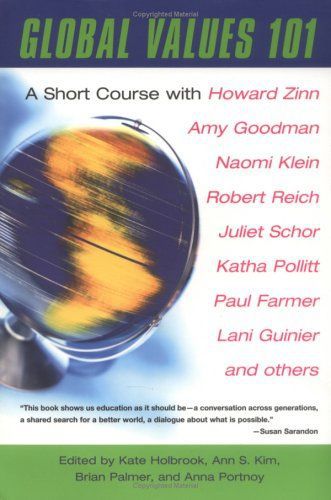
Global Values 101 grew out of one of the most popular courses ever offered at Harvard University, in which some of the most original thinkers of our day sat down with students and explored how ideas have made them—and can make us—more engaged, involved, and compassionate citizens. They addressed the topics of war, religion, the global economy, and social change: Amy Goodman, host of the popular radio program Democracy Now as well as the author of The Exception to the Ruler, speaks about the role of the citizen and the media in a free society; Lani Guinier reveals that students’ SAT scores more accurately describe the kind of car their parents drive than the grades they will earn in college and shows the way to a more equitable college admissions system; Juliet Schor, author of Born to Buy and The Overspent American, discusses the evolution of personal responsibility in a consumer culture; and Robert Reich, author of Locked in the Cabinet, tells us to get involved in politics because, if you want to see change, you have to make change happen.For anyone who has been moved by idealism and wondered how to become an engaged citizen, this collection offers a range of stories on how progressive ideals can inform, inspire, engage, and ultimately change lives.Other contributors include Harvey Cox, Katha Pollitt, Howard Zinn, Diana Eck, and Naomi Klein.
ما از اخلاق چه انتظاری داریم؟ این سوال شاید تاحدودی برای عموم مردم و یا متخصصان این رشته قابل پاسخ باشد؛ اینکه خوب بودن را به ما بیاموزد و در تنظیم روابط فردی م...

جشن کتاب تهران به ایستگاه سی و یکم رسیده است. حال و احوال نشر کتاب خوب نیست و باید فرهنگدوستان را به خرید و هدیه دادن کتاب ترغیب نمود. خانه اخلاقپژوهان جوان ب...

بنیاد کتابهای اخلاق اسلامی عمدتا پالایش جان از آلودگیها و آراستن آن به زیباییها است. اندیشه محوری این قبیل کتابها آن است که انسان فعلی آنی نیست که باید باشد...

-
0 Comments