Notice: تابع WP_Block_Type_Registry::register به طورنادرست فراخوانی شد. نامهای نوع بلوک نباید حروف بزرگ داشته باشند. لطفاً برای اطلاعات بیشتر، اشکال زدایی در وردپرس را مشاهده کنید. (این پیام در نگارش 5.0.0 افزوده شده است.) in /home/ethicsho/public_html/wp-includes/functions.php on line 5313
Warning: Use of undefined constant TDC_PATH_LEGACY - assumed 'TDC_PATH_LEGACY' (this will throw an Error in a future version of PHP) in /home/ethicsho/public_html/wp-content/plugins/td-composer/td-composer.php on line 109
Warning: Use of undefined constant TDSP_THEME_PATH - assumed 'TDSP_THEME_PATH' (this will throw an Error in a future version of PHP) in /home/ethicsho/public_html/wp-content/plugins/td-composer/td-composer.php on line 113 بایگانیهای 0-19-824495-9 - خانه اخلاق پژوهان جوان Notice: Trying to access array offset on value of type bool in /home/ethicsho/public_html/wp-content/plugins/wp-ulike/inc/general-functions.php on line 807
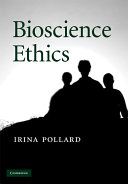
Bioscience ethics facilitates free and accurate information transfer from applied science to applied bioethics. Its major elements are: increased understanding of biological systems, responsible use of technology, and attuning ethnocentric debates to new scientific insights. Pioneered by Irina Pollard in 1994, bioscience ethics has become an internationally recognized discipline, interfacing science and bioethics within professional perspectives such as medical, legal, bio-engineering, and economics. Written for students and professionals alike, the fundamental feature of this book is its breadth, important because bioscience ethics interweaves many diverse subjects in the process of gathering specialist scientific knowledge for bioethical review. It contains chapters which embrace topics affecting human reproduction, end-of-life care and euthanasia, challenge human-dominated ecosystems, and review population growth, economic activity and warfare. A background section describes the evolution of ethical consciousness, explores the future, and proposes that the reworking of ethical boundaries can enhance mature decision-making in harmony with changing technology.
Simon Blackburn puts forward a compelling and original philosophy of human motivation and morality. Why do we behave as we do? Can we improve? Is our ethics at war with our passions, or is it an upshot of those passions? Blackburn seeks the answers to such questions in an exploration of the nature of moral emotions and the structures of human motivation. He develops a naturalistic ethics, which integrates our understanding of ethics with the rest of our understanding of the world we live in. His theory does not debunk the ethical by reducing it to the non-ethical, and it banishes the spectres of scepticism and relativism that have haunted recent moral philosophy. Ruling Passions reveals how ethics can maintain its authority even though it is rooted in the very emotions and motivations that it exists to control.
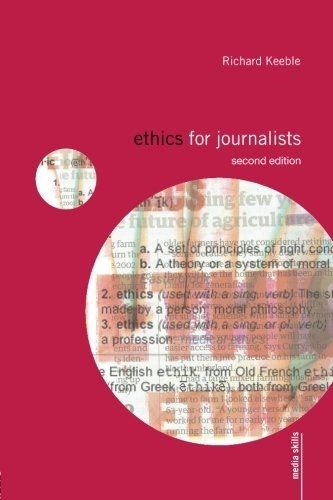
Ethics for Journalists tackles many of the issues which journalists face in their everyday lives – from the media’s supposed obsession with sex, sleaze and sensationalism, to issues of regulation and censorship. Its accessible style and question and answer approach highlights the relevance of ethical issues for everyone involved in journalism, both trainees and professionals, whether working in print, broadcast or new media.Ethics for Journalists provides a comprehensive overview of ethical dilemmas and features interviews with a number of journalists. Presenting a range of imaginative strategies for improving media standards and supported by a thorough bibliography and a wide ranging list of websites.
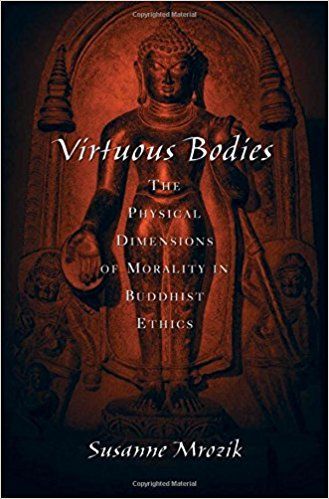
Virtuous Bodies breaks new ground in the field of Buddhist ethics by investigating the diverse roles bodies play in ethical development. Traditionally, Buddhists assumed a close connection between body and morality. Thus Buddhist literature contains descriptions of living beings that stink with sin, are disfigured by vices, or are perfumed and adorned with virtues. Taking an influential early medieval Indian Mahayana Buddhist text-Santideva’s Compendium of Training (Siksasamuccaya)-as a case study, Susanne Mrozik demonstrates that Buddhists regarded ethical development as a process of physical and moral transformation. Mrozik chooses The Compendium of Training because it quotes from over one hundred Buddhist scriptures, allowing her to reveal a broader Buddhist interest in the ethical significance of bodies. The text is a training manual for bodhisattvas, especially monastic bodhisattvas. In it, bodies function as markers of, and conditions for, one’s own ethical development. Most strikingly, bodies also function as instruments for the ethical development of others. When living beings come into contact with the virtuous bodies of bodhisattvas, they are transformed physically and morally for the better. Virtuous Bodies explores both the centrality of bodies to the bodhisattva ideal and the corporeal specificity of that ideal. Arguing that the bodhisattva ideal is an embodied ethical ideal, Mrozik poses an array of fascinating questions: What does virtue look like? What kinds of physical features constitute virtuous bodies? What kinds of bodies have virtuous effects on others? Drawing on a range of contemporary theorists, this book engages in a feminist hermeneutics of recovery and suspicion in order to explore the ethical resources Buddhism offers to scholars and religious practitioners interested in the embodied nature of ethical ideals.
Is there a “right to die”? Should the elderly or the terminally ill be allowed to take their own lives? Should the families of comatose patients be permitted to decide when to “pull the plug”? Do “living wills” have full legal standing? Questions like these have been brought to the forefront of national attention by cases such as the battle in Terri Schiavo’s family. Offering excerpts from court decisions, plenty of full-color photographs, and other essential resources, “The Right to Die” examines this incendiary issue by illuminating the arguments from both sides.
ما از اخلاق چه انتظاری داریم؟ این سوال شاید تاحدودی برای عموم مردم و یا متخصصان این رشته قابل پاسخ باشد؛ اینکه خوب بودن را به ما بیاموزد و در تنظیم روابط فردی م...

جشن کتاب تهران به ایستگاه سی و یکم رسیده است. حال و احوال نشر کتاب خوب نیست و باید فرهنگدوستان را به خرید و هدیه دادن کتاب ترغیب نمود. خانه اخلاقپژوهان جوان ب...

بنیاد کتابهای اخلاق اسلامی عمدتا پالایش جان از آلودگیها و آراستن آن به زیباییها است. اندیشه محوری این قبیل کتابها آن است که انسان فعلی آنی نیست که باید باشد...

-
0 Comments