Notice: تابع WP_Block_Type_Registry::register به طورنادرست فراخوانی شد. نامهای نوع بلوک نباید حروف بزرگ داشته باشند. لطفاً برای اطلاعات بیشتر، اشکال زدایی در وردپرس را مشاهده کنید. (این پیام در نگارش 5.0.0 افزوده شده است.) in /home/ethicsho/public_html/wp-includes/functions.php on line 5313
Warning: Use of undefined constant TDC_PATH_LEGACY - assumed 'TDC_PATH_LEGACY' (this will throw an Error in a future version of PHP) in /home/ethicsho/public_html/wp-content/plugins/td-composer/td-composer.php on line 109
Warning: Use of undefined constant TDSP_THEME_PATH - assumed 'TDSP_THEME_PATH' (this will throw an Error in a future version of PHP) in /home/ethicsho/public_html/wp-content/plugins/td-composer/td-composer.php on line 113 بایگانیهای 0-19-515146-1 - خانه اخلاق پژوهان جوان Notice: Trying to access array offset on value of type bool in /home/ethicsho/public_html/wp-content/plugins/wp-ulike/inc/general-functions.php on line 807
Sets out modern contributions to Christian ethics alongside texts from Augustine, Aquinas and Luther. The modern writers range from thinkers such as Niebuhr, Barth and Bonhoeffer to liberation and Third World theologians. The differing ethical positions and arguments are examined together with social and historical factors which shaped them.
Self-deception raises complex questions about the nature of belief and the structure of the human mind. In this book, Alfred Mele addresses four of the most critical of these questions: What is it to deceive oneself? How do we deceive ourselves? Why do we deceive ourselves? Is self-deception really possible?Drawing on cutting-edge empirical research on everyday reasoning and biases, Mele takes issue with commonplace attempts to equate the processes of self-deception with those of stereotypical interpersonal deception. Such attempts, he demonstrates, are fundamentally misguided, particularly in the assumption that self-deception is intentional. In their place, Mele proposes a compelling, empirically informed account of the motivational causes of biased beliefs. At the heart of this theory is an appreciation of how emotion and motivation may, without our knowing it, bias our assessment of evidence for beliefs. Highlighting motivation and emotion, Mele develops a pair of approaches for explaining the two forms of self-deception: the “straight” form, in which we believe what we want to be true, and the “twisted” form, in which we believe what we wish to be false.Underlying Mele’s work is an abiding interest in understanding and explaining the behavior of real human beings. The result is a comprehensive, elegant, empirically grounded theory of everyday self-deception that should engage philosophers and social scientists alike.
The fusion between virtuality and reality has created a new quality of experience establishing metaverses and virtual worlds. Second Life, Twinity, Entropia Universe or Fregger have experienced rapid growth in recent years and show no signs of slowing down. Not only have countless companies discovered these “virtureal worlds” as marketplaces, but so have fraudsters and other criminals. In this book, European experts from different academic disciplines show how to meet the new challenges arising from virtual worlds. They discuss the reasons for and the impacts of these new forms of criminality as well as the necessity and means of combating them. Moreover, other fundamental issues are examined, such as the addictive potential of virtual-world use, media violence, and conflict resolution problems arising in the context of virtual worlds.
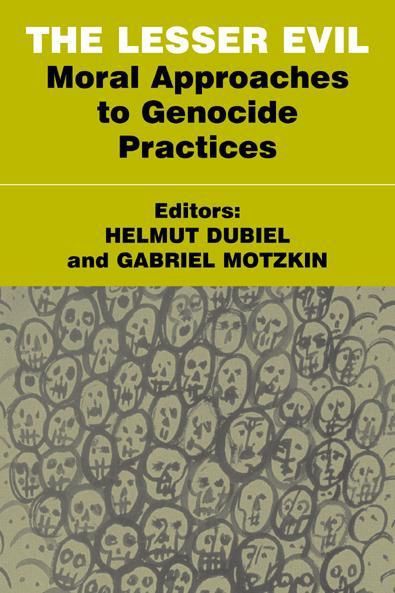
This book compares the genocide perpetrated by both Nazism and Communism. Both political systems were evil yet, when compared, they lose some of their power to shock. The book considers: the different receptions given to Nazism and Communism; whether people can behave “rationally” in contexts of great wickedness; whether the Communist or Nazi worldview was more “rational” the relationship between post-war memories and history; and how atrocities are remembered by society and how intellectuals construct them. The editors argue that these twentieth-century evils invite comparison if only because of their traumatic effects and that we have an obligation to understand what happened and an obligation to understand how we have dealt with it.
ما از اخلاق چه انتظاری داریم؟ این سوال شاید تاحدودی برای عموم مردم و یا متخصصان این رشته قابل پاسخ باشد؛ اینکه خوب بودن را به ما بیاموزد و در تنظیم روابط فردی م...

جشن کتاب تهران به ایستگاه سی و یکم رسیده است. حال و احوال نشر کتاب خوب نیست و باید فرهنگدوستان را به خرید و هدیه دادن کتاب ترغیب نمود. خانه اخلاقپژوهان جوان ب...

بنیاد کتابهای اخلاق اسلامی عمدتا پالایش جان از آلودگیها و آراستن آن به زیباییها است. اندیشه محوری این قبیل کتابها آن است که انسان فعلی آنی نیست که باید باشد...

-
0 Comments