Notice: تابع WP_Block_Type_Registry::register به طورنادرست فراخوانی شد. نامهای نوع بلوک نباید حروف بزرگ داشته باشند. لطفاً برای اطلاعات بیشتر، اشکال زدایی در وردپرس را مشاهده کنید. (این پیام در نگارش 5.0.0 افزوده شده است.) in /home/ethicsho/public_html/wp-includes/functions.php on line 5313
Warning: Use of undefined constant TDC_PATH_LEGACY - assumed 'TDC_PATH_LEGACY' (this will throw an Error in a future version of PHP) in /home/ethicsho/public_html/wp-content/plugins/td-composer/td-composer.php on line 109
Warning: Use of undefined constant TDSP_THEME_PATH - assumed 'TDSP_THEME_PATH' (this will throw an Error in a future version of PHP) in /home/ethicsho/public_html/wp-content/plugins/td-composer/td-composer.php on line 113 بایگانیهای 0-19-289188-X - خانه اخلاق پژوهان جوان Notice: Trying to access array offset on value of type bool in /home/ethicsho/public_html/wp-content/plugins/wp-ulike/inc/general-functions.php on line 807
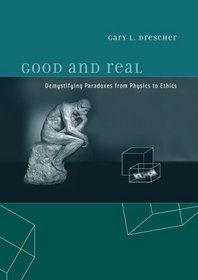
In Good and Real, Gary Drescher examines a series of provocative paradoxes about consciousness, choice, ethics, quantum mechanics, and other topics, in an effort to reconcile a purely mechanical view of the universe with key aspects of our subjective impressions of our own existence.Many scientists suspect that the universe can ultimately be described by a simple (perhaps even deterministic) formalism; all that is real unfolds mechanically according to that formalism. But how, then, is it possible for us to be conscious, or to make genuine choices? And how can there be an ethical dimension to such choices? Drescher sketches computational models of consciousness, choice, and subjunctive reasoning—what would happen if this or that were to occur?—to show how such phenomena are compatible with a mechanical, even deterministic universe. Analyses of Newcomb’s Problem (a paradox about choice) and the Prisoner’s Dilemma (a paradox about self-interest vs. altruism, arguably reducible to Newcomb’s Problem) help bring the problems and proposed solutions into focus. Regarding quantum mechanics, Drescher builds on Everett’s relative-state formulation—but presenting a simplified formalism, accessible to laypersons—to argue that, contrary to some popular impressions, quantum mechanics is compatible with an objective, deterministic physical reality, and that there is no special connection between quantum phenomena and consciousness.In each of several disparate but intertwined topics ranging from physics to ethics, Drescher argues that a missing technical linchpin can make the quest for objectivity seem impossible, until the elusive technical fix is at hand.
By juxtaposing issues and problems, Donald Preziosi’s latest collection of essays, In the Aftermath of Art, opens up multiple interpretive possibilities by bringing to the surface hidden resonances in the implications of each text. In re-reading his own writings, Preziosi opens up alternatives to contemporary discourses on art history and visual culture. A critical commentary by critic, historian, and theorist Johanne Lamoureux complements the author’s own introduction, mirroring the multiple interpretations within the essays themselves.
Edited by four leading members of the new generation of medical and healthcare ethicists working in the UK, respected worldwide for their work in medical ethics, Principles of Health Care Ethics, Second Edition is a standard resource for students, professionals, and academics wishing to understand current and future issues in healthcare ethics. With a distinguished international panel of contributors working at the leading edge of academia, this volume presents a comprehensive guide to the field, with state of the art introductions to the wide range of topics in modern healthcare ethics, from consent to human rights, from utilitarianism to feminism, from the doctor-patient relationship to xenotransplantation. This volume is the Second Edition of the highly successful work edited by Professor Raanan Gillon, Emeritus Professor of Medical Ethics at Imperial College London and former editor of the Journal of Medical Ethics, the leading journal in this field. Developments from the First Edition include: The focus on ‘Four Principles Method’ is relaxed to cover more different methods in health care ethics. More material on new medical technologies is included, the coverage of issues on the doctor/patient relationship is expanded, and material on ethics and public health is brought together into a new section.
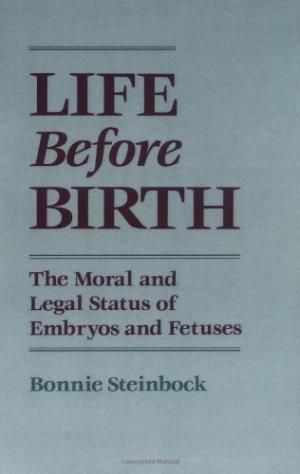
Life Before Birth provides a coherent framework for addressing bioethical issues in which the moral status of embryos and fetuses is relevant. It is based on the “interest view” which ascribes moral standing to beings with interests, and connects the possession of interests with the capacity for conscious awareness or sentience. The theoretical framework is applied to ethical and legal topics, including abortion, prenatal torts, wrongful life, the crime of feticide, substance abuse by pregnant women, compulsory cesareans, assisted reproduction, and stem cell research. Along the way, difficult philosophical problems, such as identity and the non-identity problem are thoroughly explored. The book will be of interest not only to philosophers, but also physicians, lawyers, policy makers, and anyone perplexed by the many difficulties surrounding the unborn.”Bonnie Steinbock’s excellent book is . . . consistent, thoroughgoing, and intelligible.” –Nature”Steinbock’s book is valuable for all interested in the ethical/legal issues surrounding abortion, prenatal injury and liability, maternal-fetal conflict, and fetal/embryo research. The author provides an excellent historical overview of these issues, but she also addresses the issues from the stance of a particular theory of moral status, namely, interest theory. This gives coherence to her discussion as well as allowing testing of the viability of interest theory.” –Choice”A focused, lucid, analytically fine-grained discussion of a wide variety of problems. . . extremely useful as a survey of the current state of the debate.” –Religious Studies Review”Merits serious consideration by physicians. Steinbock’s interests-based approach treats all questions as open — another and most welcome breath of fresh air.” -New England Journal of Medicine”An extremely valuable contribution to the literature. The author carefully identifies the many bioethical issues to which the status of embryos and fetuses is relevant….She thoroughly reviews the extensive medical, bioethical, and legal literature on all of these issues, offering well-developed critiques of many standard positions. She articulates and thoughtfully defends interesting positions on all of theses topics. Anyone with an interest in these issues will learn a great deal from her knowledgeable and judicious treatment of them.” — The Journal of Clinical Ethics
Using a linguistic point of view, The Language of Confession, Interrogation, and Deception is a practical explanation of how confessions work, written by the “father of forensic linguistics”, Roger W. Shuy. Using his 1993 benchmark work, Language Crimes as his model, Shuy examines criminal confessions, the interrogations that elicit them, and the deceptive language that plays a role in the confession event. He presents transcripts from numerous interrogations and analyzes how language is used, how constitutional rights are not protected, consistency and truthfulness, suggestibility, written confessions, as well as unvalidated confessions. He concludes the volume with explicit advice on how to conduct interrogations that will yield credible evidence. A landmark volume with cross-disciplinary applications, The Language of Confession, Interrogation, and Deception is useful for professionals and academics in linguistics, forensic linguistics, criminal justice, communication, and interpersonal violence.
ما از اخلاق چه انتظاری داریم؟ این سوال شاید تاحدودی برای عموم مردم و یا متخصصان این رشته قابل پاسخ باشد؛ اینکه خوب بودن را به ما بیاموزد و در تنظیم روابط فردی م...

جشن کتاب تهران به ایستگاه سی و یکم رسیده است. حال و احوال نشر کتاب خوب نیست و باید فرهنگدوستان را به خرید و هدیه دادن کتاب ترغیب نمود. خانه اخلاقپژوهان جوان ب...

بنیاد کتابهای اخلاق اسلامی عمدتا پالایش جان از آلودگیها و آراستن آن به زیباییها است. اندیشه محوری این قبیل کتابها آن است که انسان فعلی آنی نیست که باید باشد...

-
0 Comments