Notice: تابع WP_Block_Type_Registry::register به طورنادرست فراخوانی شد. نامهای نوع بلوک نباید حروف بزرگ داشته باشند. لطفاً برای اطلاعات بیشتر، اشکال زدایی در وردپرس را مشاهده کنید. (این پیام در نگارش 5.0.0 افزوده شده است.) in /home/ethicsho/public_html/wp-includes/functions.php on line 5313
Warning: Use of undefined constant TDC_PATH_LEGACY - assumed 'TDC_PATH_LEGACY' (this will throw an Error in a future version of PHP) in /home/ethicsho/public_html/wp-content/plugins/td-composer/td-composer.php on line 109
Warning: Use of undefined constant TDSP_THEME_PATH - assumed 'TDSP_THEME_PATH' (this will throw an Error in a future version of PHP) in /home/ethicsho/public_html/wp-content/plugins/td-composer/td-composer.php on line 113 بایگانیهای 0-02-865781-0 - خانه اخلاق پژوهان جوان Notice: Trying to access array offset on value of type bool in /home/ethicsho/public_html/wp-content/plugins/wp-ulike/inc/general-functions.php on line 807
Behind headlines on the conflict in Iraq and global terrorism, a much deeper battle is raging over children and the values they should adopt. Political and religious leaders including Blair and Bush have been joined the popular press in Enlightenment-bashing and bitter attacks on “liberal parenting,” calling for a return to authority and religious tradition. How do we raise good children? How do we make good citizens? In defiant yet acute fashion, Stephen Law urges us to re-evaluate the liberal tradition of thinking about morality. Tackling authoritarian rhetoric head-on, he argues that children should learn about right and wrong and respect for others, but that their education should be grounded in the hard-won values of the Enlightenment. Taking on neo-conservatives and religious and media commentators, The War for Children’s Minds is a candid and controversial call for a liberal, philosophically informed approach to raising children. Rejecting accusations that liberal parenting is aSixties hangover that entails an aimless “whatever” attitude to morality, Stephen Law exposes the weaknesses of arguments calling for a return to authoritarian styles of moral education. He clearly shows that thinking for oneself does not mean that all moral points of view are equally good, or that we must reject faith in order to think freely. A staunch defence of the humane, liberal life The War for Children’s Minds is a much-needed guide to an urgent moral conundrum.
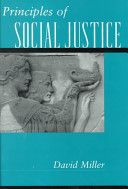
Social justice has been the animating ideal of democratic governments throughout the twentieth century. Even those who oppose it recognize its potency. Yet the meaning of social justice remains obscure, and existing theories put forward by political philosophers to explain it have failed to capture the way people in general think about issues of social justice. This book develops a new theory. David Miller argues that principles of justice must be understood contextually, with each principle finding its natural home in a different form of human association. Because modern societies are complex, the theory of justice must be complex, too. The three primary components in Miller’s scheme are the principles of desert, need, and equality.The book uses empirical research to demonstrate the central role played by these principles in popular conceptions of justice. It then offers a close analysis of each concept, defending principles of desert and need against a range of critical attacks, and exploring instances when justice requires equal distribution and when it does not. Finally, it argues that social justice understood in this way remains a viable political ideal even in a world characterized by economic globalization and political multiculturalism. Accessibly written, and drawing upon the resources of both political philosophy and the social sciences, this book will appeal to readers with interest in public policy as well as to students of politics, philosophy, and sociology.
The position of rational egoism centres upon the thought that the rational thing to do must be to pursue one’s own self-interest. Focusing on the work of Hobbes and Sidgwick, this book is an extensive history and evaluation of rational egoism. They are, after the ancients, the foremost exponents of rational egoism. He also considers other figures – Grotius, Samuel Clarke, John Clarke, Butler, Hume, Reid, Kant, Paley and Bentham – and a related position: the instrumental theory of rationality. Robert Shaver’s conclusion is that none of the arguments for rational egoism or the instrumental theory are cogent. This is an important book not just for historians of philosophy but for all readers in philosophy or the social sciences interested in theories of morality and rationality.
The Cambridge Companion to the Scottish Enlightenment offers a philosophical perspective on an eighteenth-century movement that has been profoundly influential on western culture. A distinguished team of contributors examines the writings of David Hume, Adam Smith, Thomas Reid, Adam Ferguson, Colin Maclaurin and other Scottish thinkers, in fields including philosophy, natural theology, economics, anthropology, natural science and law. In addition, the contributors relate the Scottish Enlightenment to its historical context and assess its impact and legacy in Europe, America and beyond. The result is a comprehensive and accessible volume that illuminates the richness, the intellectual variety and the underlying unity of this important movement. It will be of interest to a wide range of readers in philosophy, theology, literature and the history of ideas.
ما از اخلاق چه انتظاری داریم؟ این سوال شاید تاحدودی برای عموم مردم و یا متخصصان این رشته قابل پاسخ باشد؛ اینکه خوب بودن را به ما بیاموزد و در تنظیم روابط فردی م...

جشن کتاب تهران به ایستگاه سی و یکم رسیده است. حال و احوال نشر کتاب خوب نیست و باید فرهنگدوستان را به خرید و هدیه دادن کتاب ترغیب نمود. خانه اخلاقپژوهان جوان ب...

بنیاد کتابهای اخلاق اسلامی عمدتا پالایش جان از آلودگیها و آراستن آن به زیباییها است. اندیشه محوری این قبیل کتابها آن است که انسان فعلی آنی نیست که باید باشد...

-
0 Comments