Notice: تابع WP_Block_Type_Registry::register به طورنادرست فراخوانی شد. نامهای نوع بلوک نباید حروف بزرگ داشته باشند. لطفاً برای اطلاعات بیشتر، اشکال زدایی در وردپرس را مشاهده کنید. (این پیام در نگارش 5.0.0 افزوده شده است.) in /home/ethicsho/public_html/wp-includes/functions.php on line 5313
Warning: Use of undefined constant TDC_PATH_LEGACY - assumed 'TDC_PATH_LEGACY' (this will throw an Error in a future version of PHP) in /home/ethicsho/public_html/wp-content/plugins/td-composer/td-composer.php on line 109
Warning: Use of undefined constant TDSP_THEME_PATH - assumed 'TDSP_THEME_PATH' (this will throw an Error in a future version of PHP) in /home/ethicsho/public_html/wp-content/plugins/td-composer/td-composer.php on line 113 بایگانیهای 953 - خانه اخلاق پژوهان جوان Notice: Trying to access array offset on value of type bool in /home/ethicsho/public_html/wp-content/plugins/wp-ulike/inc/general-functions.php on line 807
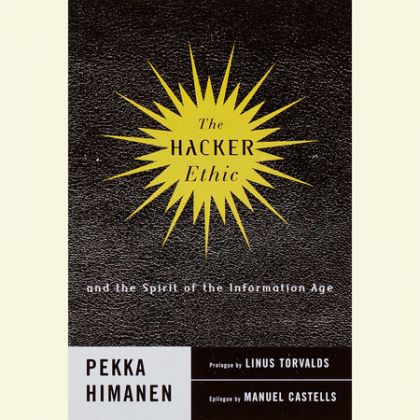
You may be a hacker and not even know it. Being a hacker has nothing to do with cyberterrorism, and it doesn’t even necessarily relate to the open-source movement. Being a hacker has more to do with your underlying assumptions about stress, time management, work, and play. It’s about harmonizing the rhythms of your creative work with the rhythms of the rest of your life so that they amplify each other. It is a fundamentally new work ethic that is revolutionizing the way business is being done around the world.Without hackers there would be no universal access to e-mail, no Internet, no World Wide Web, but the hacker ethic has spread far beyond the world of computers. It is a mind-set, a philosophy, based on the values of play, passion, sharing, and creativity, that has the potential to enhance every individual’s and company’s productivity and competitiveness. Now there is a greater need than ever for entrepreneurial versatility of the sort that has made hackers the most important innovators of our day. Pekka Himanen shows how we all can make use of this ongoing transformation in the way we approach our working lives.
Bringing together a distinguished array of researchers and scholars, this volume reviews the breadth of current knowledge on the psychology of forgiveness. In addition to presenting cutting-edge theory and research, the book outlines crucial issues that must be addressed to advance the state of the science in years to come. The first section provides a historical and conceptual overview, examining definitional problems and giving special attention to religious and cultural influences on how forgiveness is understood and experienced. The biological, developmental, social, and personality foundations of forgiveness are then explored. The final section covers applications in clinical research and practice, including guidelines for studying and applying forgiveness-based strategies in psychotherapy, counseling, and interventions to promote health. This volume will be of interest to a broad interdisciplinary audience of researchers, educators, students, and practicing professionals.
Section I examines historical philosophical understandings of expertise in order to situate the current institution of bioethics. Section II focuses on philosophical analyses of the concept of expertise, asking, among other things, how it should be understood, how it can be acquired, and what such expertise warrants. Finally, section III addresses topics in bioethics and how ethics expertise should or should not be brought to bear in these areas, including expertise in the court room, in the hospital room, in the media, and in making policy. 2. A GUIDED HISTORICAL TOUR As Scott LaBarge points out, Plato’s dialogues can be viewed as an extended treatment of the concept of moral expertise, so it is fitting to begin the volume with an examination of “Socrates and Moral Expertise”. Given Socrates’ protestations (the Oracle at Delphi notwithstanding) that he knows nothing, LaBarge observes that it would be interesting to determine both what a Socratic theory of moral expertise might be and whether Socrates qualified as such an expert. Plato’s model of moral expertise is what LaBarge calls “demonstrable expertise”, which is concerned mainly with the ability to attain a goal and to explain how one did it. The problem with this account is that when one tries to solve the various problems in the model – for example, allowing that moral expertise is not an all-or-nothing skill – then one is immediately faced with the “credentials problem”. As LaBarge puts it, “. . .
Social justice has been the animating ideal of democratic governments throughout the twentieth century. Even those who oppose it recognize its potency. Yet the meaning of social justice remains obscure, and existing theories put forward by political philosophers to explain it have failed to capture the way people in general think about issues of social justice. This book develops a new theory. David Miller argues that principles of justice must be understood contextually, with each principle finding its natural home in a different form of human association. Because modern societies are complex, the theory of justice must be complex, too. The three primary components in Miller’s scheme are the principles of desert, need, and equality.The book uses empirical research to demonstrate the central role played by these principles in popular conceptions of justice. It then offers a close analysis of each concept, defending principles of desert and need against a range of critical attacks, and exploring instances when justice requires equal distribution and when it does not. Finally, it argues that social justice understood in this way remains a viable political ideal even in a world characterized by economic globalization and political multiculturalism. Accessibly written, and drawing upon the resources of both political philosophy and the social sciences, this book will appeal to readers with interest in public policy as well as to students of politics, philosophy, and sociology.
ما از اخلاق چه انتظاری داریم؟ این سوال شاید تاحدودی برای عموم مردم و یا متخصصان این رشته قابل پاسخ باشد؛ اینکه خوب بودن را به ما بیاموزد و در تنظیم روابط فردی م...

جشن کتاب تهران به ایستگاه سی و یکم رسیده است. حال و احوال نشر کتاب خوب نیست و باید فرهنگدوستان را به خرید و هدیه دادن کتاب ترغیب نمود. خانه اخلاقپژوهان جوان ب...

بنیاد کتابهای اخلاق اسلامی عمدتا پالایش جان از آلودگیها و آراستن آن به زیباییها است. اندیشه محوری این قبیل کتابها آن است که انسان فعلی آنی نیست که باید باشد...

-
0 Comments