Notice: تابع WP_Block_Type_Registry::register به طورنادرست فراخوانی شد. نامهای نوع بلوک نباید حروف بزرگ داشته باشند. لطفاً برای اطلاعات بیشتر، اشکال زدایی در وردپرس را مشاهده کنید. (این پیام در نگارش 5.0.0 افزوده شده است.) in /home/ethicsho/public_html/wp-includes/functions.php on line 5313
Warning: Use of undefined constant TDC_PATH_LEGACY - assumed 'TDC_PATH_LEGACY' (this will throw an Error in a future version of PHP) in /home/ethicsho/public_html/wp-content/plugins/td-composer/td-composer.php on line 109
Warning: Use of undefined constant TDSP_THEME_PATH - assumed 'TDSP_THEME_PATH' (this will throw an Error in a future version of PHP) in /home/ethicsho/public_html/wp-content/plugins/td-composer/td-composer.php on line 113 بایگانیهای 926 - خانه اخلاق پژوهان جوان Notice: Trying to access array offset on value of type bool in /home/ethicsho/public_html/wp-content/plugins/wp-ulike/inc/general-functions.php on line 807
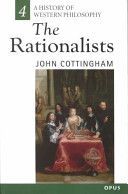
The seventeenth century saw a major revolution in our ways of thinking about such issues as the method appropriate to philosophy and science, the relation between mind and body, the nature of substance, and the place of humanity in nature. While not neglecting the lesser but still influential figures, such as Arnauld and Malebranche, John Cottingham focuses primarily on the three great “rationalists”: Descartes, Spinoza, and Leibniz. He examines how they approached central problems of philosophy, and shows how closely their ideas are related, despite the radically different philosophical systems they produced. He not only places the major thinkers in their historical and philosophical contexts, but engages their ideas in a vigorously critical way, revealing their capacity to throw light on major philosophical topics that are still very much alive today.
Alain de Botton’s bestselling The Consolations of Philosophy–later made into a six-part TV series–has helped popularize ancient philosophy and especially the work of Seneca. This superb volume offers the finest translation of Seneca’s dialogues and essays in print, capturing the full range of his philosophical interests. Here the Stoic philosopher outlines his thoughts on how to live in a troubled world. Tutor to the young emperor Nero, Seneca wrote exercises in practical philosophy that draw upon contemporary Roman life and illuminate the intellectual concerns of the day. They also have much to say to the modern reader, as Seneca ranges widely across subjects such as the shortness of life, tranquility of mind, anger, mercy, happiness, and grief at the loss of a loved one. Seneca’s accessible, aphoristic style makes his writing especially attractive as an introduction to Stoic philosophy, and belies its reputation for austerity and dogmatism. This edition combines a clear and modern translation by John Davies with Tobias Reinhardt’s fascinating introduction to Seneca’s career, literary style, and influence, including a superb summary of Stoic philosophy and Seneca’s interpretation of it. The book’s notes are the fullest of any comparable edition.
Dealing with a diverse set of problems in practical and theoretical ethics, these fourteen essays, three of them previously unpublished, reconfirm Joel Feinberg’s leading position in the field of legal philosophy. With a clarity and humor that will be familiar to readers of his other works, Feinberg writes on topics including “wrongful life” suits in the law of torts, or whether there is any sense in the remark that a person is so badly off that he would be better off not existing at all; the morality of abortion; educational options; free expression; civil disobedience; and the duty of easy rescue in criminal law. He continues with a three-part defense of moral rights in the abstract, a discussion of voluntary euthanasia, and an inquiry into arguments of various kinds for not granting legal rights in enforcement of a person’s acknowledged moral rights. This collection concludes with two essays dealing with concepts used in appraising the whole of a person’s life: absurdity and self-fulfillment, and their interplay.Dealing with a diverse set of problems in practical and theoretical ethics, these fourteen essays, three of them previously unpublished, reconfirm Joel Feinberg’s leading position in the field of legal philosophy. With a clarity and humor that will be familiar to readers of his other works, Feinberg writes on topics including “wrongful life” suits in the law of torts, or whether there is any sense in the remark that a person is so badly off that he would be better off not existing at all; the morality of abortion; educational options; free expression; civil disobedience; and the duty of easy rescue in criminal law. He continues with a three-part defense of moral rights in theabstract, a discussion of voluntary euthanasia, and an inquiry into arguments of various kinds for not granting legal rights in enforcement of a person’s acknowledged moral rights. This collection concludes with two essays dealing with concepts used in appraising the whole of a person’s life: absurdity and self-fulfillment, and their interplay.
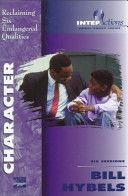
There are no discount character stores.Courage. Discipline. Confidence. Patience. Endurance. Contentment. They’re qualities that can take a lifetime to acquire. Qualities money can’t buy. But here’s good news: God says you can have them all!In Character, you will discover how firmly God is committed to forming noble qualities within you. He wants your character to deepen even more than you do–and He has the power to do something about it! If you’re ready to journey toward the kind of character you’ve always admired, here is a path of radical, God-empowered change and growth–and a transformed, more Christ-like you.Interactions–a powerful, challenging tool for building deep relationships between you and your group member, and you and God. Interaction is far more than another group Bible study. It’s a cutting-edge series designed to help small group participants develop into fully devoted followers of Christ.
ما از اخلاق چه انتظاری داریم؟ این سوال شاید تاحدودی برای عموم مردم و یا متخصصان این رشته قابل پاسخ باشد؛ اینکه خوب بودن را به ما بیاموزد و در تنظیم روابط فردی م...

جشن کتاب تهران به ایستگاه سی و یکم رسیده است. حال و احوال نشر کتاب خوب نیست و باید فرهنگدوستان را به خرید و هدیه دادن کتاب ترغیب نمود. خانه اخلاقپژوهان جوان ب...

بنیاد کتابهای اخلاق اسلامی عمدتا پالایش جان از آلودگیها و آراستن آن به زیباییها است. اندیشه محوری این قبیل کتابها آن است که انسان فعلی آنی نیست که باید باشد...

-
0 Comments