Notice: تابع WP_Block_Type_Registry::register به طورنادرست فراخوانی شد. نامهای نوع بلوک نباید حروف بزرگ داشته باشند. لطفاً برای اطلاعات بیشتر، اشکال زدایی در وردپرس را مشاهده کنید. (این پیام در نگارش 5.0.0 افزوده شده است.) in /home/ethicsho/public_html/wp-includes/functions.php on line 5313
Warning: Use of undefined constant TDC_PATH_LEGACY - assumed 'TDC_PATH_LEGACY' (this will throw an Error in a future version of PHP) in /home/ethicsho/public_html/wp-content/plugins/td-composer/td-composer.php on line 109
Warning: Use of undefined constant TDSP_THEME_PATH - assumed 'TDSP_THEME_PATH' (this will throw an Error in a future version of PHP) in /home/ethicsho/public_html/wp-content/plugins/td-composer/td-composer.php on line 113 بایگانیهای 914 - خانه اخلاق پژوهان جوان Notice: Trying to access array offset on value of type bool in /home/ethicsho/public_html/wp-content/plugins/wp-ulike/inc/general-functions.php on line 807
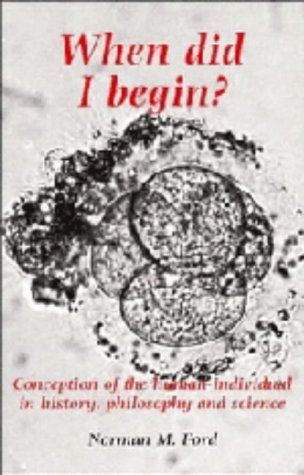
When Did I Begin? investigates the theoretical, moral and biological issues surrounding the debate over the beginning of human life. With the continuing controversy over the use of in vitro fertilization techniques and experimentation with human embryos, these issues have been forced into the arena of public debate. The answer to the question, āWhen did I begin?ā draws on both scientific evidence, and on the philosophical concepts of the presence of the human individaul. As a leading theologian and moral philosopher, thoroughly conversant with modern embryology, Norman Ford, a Salesian priest, is well qualified to bridge the gap between the biological and philosophical point of view. Dr Ford argues that a human individual could not begin before definitive individuation occurs with the appearance of the primative streak about two weeks after fertilisation. While he does not specifically address any moral issues regarding the treatment of human embryos, the author views reading of this book as an essential prerequisite for such moral considerations. The implications of Dr Fordās answer to the question posed in the title will be crucially important for fully evaluating such problems as embryo experimentation and contraception, for a range of readers from embryologists and physicians to moral philosophers and theologians. The book has already stimulated considerable interest and debate, and is now available in paperback for the first time.
In a unique and student-friendly package, Ethics and Values in Social Work offers a series of learning modules that will ensure graduates receive a comprehensive ethics and values education. Designed to be easily incorporated into any curriculum, each module helps students integrate the knowledge, skills, self-awareness, and critical thinking abilities required for dealing with ethical issues. From applying basic ethical standards of practice to managing complex ethical dilemmas, this textbook equips readers with a range of tools and strategies for responding to ethical questions and concerns. Traditional ethics textbooks provide students with a model for ethical decision making. This breakthrough textbook goes beyond ethical decision making by providing students with a strategic framework for managing ethical issues that includes guidelines for engaging others in ethical discussions and using conflict resolution theory to promote collaborative solutions. Some textbooks introduce students to ethical theories, such as deontology, teleology, and virtue ethics. This textbook goes beyond describing these theories by providing students with opportunities to apply, compare, and contrast these approaches as they relate to various contexts of social work practice. A wealth of case scenarios, discussion questions, and role-play exercises make this an engaging, thought-provoking teaching and learning tool. At a basic level, this textbook teaches students the essential principles and standards that define ethical practice. At a more profound level, Ethics and Values in Social Work inspires students to reach for the highest values of profession: service, dignity and worth of the person, human relationships, integrity, competence, social justice, human rights, and scientific inquiry. Format and contents help social work programs meet and exceed CSWE accreditation standards, providing a clear structure for integrating ethics and values content throughout foundation and advanced courses The six-stage framework for managing ethical issues provides a range of tools and strategies for identifying, analyzing, and responding to ethical problems, dilemmas, and breaches A developmental approach to learning ethics supports students in engaging in higher levels of understanding, abstraction, application, and synthesis of ethics material Experiential exercises prepare students for managing the ethical and values issues that may arise in field placements Fun, engaging activities encourage students to reflect, question, and apply theory to practice Thought-provoking and reality-based case examples illustrate thorny ethical issues that professionals may encounter, ranging from end-of-life decision making to boundary crossings to rationing resources during a national crisis
What makes an event count as an action? Typical answers appeal to the way in which the event was produced: e.g., perhaps an arm movement is an action when caused by mental states (in particular ways), but not when caused in other ways. Andrew Sneddon argues that this type of answer, which he calls “productionism”, is methodologically and substantially mistaken. In particular, productionist answers to this question tend to be either individualistic or foundationalist, or both, without explicit defence. Instead, Sneddon offers an externalist, anti-foundationalist account of what makes an event count as an action, which he calls neo-ascriptivism, after the work of H.L.A. Hart. Specifically, Sneddon argues that our practices of attributing moral responsibility to each other are at least partly constitutive of events as actions.
A Companion to Genethics is the first substantial study of the multifaceted dimensions of the genetic revolution and its philosophical, ethical, social and political significance.Brings together the best and most influential writing about the ethics of genetics; Includes 33 newly-commissioned essays, all written by prominent figures in the field; Shows how there is scarcely a part of our lives left unaffected by the impact of the new genetics.
Crispin Wright’s Truth and Objectivity brought about a far-reaching reorientation of the metaphysical debates concerning realism and truth. The essays in this companion volume prefigure, elaborate, or defend the proposals put forward in that landmark work. The collection includes the Gareth Evans memorial lecture in which the program of Truth and Objectivity was first announced, as well as all of Wright’s published reactions to the extensive commentary his study provoked; it presents substantial new developments and applications of the pluralistic outlook on the realism debates proposed in Truth and Objectivity, and further pursues its distinctive minimalist conceptions of truth and of truth-aptitude. Among the papers are important discussions of coherence conceptions of truth, of Hilary Putnam’s most recent views on truth, and of the classical debate between correspondence, coherence, pragmatism, and deflationary conceptions of the notion. Others are concerned with Kripke’s famous argument against physicalist conceptions of sensation; the distinction between minimal truth-aptitude and cognitive command; a novel prospectus for a philosophy of vagueness; and a new proposal about the most resilient interpretation of relativism.
ما از اخلاق چه انتظاری داریم؟ این سوال شاید تاحدودی برای عموم مردم و یا متخصصان این رشته قابل پاسخ باشد؛ اینکه خوب بودن را به ما بیاموزد و در تنظیم روابط فردی م...

جشن کتاب تهران به ایستگاه سی و یکم رسیده است. حال و احوال نشر کتاب خوب نیست و باید فرهنگدوستان را به خرید و هدیه دادن کتاب ترغیب نمود. خانه اخلاقپژوهان جوان ب...

بنیاد کتابهای اخلاق اسلامی عمدتا پالایش جان از آلودگیها و آراستن آن به زیباییها است. اندیشه محوری این قبیل کتابها آن است که انسان فعلی آنی نیست که باید باشد...

-
0 Comments