Notice: تابع WP_Block_Type_Registry::register به طورنادرست فراخوانی شد. نامهای نوع بلوک نباید حروف بزرگ داشته باشند. لطفاً برای اطلاعات بیشتر، اشکال زدایی در وردپرس را مشاهده کنید. (این پیام در نگارش 5.0.0 افزوده شده است.) in /home/ethicsho/public_html/wp-includes/functions.php on line 5313
Warning: Use of undefined constant TDC_PATH_LEGACY - assumed 'TDC_PATH_LEGACY' (this will throw an Error in a future version of PHP) in /home/ethicsho/public_html/wp-content/plugins/td-composer/td-composer.php on line 109
Warning: Use of undefined constant TDSP_THEME_PATH - assumed 'TDSP_THEME_PATH' (this will throw an Error in a future version of PHP) in /home/ethicsho/public_html/wp-content/plugins/td-composer/td-composer.php on line 113 بایگانیهای 910 - خانه اخلاق پژوهان جوان Notice: Trying to access array offset on value of type bool in /home/ethicsho/public_html/wp-content/plugins/wp-ulike/inc/general-functions.php on line 807
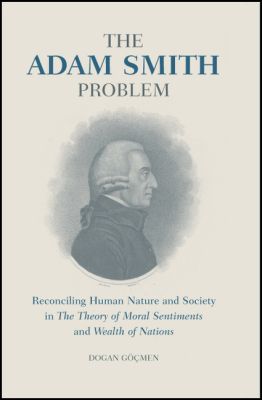
This is the first scholarly work to deal solely with the ‘Adam Smith problem’, namely the apparent contradiction between Adam Smith’s most famous works, The Theory of Moral Sentiments and The Nature and Causes of the Wealth of Nations. Since the 1840s scholars have puzzled over and attempted to explain the fact that these works offer two fundamentally different and contradictory concepts of human nature. In this radical new approach Dogan Göçmen makes a major contribution to the debate. Accepting that Smith does indeed put forward two different and varied ideas, he argues that the ethical position articulated in The Theory of Moral Sentiments can be, and was intended by Smith to be, applied as a basis for criticising the commercial society analysed in the Wealth of Nations. Göçmen argues that this ethical position points to the character of an ideal future society, Adam Smith’s Utopia, a society in which its social components are completely in sympathy – and therefore harmonious – with each other.
A psychologist and frequent television guest shows readers how to shore up their sense of right and wrong and communicate it to their children, outlining four universal moral principles and many real-life scenarios where right thinking is required.
Literature often deals with moral issues. It focuses on human dilemmas and awakens our imagination to new possibilities. It compels us to rethink and revise our everyday assumptions, enabling us to consider ethical questions in creative ways. The Moral Life: An Introductory Reader in Ethics and Literature brings together an extensive and varied collection of 87 classical and contemporary readings on ethical theory and practice. The book is divided into four sections covering the nature of morality, moral theories, moral issues, and applied ethics. Integrating literature with philosophy in an innovative way, editor Louis Pojman uses literary works to enliven and make concrete the ethical theory or applied issues addressed in each chapter. Literary works by Hugo, Hawthorne, Melville, Tolstoy, Ibsen, Huxley, Orwell, Camus, LeGuin, Styron, and many others lead students into philosophical concepts and issues such as relativism, utilitarianism, virtue ethics, the meaning of life, freedom, sex, love and marriage, and environmental ethics. Once introduced, these topics are developed further through readings by philosophers including Aristotle, Sartre, Bernard Williams, Jane English, and Thomas E. Hill, Jr. This unique anthology emphasizes the personal dimension of ethics, which is often ignored or minimized in ethics texts. Featuring insightful part and chapter introductions as well as biographical sketches, abstracts, and study questions for each reading selection, The Moral Life is ideal for introductory ethics courses. It also provides an engaging gateway into personal and social ethics for the general reader.
ما از اخلاق چه انتظاری داریم؟ این سوال شاید تاحدودی برای عموم مردم و یا متخصصان این رشته قابل پاسخ باشد؛ اینکه خوب بودن را به ما بیاموزد و در تنظیم روابط فردی م...

جشن کتاب تهران به ایستگاه سی و یکم رسیده است. حال و احوال نشر کتاب خوب نیست و باید فرهنگدوستان را به خرید و هدیه دادن کتاب ترغیب نمود. خانه اخلاقپژوهان جوان ب...

بنیاد کتابهای اخلاق اسلامی عمدتا پالایش جان از آلودگیها و آراستن آن به زیباییها است. اندیشه محوری این قبیل کتابها آن است که انسان فعلی آنی نیست که باید باشد...

-
0 Comments