Notice: تابع WP_Block_Type_Registry::register به طورنادرست فراخوانی شد. نامهای نوع بلوک نباید حروف بزرگ داشته باشند. لطفاً برای اطلاعات بیشتر، اشکال زدایی در وردپرس را مشاهده کنید. (این پیام در نگارش 5.0.0 افزوده شده است.) in /home/ethicsho/public_html/wp-includes/functions.php on line 5313
Warning: Use of undefined constant TDC_PATH_LEGACY - assumed 'TDC_PATH_LEGACY' (this will throw an Error in a future version of PHP) in /home/ethicsho/public_html/wp-content/plugins/td-composer/td-composer.php on line 109
Warning: Use of undefined constant TDSP_THEME_PATH - assumed 'TDSP_THEME_PATH' (this will throw an Error in a future version of PHP) in /home/ethicsho/public_html/wp-content/plugins/td-composer/td-composer.php on line 113 بایگانیهای 88 - خانه اخلاق پژوهان جوان Notice: Trying to access array offset on value of type bool in /home/ethicsho/public_html/wp-content/plugins/wp-ulike/inc/general-functions.php on line 807
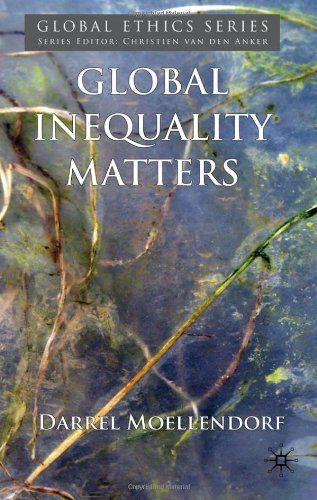
The globalization of trade, investment, and finance continues apace. Many have benefited from this, but deep inequalities persist. This book argues that the interconnections established by globalization make possible a critique of its inequality. For those who take seriously human dignity, equality is a basic presumption of social institutions.
Once regarded as a conservative critic of culture, then enlisted by the court theoreticians of Nazism, Nietzsche has come to be revered by postmodern thinkers as one of their founding fathers, a prophet of human liberation who revealed the perspectival character of all knowledge and broke radically with traditional forms of morality and philosophy. In Nietzsche: The Ethics of an Immoralist, Peter Berkowitz challenges this new orthodoxy, asserting that it produces a one-dimensional picture of Nietzsche’s philosophical explorations and passes by much of what is provocative and problematic in his thought. Berkowitz argues that Nietzsche’s thought is rooted in extreme and conflicting opinions about metaphysics and human nature. Discovering a deep unity in Nietzsche’s work by exploring the structure and argumentative movement of a wide range of his books, Berkowitz shows that Nietzsche is a moral and political philosopher in the Socratic sense whose governing question is, “What is the best life?” Nietzsche, Berkowitz argues, puts forward a severe and aristocratic ethics, an ethics of creativity, that demands that the few human beings who are capable acquire a fundamental understanding of and attain total mastery over the world. Following the path of Nietzsche’s thought, Berkowitz shows that this mastery, which represents a suprapolitical form of rule and entails a radical denigration of political life, is, from Nietzsche’s own perspective, neither desirable nor attainable. Out of the colorful and richly textured fabric of Nietzsche’s books, Peter Berkowitz weaves an interpretation of Nietzsche’s achievement that is at once respectful and skeptical, an interpretation that brings out the love of truth, the courage, and the yearning for the good that mark Nietzsche’s magisterial effort to live an examined life by giving an account of the best life.
Tenure is the abortion issue of the academy, igniting arguments and inflaming near-religious passions. To some, tenure is essential to academic freedom and a magnet to recruit and retain top-flight faculty. To others, it is an impediment to professorial accountability and a constraint on institutional flexibility and finances. But beyond anecdote and opinion, what do we really know about how tenure works?In this unique book, Richard Chait and his colleagues offer the results of their research on key empirical questions. Are there circumstances under which faculty might voluntarily relinquish tenure? When might new faculty actually prefer non-tenure track positions? Does the absence of tenure mean the absence of shared governance? Why have some colleges abandoned tenure while others have adopted it? Answers to these and other questions come from careful studies of institutions that mirror the American academy: research universities and liberal arts colleges, including both highly selective and less prestigious schools.Lucid and straightforward, The Questions of Tenure offers vivid pictures of academic subcultures. Chait and his colleagues conclude that context counts so much that no single tenure system exists. Still, since no academic reward carries the cachet of tenure, few institutions will initiate significant changes without either powerful external pressures or persistent demands from new or disgruntled faculty.
This scarce antiquarian book is included in our special Legacy Reprint Series. In the interest of creating a more extensive selection of rare historical book reprints, we have chosen to reproduce this title even though it may possibly have occasional imperfections such as missing and blurred pages, missing text, poor pictures, markings, dark backgrounds and other reproduction issues beyond our control. Because this work is culturally important, we have made it available as a part of our commitment to protecting, preserving and promoting the world’s literature.
Is it ever acceptable to lie? This question plays a surprisingly important role in the story of Europe’s transition from medieval to modern society. According to many historians, Europe became modern when Europeans began to lie–that is, when they began to argue that it is sometimes acceptable to lie. This popular account offers a clear trajectory of historical progression from a medieval world of faith, in which every lie is sinful, to a more worldly early modern society in which lying becomes a permissible strategy for self-defense and self-advancement. Unfortunately, this story is wrong. For medieval and early modern Christians, the problem of the lie was the problem of human existence itself. To ask “Is it ever acceptable to lie?” was to ask how we, as sinners, should live in a fallen world. As it turns out, the answer to that question depended on who did the asking. The Devil Wins uncovers the complicated history of lying from the early days of the Catholic Church to the Enlightenment, revealing the diversity of attitudes about lying by considering the question from the perspectives of five representative voices–the Devil, God, theologians, courtiers, and women. Examining works by Augustine, Bonaventure, Martin Luther, Madeleine de Scudâery, Jean-Jacques Rousseau, and a host of others, Dallas G. Denery II shows how the lie, long thought to be the source of worldly corruption, eventually became the very basis of social cohesion and peace. –from back cover.
ما از اخلاق چه انتظاری داریم؟ این سوال شاید تاحدودی برای عموم مردم و یا متخصصان این رشته قابل پاسخ باشد؛ اینکه خوب بودن را به ما بیاموزد و در تنظیم روابط فردی م...

جشن کتاب تهران به ایستگاه سی و یکم رسیده است. حال و احوال نشر کتاب خوب نیست و باید فرهنگدوستان را به خرید و هدیه دادن کتاب ترغیب نمود. خانه اخلاقپژوهان جوان ب...

بنیاد کتابهای اخلاق اسلامی عمدتا پالایش جان از آلودگیها و آراستن آن به زیباییها است. اندیشه محوری این قبیل کتابها آن است که انسان فعلی آنی نیست که باید باشد...

-
0 Comments