Notice: تابع WP_Block_Type_Registry::register به طورنادرست فراخوانی شد. نامهای نوع بلوک نباید حروف بزرگ داشته باشند. لطفاً برای اطلاعات بیشتر، اشکال زدایی در وردپرس را مشاهده کنید. (این پیام در نگارش 5.0.0 افزوده شده است.) in /home/ethicsho/public_html/wp-includes/functions.php on line 5313
Warning: Use of undefined constant TDC_PATH_LEGACY - assumed 'TDC_PATH_LEGACY' (this will throw an Error in a future version of PHP) in /home/ethicsho/public_html/wp-content/plugins/td-composer/td-composer.php on line 109
Warning: Use of undefined constant TDSP_THEME_PATH - assumed 'TDSP_THEME_PATH' (this will throw an Error in a future version of PHP) in /home/ethicsho/public_html/wp-content/plugins/td-composer/td-composer.php on line 113 بایگانیهای 867 - خانه اخلاق پژوهان جوان Notice: Trying to access array offset on value of type bool in /home/ethicsho/public_html/wp-content/plugins/wp-ulike/inc/general-functions.php on line 807
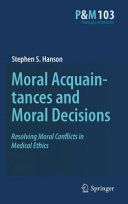
The potential of modern medicine in a pluralistic world leads to the potential for moral conflict. The most prevalent bioethical theories often either overestimate or underestimate the amount of shared moral belief that can be used to address those conflicts. This work presents a means for taking seriously the pluralism in the modern world while recognizing the likelihood of moral acquaintance between persons with differing views. It criticizes moral theories that overstate the extent of the problem of pluralism as well as those that imply too much agreement between reasonable moral persons, yet it locates a means for the resolution of many moral conflicts in moral acquaintanceship. Drawing from the work of H. Tristram Engelhardt, Jr., casuists and principle-based theorists, and Erich Loewy and Kevin W. Wildes s initial development of the concept of moral acquaintanceship, Moral Acquaintances and Moral Decisions is philosophically indepth work with direct applications for decisionmaking in real medical settings. A work in moral theory as well as a source of real world guidance, clinically oriented bioethics professionals as well as students of bioethical theory should find the theory of moral acquaintanceship provided here important to their work.
Jeremy Carrette argues that the psychology of religion is no longer sustainable without a social critique, and that as William James predicted, the project of the modernist psychology of religion has failed. Controversially he champions greater social and philosophical analysis within the field to challenge the political naivety and disciplinary illusions of the traditional approaches to psychology of religion. Carrette discusses the relevance of the social and economic factors surrounding the debates of psychology and religion, through three critical examples: psychoanalysis humanistic psychology cognitive neuroscience. A Critical Psychology of Religion provides a new dimension to the debates surrounding religious experience. It will be of interest to students and researchers in the fields of critical psychology, religious experience and the psychology of religion and extends aninterdisciplinary challenge to the separation of psychology, sociology, politics, economics and religion.
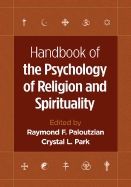
From foremost authorities in the field, this comprehensive volume synthesizes the breadth of current knowledge on the psychological processes underlying spirituality, religious behavior, and religious experience. Presented are cutting-edge theories, conceptual frameworks, methodologies, and empirical findings emerging from all psychological subdisciplines. Coverage includes the neural and cognitive bases of religiousness; social, personality, and developmental issues; religion as a meaning system; and implications for behavior, mental health, and clinical practice. Seamlessly edited, the Handbook provides a definitive portrait of the current state of the science, fosters the development of integrative theory, and identifies vital directions for future research.
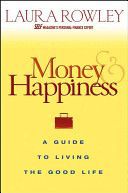
“Laura Rowley makes us all understand the money-happiness connection in our own lives so that we spend our time and our efforts wisely. She gets to the heart of why money can bring feelings of stress, joy, and freedom, and Rowley offers insight that every reader can use to make smarter decisions that will lead to living a rich life in every possible definition of the term.”Lucy Danziger, Editor-in-Chief, Self magazin “This is a wry and companionable guide to getting your finances in better sync with your values, and who wouldn’t be enriched by that?” Melinda Henneberger, Contributing Editor, Newsweek “Money and Happiness takes cold, hard, financial information and warms it up through the voice of your best friend. You’ll find out how to achieve your life dreams, and avoid money nightmares. The cost of this book may be the best investment you’ll ever make.”Kevin McKinley, CFP™, author of Make Your Kid a Millionaire and host of public radio’s On Your Mone “Laura Rowley helps demystify the age-old connection between money and happiness while providing lots of helpful hints on how to find the right balance of both in your life.” Terry Keenan, Anchor, Fox News Channe “Let Laura Rowley guide you to a rational and rewarding life by helping you re-order your approach to your financial well-being. This book covers all the dimensions you need to know about how to plan properly for your reality. She teaches that you need not be loaded to be happy. And she shows you how to set, then achieve, your goals. For your sanity, Rowley is a welcome antidote to the wave of materialism washing over our culture.”Allan Dodds Frank, Bloomberg Televisio
Regenerative medicine is rich with promethean promises. The use of human embryonic stem cells in research is justified by its advocates in terms of promises to cure a wide range of diseases and disabilities, from Alzheimer’s and Parkinsonism to the results of heart attacks and spinal cord injuries. More broadly, there is the promethean allure of being able to redesign human biological nature in terms of the goals and concerns of humans. Needless to say, these allures and promises have provoked a wide range of not just moral but metaphysical reflections that reveal and reflect deep fault-lines in our cultures. The essays in this volume, directly and indirectly, present the points of controversy as they tease out the character of the moral issues that confront any attempt to develop the human regenerative technologies that might move us from a human to a post-human nature. Although one can appreciate the disputes as independently philosophical, they are surely also a function of the conflict between a Christian and a post-Christian culture, in that Christianity has from its beginning recognized a fundamental prohibition against the taking of early human life. Even the philosophical disputes that frame secular bioethics are often motivated and shaped by these background cultural conflicts. These essays display this circumstance in rich ways.
ما از اخلاق چه انتظاری داریم؟ این سوال شاید تاحدودی برای عموم مردم و یا متخصصان این رشته قابل پاسخ باشد؛ اینکه خوب بودن را به ما بیاموزد و در تنظیم روابط فردی م...

جشن کتاب تهران به ایستگاه سی و یکم رسیده است. حال و احوال نشر کتاب خوب نیست و باید فرهنگدوستان را به خرید و هدیه دادن کتاب ترغیب نمود. خانه اخلاقپژوهان جوان ب...

بنیاد کتابهای اخلاق اسلامی عمدتا پالایش جان از آلودگیها و آراستن آن به زیباییها است. اندیشه محوری این قبیل کتابها آن است که انسان فعلی آنی نیست که باید باشد...

-
0 Comments