Notice: تابع WP_Block_Type_Registry::register به طورنادرست فراخوانی شد. نامهای نوع بلوک نباید حروف بزرگ داشته باشند. لطفاً برای اطلاعات بیشتر، اشکال زدایی در وردپرس را مشاهده کنید. (این پیام در نگارش 5.0.0 افزوده شده است.) in /home/ethicsho/public_html/wp-includes/functions.php on line 5313
Warning: Use of undefined constant TDC_PATH_LEGACY - assumed 'TDC_PATH_LEGACY' (this will throw an Error in a future version of PHP) in /home/ethicsho/public_html/wp-content/plugins/td-composer/td-composer.php on line 109
Warning: Use of undefined constant TDSP_THEME_PATH - assumed 'TDSP_THEME_PATH' (this will throw an Error in a future version of PHP) in /home/ethicsho/public_html/wp-content/plugins/td-composer/td-composer.php on line 113 بایگانیهای 860 - خانه اخلاق پژوهان جوان Notice: Trying to access array offset on value of type bool in /home/ethicsho/public_html/wp-content/plugins/wp-ulike/inc/general-functions.php on line 807
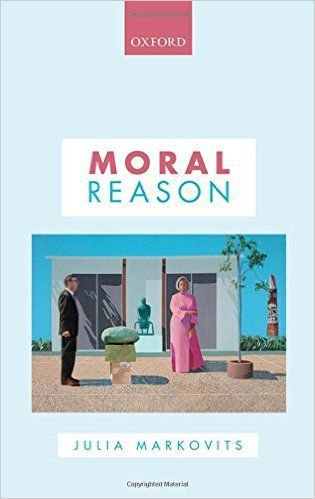
Julia Markovits develops a desire-based, internalist account of what normative reasons are-an account which is compatible with the idea that moral reasons can apply to all of us, regardless of our desires. She builds on Kant’s formula of humanity to defend universal moral reasons, and addresses the age-old question of why we should be moral.
This systematic introduction to Buddhist ethics is aimed at anyone interested in Buddhism, including students, scholars and general readers. Peter Harvey is the author of the acclaimed Introduction to Buddhism (Cambridge, 1990), and his new book is written in a clear style, assuming no prior knowledge. At the same time it develops a careful, probing analysis of the nature and practical dynamics of Buddhist ethics in both its unifying themes and in the particularities of different Buddhist traditions. The book applies Buddhist ethics to a range of issues of contemporary concern: humanity’s relationship with the rest of nature; economics; war and peace; euthanasia; abortion; the status of women; and homosexuality. Professor Harvey draws on texts of the main Buddhist traditions, and on historical and contemporary accounts of the behaviour of Buddhists, to describe existing Buddhist ethics, to assess different views within it, and to extend its application into new areas.
Virtue epistemology is an exciting, new movement receiving an enormous amount of attention from top epistemologists and ethicists; this pioneering volume reflects the best work in that vein. Featuring superb writing from contemporary American philosophers, it includes thirteen never before published essays that focus on the place of the concept of virtue in epistemology. In recent years, philosophers have been debating how this concept functions in definitions of knowledge. They question the extent to which knowledge is both normative (i.e., with a moral component) and non-normative, and many of them dispute the focus on justification, which has proven to be too restrictive. Epistemologists are searching for a way to combine the traditional concepts of ethical theory with epistemic concepts; the result is a new approach called virtue epistemology–one that has established itself as a particularly favorable alternative. Containing the fruits of recent study on virtue epistemology, this volume offers a superb selection of contributors–including Robert Audi, Simon Blackburn, Richard Foley, Alvin Goldman, Hilary Kornblith, Keith Lehrer, Ernest Sosa, and Linda Zagzebski–whose work brings epistemology into dialogue with everyday issues.
ما از اخلاق چه انتظاری داریم؟ این سوال شاید تاحدودی برای عموم مردم و یا متخصصان این رشته قابل پاسخ باشد؛ اینکه خوب بودن را به ما بیاموزد و در تنظیم روابط فردی م...

جشن کتاب تهران به ایستگاه سی و یکم رسیده است. حال و احوال نشر کتاب خوب نیست و باید فرهنگدوستان را به خرید و هدیه دادن کتاب ترغیب نمود. خانه اخلاقپژوهان جوان ب...

بنیاد کتابهای اخلاق اسلامی عمدتا پالایش جان از آلودگیها و آراستن آن به زیباییها است. اندیشه محوری این قبیل کتابها آن است که انسان فعلی آنی نیست که باید باشد...

-
0 Comments