Notice: تابع WP_Block_Type_Registry::register به طورنادرست فراخوانی شد. نامهای نوع بلوک نباید حروف بزرگ داشته باشند. لطفاً برای اطلاعات بیشتر، اشکال زدایی در وردپرس را مشاهده کنید. (این پیام در نگارش 5.0.0 افزوده شده است.) in /home/ethicsho/public_html/wp-includes/functions.php on line 5313
Warning: Use of undefined constant TDC_PATH_LEGACY - assumed 'TDC_PATH_LEGACY' (this will throw an Error in a future version of PHP) in /home/ethicsho/public_html/wp-content/plugins/td-composer/td-composer.php on line 109
Warning: Use of undefined constant TDSP_THEME_PATH - assumed 'TDSP_THEME_PATH' (this will throw an Error in a future version of PHP) in /home/ethicsho/public_html/wp-content/plugins/td-composer/td-composer.php on line 113 بایگانیهای 851 - خانه اخلاق پژوهان جوان Notice: Trying to access array offset on value of type bool in /home/ethicsho/public_html/wp-content/plugins/wp-ulike/inc/general-functions.php on line 807
Sullivan and Kymlicka seek to provide an alternative to post-9/11 pessimism about the ability of serious ethical dialogue to resolve disagreements and conflict across national, religious, and cultural differences. It begins by acknowledging the gravity of the problem: on our tightly interconnected planet, entire populations look for moral guidance to a variety of religious and cultural traditions, and these often stiffen, rather than soften, opposing moral perceptions. How, then, to set minimal standards for the treatment of persons while developing moral bases for coexistence and cooperation across different ethical traditions? The Globalization of Ethics argues for a tempered optimism in approaching these questions. Its distinguished contributors report on some of the most globally influential traditions of ethical thought in order to identify the resources within each tradition for working toward consensus and accommodation among the ethical traditions that shape the contemporary world.
David Hume (1711-76) is one of the greatest figures in the history of British philosophy. Of all of Hume’s writings, the philosophically most profound is undoubtedly his first,A Treatise on Human Nature.Hume on Moralityintroduces and assesses: Hume’s life and the background of theTreatise; the ideas and text in theTreatise; and Hume’s continuing importance to philosophy. James Baillie provides us with a map to Books 2 and 3 of theTreatise,focusing on Hume’s theory of the passions and morality. This book sets out its principal ideas and arguments of theTreatisein a clear and readable way and is ideal for anyone coming to Hume’s work for the first time.
“What implications do recent empirical findings from the fields of biology, primatology, anthropology, psychology and history have for metaethical theories about moral objectivity? I defend the thesis that these findings detract from the plausibility of a realist account of moral objectivity but leave room for a more moderate, antirealist account of objectivity, framed in terms of stance-invariance. The dissertation consists of six articles written for publication in academic journals. In these articles I present two novel, empirically informed challenges to moral realism, and point out some shortcomings of existing challenges. One of the novel challenges builds on the second horn of Sharon Street’s ‘Darwinian Dilemma’, according to which moral realists are committed to an implausible evolutionary hypothesis, and extends this criticism to the historical realm. The other novel challenge is fuelled by theoretical and experimental work in moral psychology, and takes issue with the presumed advantages of moral realism in explaining the qualities of our moral experience. Apart from criticizing moral realism, I also develop and defend an alternative account of moral objectivity in antirealist terms and argue that it is as least as successful as a realist account in capturing the objectivist commitments of ordinary moral discourse.”– Page 14.
We inhabit a world of differences–cultural, religious, moral, philosophical. The question that preoccupies the contributors to this volume is whether the fact of difference–plurality–inevitably leads to the conclusion that there cannot be a single truth, even in moral matters. The collection brings together a wide variety of contributors with different backgrounds and distinctive skills and attitudes to explore the implications of plurality, and no reader will be left in any doubt that the issues are fundamental ones.
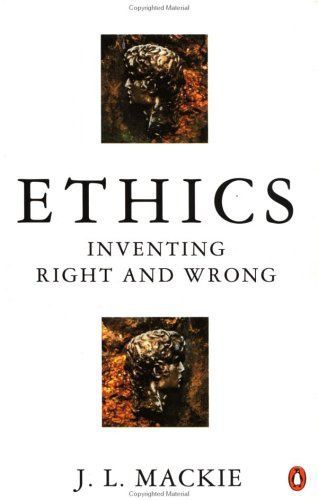
John Mackie’s stimulating book is a complete and clear treatise on moral theory. His writings on normative ethics-the moral principles he recommends-offer a fresh approach on a much neglected subject, and the work as a whole is undoubtedly a major contribution to modern philosophy.The author deals first with the status of ethics, arguing that there are not objective values, that morality cannot be discovered but must be made. He examines next the content of ethics, seeing morality as a functional device, basically the same at all times but changing significantly in response to changes in the human condition. He sketches a practical moral system, criticizing but also borrowing from both utilitarian and absolutist views. Thirdly, the frontiers of ethics, areas of contact with psychology, metaphysics, theology, law and politcs, are explored.Throughout, his aim is to discuss a wide range of questions that are both philosophical and practical, working within a distinctive version of subjectivism-an “error” theory of the apparent objectivity of values. John Mackie has drawn on the contributions of such classic thinkers as Plato, Aristotle, Hobbes, Hume, Kant and Sidgwick, and on more recent discussions, to produce a thought-provoking account that will inspire both the general reader and the student of philosophy.
ما از اخلاق چه انتظاری داریم؟ این سوال شاید تاحدودی برای عموم مردم و یا متخصصان این رشته قابل پاسخ باشد؛ اینکه خوب بودن را به ما بیاموزد و در تنظیم روابط فردی م...

جشن کتاب تهران به ایستگاه سی و یکم رسیده است. حال و احوال نشر کتاب خوب نیست و باید فرهنگدوستان را به خرید و هدیه دادن کتاب ترغیب نمود. خانه اخلاقپژوهان جوان ب...

بنیاد کتابهای اخلاق اسلامی عمدتا پالایش جان از آلودگیها و آراستن آن به زیباییها است. اندیشه محوری این قبیل کتابها آن است که انسان فعلی آنی نیست که باید باشد...

-
0 Comments