Notice: تابع WP_Block_Type_Registry::register به طورنادرست فراخوانی شد. نامهای نوع بلوک نباید حروف بزرگ داشته باشند. لطفاً برای اطلاعات بیشتر، اشکال زدایی در وردپرس را مشاهده کنید. (این پیام در نگارش 5.0.0 افزوده شده است.) in /home/ethicsho/public_html/wp-includes/functions.php on line 5313
Warning: Use of undefined constant TDC_PATH_LEGACY - assumed 'TDC_PATH_LEGACY' (this will throw an Error in a future version of PHP) in /home/ethicsho/public_html/wp-content/plugins/td-composer/td-composer.php on line 109
Warning: Use of undefined constant TDSP_THEME_PATH - assumed 'TDSP_THEME_PATH' (this will throw an Error in a future version of PHP) in /home/ethicsho/public_html/wp-content/plugins/td-composer/td-composer.php on line 113 بایگانیهای 815 - خانه اخلاق پژوهان جوان Notice: Trying to access array offset on value of type bool in /home/ethicsho/public_html/wp-content/plugins/wp-ulike/inc/general-functions.php on line 807
Much of our knowledge of stem cells has been inferred from studies of remarkable few species. The ability to manipulate stem cells in “model” organisms such as the mouse and a few other vertebrate species has driven our understanding of basic biology of stem cells. The power and efficiency of studying model organisms, however, comes at a cost since a few species, obviously, do not reflect natureA´s true diversity. Unfortunately, although all multicellular organisms seem to rely on stem cells, and although this seems to be a question of key importance for understanding the evolution of animal life, little is known about stem cells in early-branching taxa. The book “Stem Cells: From Hydra to Man” illustrates that here is more than human and mouse stem cells to learn from. Reflecting an enormous growth in the knowledge of stem cells in various organisms, the book presents the conceptual language and the nature of questions, as well as a summary of the advances in our understanding of stem cells from a comparative point of view that has resulted from the development of new technology and the development of novel model organisms over the past few decades. As such this book is largely a horizon analysis of a frontier rather than a retrospective. It presents an integrative approach to animal stem cells and covers the major contributions, tools and trends in a newly emerging field: comparative stem cell biology.
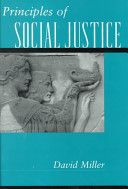
Social justice has been the animating ideal of democratic governments throughout the twentieth century. Even those who oppose it recognize its potency. Yet the meaning of social justice remains obscure, and existing theories put forward by political philosophers to explain it have failed to capture the way people in general think about issues of social justice. This book develops a new theory. David Miller argues that principles of justice must be understood contextually, with each principle finding its natural home in a different form of human association. Because modern societies are complex, the theory of justice must be complex, too. The three primary components in Miller’s scheme are the principles of desert, need, and equality.The book uses empirical research to demonstrate the central role played by these principles in popular conceptions of justice. It then offers a close analysis of each concept, defending principles of desert and need against a range of critical attacks, and exploring instances when justice requires equal distribution and when it does not. Finally, it argues that social justice understood in this way remains a viable political ideal even in a world characterized by economic globalization and political multiculturalism. Accessibly written, and drawing upon the resources of both political philosophy and the social sciences, this book will appeal to readers with interest in public policy as well as to students of politics, philosophy, and sociology.
We all face disease and death, and rely on the medical profession to extend our lives. Yet, David Wootton argues, from the fifth century BC until the 1930s, doctors actually did more harm than good. In this controversial new account of the history of medicine, he asks just how much good it has done us over the years, and how much harm it continues to do today.
ما از اخلاق چه انتظاری داریم؟ این سوال شاید تاحدودی برای عموم مردم و یا متخصصان این رشته قابل پاسخ باشد؛ اینکه خوب بودن را به ما بیاموزد و در تنظیم روابط فردی م...

جشن کتاب تهران به ایستگاه سی و یکم رسیده است. حال و احوال نشر کتاب خوب نیست و باید فرهنگدوستان را به خرید و هدیه دادن کتاب ترغیب نمود. خانه اخلاقپژوهان جوان ب...

بنیاد کتابهای اخلاق اسلامی عمدتا پالایش جان از آلودگیها و آراستن آن به زیباییها است. اندیشه محوری این قبیل کتابها آن است که انسان فعلی آنی نیست که باید باشد...

-
0 Comments