Notice: تابع WP_Block_Type_Registry::register به طورنادرست فراخوانی شد. نامهای نوع بلوک نباید حروف بزرگ داشته باشند. لطفاً برای اطلاعات بیشتر، اشکال زدایی در وردپرس را مشاهده کنید. (این پیام در نگارش 5.0.0 افزوده شده است.) in /home/ethicsho/public_html/wp-includes/functions.php on line 5313
Warning: Use of undefined constant TDC_PATH_LEGACY - assumed 'TDC_PATH_LEGACY' (this will throw an Error in a future version of PHP) in /home/ethicsho/public_html/wp-content/plugins/td-composer/td-composer.php on line 109
Warning: Use of undefined constant TDSP_THEME_PATH - assumed 'TDSP_THEME_PATH' (this will throw an Error in a future version of PHP) in /home/ethicsho/public_html/wp-content/plugins/td-composer/td-composer.php on line 113 بایگانیهای 790 - خانه اخلاق پژوهان جوان Notice: Trying to access array offset on value of type bool in /home/ethicsho/public_html/wp-content/plugins/wp-ulike/inc/general-functions.php on line 807
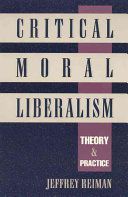
In this important book, Jeffrey Reiman responds to recent assaults on liberal theory by proposing a “critical moral liberalism.” It is liberal in maintaining the emphasis of classical liberalism on individual freedom, moral in adhering to a distinctive vision of the good life rather than professing neutrality, and critical in taking seriously the objection-raised by feminists and Marxists, among others-that liberal theories often serve as ideological cover for oppression of one group by others. Critical moral liberalism has a conception of ideology, and resources for testing the suspicion that arrangements that look free are really oppressive. Reiman sets forth the basic arguments for the liberal moral obligation to maximize people’s ability to govern their own lives, and for the conception of the good life that goes with this. He considers and answers objections to the liberal project, and defends liberal conceptions of privacy, moral virtue, economic justice, and Constitutional interpretation. Reiman then takes up specific policy issues, among them abortion, infanticide, euthanasia, moral education, capital punishment, and threats to privacy from modern information technology. Critical Moral Liberalism will be of interest to scholars and students of ethics, social and political philosophy, political theory, and public policy.
A new account of Aristotle’s Ethics, this book argues for the central importance of the concept of techne or craft in Aristotle’s moral theory. Exploring the importance of techne in the Platonic and pre-Platonic intellectual context in which Aristotle was writing, Tom Angier here shows that this concept has an important role in Aristotle’s Ethics that has rarely been studied in Anglo-American scholarship. Through close-analysis of the primary texts, this book uses the focus on techne to systematically critique and renew Aristotelian moral philosophy. Techne in Aristotle’s Ethics provides a novel and challenging approach to one of the Ancient World’s most enduring intellectual legacies.
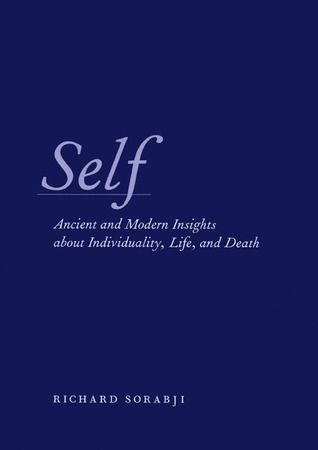
Richard Sorabji presents a brilliant exploration of the history of ourunderstanding of the self, which has remained elusive and mysterious throughoutthe spectacular development of human knowledge of the outside world. He rangesfrom ancient to contemporary thought, Western and Eastern, to reveal and assessthe insights of a remarkable variety of thinkers. He discusses a set of topicswhich are at the heart of our understanding of ourselves: personal identity;memory; the importance of seeing one’s life as a whole; the relation betweenself, intellect, will, and agency; self-awareness; the stream of consciousness;embodiment; death and survival. He rejects the view, found in variousphilosophical and religious writings, that the self is an illusion, and developshis own original conception of the self as essential to our ownership of ourexperience and our apprehension of the world.
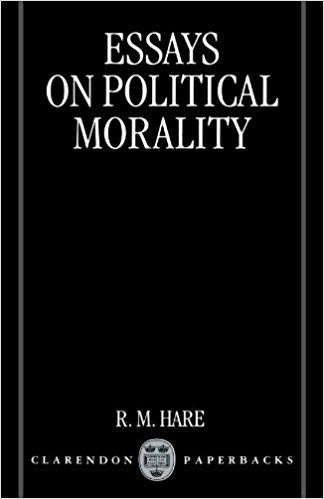
These essays represent Hare’s thinking on a range of contemporary issues in political morality, including political obligation, terrorism, morality and war, rights, quality, and the environment. Three of the essays are previously unpublished.
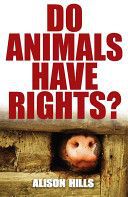
In this superbly accessible book, Alison Hills carefully examines the arguments for both sides and defends a practical, liveable idea of the ethics of animals, distinguishing ways in which animals are our equals from ways in which they are not.
ما از اخلاق چه انتظاری داریم؟ این سوال شاید تاحدودی برای عموم مردم و یا متخصصان این رشته قابل پاسخ باشد؛ اینکه خوب بودن را به ما بیاموزد و در تنظیم روابط فردی م...

جشن کتاب تهران به ایستگاه سی و یکم رسیده است. حال و احوال نشر کتاب خوب نیست و باید فرهنگدوستان را به خرید و هدیه دادن کتاب ترغیب نمود. خانه اخلاقپژوهان جوان ب...

بنیاد کتابهای اخلاق اسلامی عمدتا پالایش جان از آلودگیها و آراستن آن به زیباییها است. اندیشه محوری این قبیل کتابها آن است که انسان فعلی آنی نیست که باید باشد...

-
0 Comments