Notice: تابع WP_Block_Type_Registry::register به طورنادرست فراخوانی شد. نامهای نوع بلوک نباید حروف بزرگ داشته باشند. لطفاً برای اطلاعات بیشتر، اشکال زدایی در وردپرس را مشاهده کنید. (این پیام در نگارش 5.0.0 افزوده شده است.) in /home/ethicsho/public_html/wp-includes/functions.php on line 5313
Warning: Use of undefined constant TDC_PATH_LEGACY - assumed 'TDC_PATH_LEGACY' (this will throw an Error in a future version of PHP) in /home/ethicsho/public_html/wp-content/plugins/td-composer/td-composer.php on line 109
Warning: Use of undefined constant TDSP_THEME_PATH - assumed 'TDSP_THEME_PATH' (this will throw an Error in a future version of PHP) in /home/ethicsho/public_html/wp-content/plugins/td-composer/td-composer.php on line 113 بایگانیهای 744 - خانه اخلاق پژوهان جوان Notice: Trying to access array offset on value of type bool in /home/ethicsho/public_html/wp-content/plugins/wp-ulike/inc/general-functions.php on line 807
Information technology is an integral part of the practices and institutions of post-industrial society. It is also a source of hard moral questions and thus is both a probing and relevant area for moral theory. In this volume, an international team of philosophers sheds light on many of the ethical issues arising from information technology, including informational privacy, digital divide and equal access, e-trust and tele-democracy. Collectively, these essays demonstrate how accounts of equality and justice, property and privacy benefit from taking into account how information technology has shaped our social and epistemic practices and our moral experiences. Information technology changes the way that we look at the world and deal with one another. It calls, therefore, for a re-examination of notions such as friendship, care, commitment and trust.
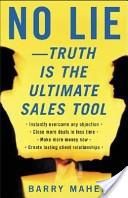
A top Fortune 500 sales trainer shows how to transform the ugly truth into beautiful sales No Lie–Truth Is the Ultimate Sales Tool introduces salespeople to a powerful new approach to winning customers’ trust instantly and selling more, more, more. Drawing upon his years of experience training sales forces at Xerox, American Express, PepsiCo, Verizon, and other top shops worldwide, guru Barry Maher explains why the most effective salespeople know how to transform their product or service’s negatives into positive selling points, or even bragging points. Using fascinating and instructive real-world examples, he describes six proven strategies that let readers: Win customer trust, instantly, by telling the whole truth about a product Use that trust to transform a negative into a powerful selling point Compare a product’s shortcomings with a competitor’s advantages and come out on top Convince potential customers that a product’s negatives translate into greater success and satisfaction
Is medical ethics in times of armed conflict identical to medical ethics in times of peace, as the World Medical Association declares? In Bioethics and Armed Conflict, the first comprehensive study of medical ethics in conventional, unconventional, and low-intensity war, Michael Gross examines the dilemmas that arise when bioethical principles clash with military necessity—when physicians try to save lives during an endeavor dedicated to taking them—and describes both the conflicts and congruencies of military and medical ethics.Gross describes how the principles of contemporary just war, unlike those of medical ethics, often go beyond the welfare of the individual to consider the collective interests of combatants and noncombatants and the general interests of the state. Military necessity plays havoc with such patients’ rights as the right to life, the right to medical care, informed consent, confidentiality, and the right to die. The principles of triage in battle conditions dictate not need-based treatment but the distribution of resources that will return the greatest number of soldiers to active duty. And unconventional warfare, including current “wars” on terrorism, challenges the traditional concept of medical neutrality as physicians who have sworn to “do no harm” are called upon to lend their expertise to “interrogational” torture or to the development of biological or chemical weapons. Difficult dilemmas inevitably arise during armed conflict, and medicine, Gross concludes, is not above the fray. Medical ethics in time of war cannot be identical to medical ethics in peacetime.
To be responsible for their acts, agents must both perform those acts voluntarily and in some sense know what they are doing. Of these requirements, the voluntariness condition has been much discussed, but the epistemic condition has received far less attention. In Who Knew? George Sher seeks to rectify that imbalance. The book is divided in two halves, the first of which criticizes a popular but inadequate way of understanding the epistemic condition, while the second seeks to develop a more adequate alternative. It is often assumed that agents are responsible only for what they are aware of doing or bringing about–that their responsibility extends only as far as the searchlight of their consciousness. The book criticizes this “searchlight view” on two main grounds: first, that it is inconsistent with our attributions of responsibility to a broad range of agents who should but do not realize that they are acting wrongly or foolishly, and, second, that the view is not independently defensible. The book’s positive view construes the crucial relation between an agent and his failure to recognize the wrongness or foolishness of what he is doing in causal terms: the agent is responsible when, and because, his failure to respond to his reasons for believing that he is acting wrongly or foolishly has its origins in the same constitutive psychology that generally does render him reason-responsive.
ما از اخلاق چه انتظاری داریم؟ این سوال شاید تاحدودی برای عموم مردم و یا متخصصان این رشته قابل پاسخ باشد؛ اینکه خوب بودن را به ما بیاموزد و در تنظیم روابط فردی م...

جشن کتاب تهران به ایستگاه سی و یکم رسیده است. حال و احوال نشر کتاب خوب نیست و باید فرهنگدوستان را به خرید و هدیه دادن کتاب ترغیب نمود. خانه اخلاقپژوهان جوان ب...

بنیاد کتابهای اخلاق اسلامی عمدتا پالایش جان از آلودگیها و آراستن آن به زیباییها است. اندیشه محوری این قبیل کتابها آن است که انسان فعلی آنی نیست که باید باشد...

-
0 Comments