Notice: تابع WP_Block_Type_Registry::register به طورنادرست فراخوانی شد. نامهای نوع بلوک نباید حروف بزرگ داشته باشند. لطفاً برای اطلاعات بیشتر، اشکال زدایی در وردپرس را مشاهده کنید. (این پیام در نگارش 5.0.0 افزوده شده است.) in /home/ethicsho/public_html/wp-includes/functions.php on line 5313
Warning: Use of undefined constant TDC_PATH_LEGACY - assumed 'TDC_PATH_LEGACY' (this will throw an Error in a future version of PHP) in /home/ethicsho/public_html/wp-content/plugins/td-composer/td-composer.php on line 109
Warning: Use of undefined constant TDSP_THEME_PATH - assumed 'TDSP_THEME_PATH' (this will throw an Error in a future version of PHP) in /home/ethicsho/public_html/wp-content/plugins/td-composer/td-composer.php on line 113 بایگانیهای 736 - خانه اخلاق پژوهان جوان Notice: Trying to access array offset on value of type bool in /home/ethicsho/public_html/wp-content/plugins/wp-ulike/inc/general-functions.php on line 807
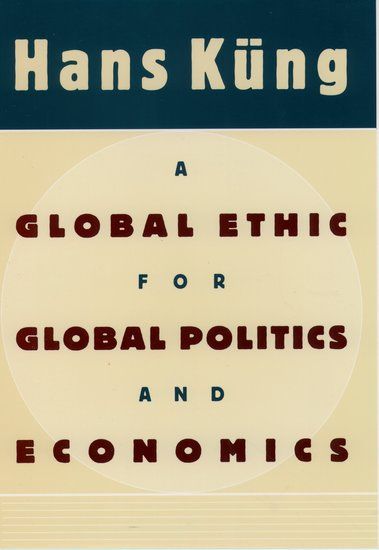
As the twentieth century draws to a close and the rush to globalization gathers momentum, political and economic considerations are crowding out vital ethical questions about the shape of our future. Now, Hans Kung, one of the world’s preeminent Christian theologians, explores these issues in a visionary and cautionary look at the coming global society. How can the new world order of the twenty first century avoid the horrors of the twentieth? Will nations form a real community or continue to aggressively pursue their own interests? Will the Machiavellian approaches of the past prevail over idealism and a more humanitarian politics? What role can religion play in a world increasingly dominated by transnational corporations? Kung tackles these and many other questions with the insight and moral authority that comes from a lifetime’s devotion to the search for justice and human dignity. Arguing against both an amoral realpolitik and an immoral resurgence of laissez faire economics, Kung defines a comprehensive ethic founded on the bedrock of mutual respect and humane treatment of all beings that would encompass the ecological, legal, technological, and social patterns that are reshaping civilization. If we are going to have a global economy, a global technology, a global media, Kung argues, we must also have a global ethic to which all nations, and peoples of the most varied backgrounds and beliefs, can commit themselves. “The world,” he says, “is not going to be held together by the Internet.” For anyone concerned about the world we are creating, A Global Ethic for Global Politics and Economics offers equal measures of informed analysis, compassionate foresight, and wise counsel.
Since Plato a surprisingly large number of philosophers have chosen to write in the first person about their own lives either in works that were primarily autobiographical or in the context of other more conventionally written texts. These texts stand in marked contrast to the bulk of philosophical writing, particularly in the past century during which the discipline has become ever more professionalized and specialized. Instead of the common impersonal and argumentative forms of ordinary philosophic discussion, these autobiographical texts are deeply personal and largely narrative or explanatory. The contributors to this book examine the philosophical significance of philosophers’ autobiographies and whether or not there are broadly philosophical tasks for which this sort of writing is particularly suited. Autobiography as Philosophy contains a general discussion about the relation between philosophical and autobiographical writing, and essays on the specific writings of Augustine, Abelard, Montaigne,Descartes, Vico, Hume, Rousseau, Newman, Mill, Nietzsche, Collingwood and Russell by specialists on the works of these individuals. The book is original and distinctive in its efforts to think about the writings of historically recognized philosophers as communicative acts governed by their own distinctive interests and purposes. It is, therefore as much about the texts and the authors as about their doctrines and arguments. As a result the book steps back from many of the issues of substantive philosophical discussion to reflect on certain forms of writing as means to philosophical ends, to consider what those ends have included.
This volume analyzes concepts of nature and ‘the natural’ in discussions of biotechnology with four broad concerns in mind. First, it surveys the recent history of biotechnology debates and identifies characteristic reactions and approaches to new biotechnological developments that invoke appeals to nature. Second, it analyzes concepts of nature and ‘the natural’ as they are invoked and interpreted in five characteristic modes of discourse; viz., spirituality and religion, philosophy, science and medicine, law and economics, and aesthetics. Third, it identifies a core cluster of ontological, epistemological, moral, and aesthetic questions that arise in conversations about nature as normative. Fourth, it highlights the findings of each of the five chapters, identifies areas of contrast and commonality, and identifies areas for further research.
ما از اخلاق چه انتظاری داریم؟ این سوال شاید تاحدودی برای عموم مردم و یا متخصصان این رشته قابل پاسخ باشد؛ اینکه خوب بودن را به ما بیاموزد و در تنظیم روابط فردی م...

جشن کتاب تهران به ایستگاه سی و یکم رسیده است. حال و احوال نشر کتاب خوب نیست و باید فرهنگدوستان را به خرید و هدیه دادن کتاب ترغیب نمود. خانه اخلاقپژوهان جوان ب...

بنیاد کتابهای اخلاق اسلامی عمدتا پالایش جان از آلودگیها و آراستن آن به زیباییها است. اندیشه محوری این قبیل کتابها آن است که انسان فعلی آنی نیست که باید باشد...

-
0 Comments