Notice: تابع WP_Block_Type_Registry::register به طورنادرست فراخوانی شد. نامهای نوع بلوک نباید حروف بزرگ داشته باشند. لطفاً برای اطلاعات بیشتر، اشکال زدایی در وردپرس را مشاهده کنید. (این پیام در نگارش 5.0.0 افزوده شده است.) in /home/ethicsho/public_html/wp-includes/functions.php on line 5313
Warning: Use of undefined constant TDC_PATH_LEGACY - assumed 'TDC_PATH_LEGACY' (this will throw an Error in a future version of PHP) in /home/ethicsho/public_html/wp-content/plugins/td-composer/td-composer.php on line 109
Warning: Use of undefined constant TDSP_THEME_PATH - assumed 'TDSP_THEME_PATH' (this will throw an Error in a future version of PHP) in /home/ethicsho/public_html/wp-content/plugins/td-composer/td-composer.php on line 113 بایگانیهای 726 - خانه اخلاق پژوهان جوان Notice: Trying to access array offset on value of type bool in /home/ethicsho/public_html/wp-content/plugins/wp-ulike/inc/general-functions.php on line 807
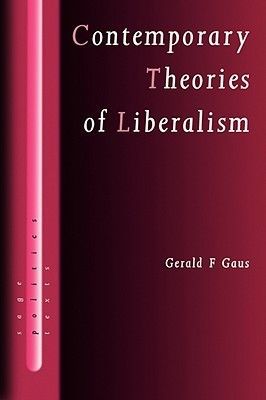
`The author has provided us with a masterful overview and critique of liberal theorizing of the past quarter-century. While dealing exhaustively and fairly with each of a variety of broadly liberal approaches, Gaus also presents a compelling argument for his own preferred “justificatory” approach. His analyses range across familiar territory – Berlin, Gauthier, Baier, Habermas, social choice theory, Rawls, and so on – and are always illuminating and, taken together, provide both the newcomer and the old-hand much to ponder’ – Fred D’Agostino, University of New England, Armidale `[A]ll that man is and all that raises him above animals he owes to his reason’ – Ludwig von Mises Contemporary Theories of Liberalism provides students with a comprehensive overview of the key tenets of liberalism developed through Hobbes, Locke, Kant and Rawls to present day theories and debates. Central to recent debate has been the idea of public reason. The text introduces and explores seven dominant theories of public reason, namely, pluralism, Neo-Hobbesianism, pragmatism, deliberative democracy, political democracy, Rawlsian political liberalism and justificatory liberalism. As a proponent of justificatory liberalism, Gaus presents an accessible and critical analysis of all contempoary liberal political theory and powerfully illustrates the distinct and importsant contribution of justificatory liberalism. Contemporary Theories of Liberalism is essential reading for students and academics seeking a deeper understanding of liberal political theory today.
— More than two-thirds of the student population admits to cheating on examsEveryone hates taking exams; and there are always a few bad seeds in every class who will try to avoid them at all costs. Exam Scams contains a myriad of cheating tips and excuses for skipping class on exam day. From underwear inspections to student riots, this uncovers the most ingenious and outrageous ways that students attempt to dodge exams, assist their memories during them, and explain poor marks after they’re all over. The old excuse that “the dog ate my notes” won’t cut it in today’s classrooms. Therefore, students must devise much more creative excuses and cheating methods. This book is filled with original deceits from students around the globe. Though none of these scams are guaranteed to work, Exam Scams is hilarious reading for any student who has taken an exam and for every teacher who has graded a paper.
Is it ever acceptable to lie? This question plays a surprisingly important role in the story of Europe’s transition from medieval to modern society. According to many historians, Europe became modern when Europeans began to lie–that is, when they began to argue that it is sometimes acceptable to lie. This popular account offers a clear trajectory of historical progression from a medieval world of faith, in which every lie is sinful, to a more worldly early modern society in which lying becomes a permissible strategy for self-defense and self-advancement. Unfortunately, this story is wrong. For medieval and early modern Christians, the problem of the lie was the problem of human existence itself. To ask “Is it ever acceptable to lie?” was to ask how we, as sinners, should live in a fallen world. As it turns out, the answer to that question depended on who did the asking. The Devil Wins uncovers the complicated history of lying from the early days of the Catholic Church to the Enlightenment, revealing the diversity of attitudes about lying by considering the question from the perspectives of five representative voices–the Devil, God, theologians, courtiers, and women. Examining works by Augustine, Bonaventure, Martin Luther, Madeleine de Scudâery, Jean-Jacques Rousseau, and a host of others, Dallas G. Denery II shows how the lie, long thought to be the source of worldly corruption, eventually became the very basis of social cohesion and peace. –from back cover.
ما از اخلاق چه انتظاری داریم؟ این سوال شاید تاحدودی برای عموم مردم و یا متخصصان این رشته قابل پاسخ باشد؛ اینکه خوب بودن را به ما بیاموزد و در تنظیم روابط فردی م...

جشن کتاب تهران به ایستگاه سی و یکم رسیده است. حال و احوال نشر کتاب خوب نیست و باید فرهنگدوستان را به خرید و هدیه دادن کتاب ترغیب نمود. خانه اخلاقپژوهان جوان ب...

بنیاد کتابهای اخلاق اسلامی عمدتا پالایش جان از آلودگیها و آراستن آن به زیباییها است. اندیشه محوری این قبیل کتابها آن است که انسان فعلی آنی نیست که باید باشد...

-
0 Comments