Notice: تابع WP_Block_Type_Registry::register به طورنادرست فراخوانی شد. نامهای نوع بلوک نباید حروف بزرگ داشته باشند. لطفاً برای اطلاعات بیشتر، اشکال زدایی در وردپرس را مشاهده کنید. (این پیام در نگارش 5.0.0 افزوده شده است.) in /home/ethicsho/public_html/wp-includes/functions.php on line 5313
Warning: Use of undefined constant TDC_PATH_LEGACY - assumed 'TDC_PATH_LEGACY' (this will throw an Error in a future version of PHP) in /home/ethicsho/public_html/wp-content/plugins/td-composer/td-composer.php on line 109
Warning: Use of undefined constant TDSP_THEME_PATH - assumed 'TDSP_THEME_PATH' (this will throw an Error in a future version of PHP) in /home/ethicsho/public_html/wp-content/plugins/td-composer/td-composer.php on line 113 بایگانیهای 718 - خانه اخلاق پژوهان جوان Notice: Trying to access array offset on value of type bool in /home/ethicsho/public_html/wp-content/plugins/wp-ulike/inc/general-functions.php on line 807
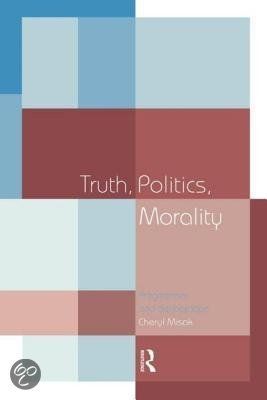
Can we criticize those who hold beliefs which are likely to be wrong? Or must we abandon notions of truth and objectivity and claim that certain beliefs are best for us while incompatible beliefs are best for others? Truth, Politics, Moralityaddresses this crucial issue and its implications for democracy by arguing that the notion of truth ought to be returned to the center of moral and political philosophy. Cheryl Misak persuasively makes a case for a certain kind of pragmatism in which a true belief is one that could not be improved by inquiry, nor defeated by experience or argument. Her compelling discussion makes sense of the idea that, despite conflict, pluralism, and the expression of difference, our moral and political beliefs aim at truth and can be subject to justified criticism.
Although much human action serves as proof that irrational behavior is remarkably common, certain forms of irrationality–most notably, incontinent action and self-deception–pose such difficult theoretical problems that philosophers have rejected them as logically or psychologically impossible. Here, Mele shows that, and how, incontinent action and self-deception are indeed possible. Drawing upon recent experimental work in the psychology of action and inference, he advances naturalized explanations of akratic action and self-deception while resolving the paradoxes around which the philosophical literature revolves. In addition, he defends an account of self-control, argues that “strict” akratic action is an insurmountable obstacle for traditional belief-desire models of action-explanation, and explains how a considerably modified model accommodates action of this sort.
What makes people cosmopolitan? How is cosmopolitanism shaping everyday life experiences and the practices of ordinary people?Making use of empirical research, “Cosmopolitanism in Practice” examines the concrete settings in which individuals display cosmopolitan sensibilities and dispositions, illustrating the ways in which cosmopolitan self-transformations can be used as an analytical tool to explain a variety of identity outlooks and practices. The manner in which both past and present cosmopolitanisms compete with meta-narratives such as nationalism, multiculturalism and religion is also investigated, alongside the employment of cosmopolitan ideas in situations of tension and conflict.With an international team of contributors, including Ulrich Beck, Steven Vertovec, Rob Kroes and Natan Sznaider, this book draws on a variety of intellectual disciplines and international contexts to show how people embrace and make use of cosmopolitan ideas and attitudes.
This textbook looks at the main ethical questions that confront the criminal justice system – legislature, law enforcement, courts, and corrections – and those who work within that system, especially police officers, prosecutors, defence lawyers, judges, juries, and prison officers. John Kleinig sets the issues in the context of a liberal democratic society and its ethical and legislative underpinnings, and illustrates them with a wide and international range of real-life case studies. Topics covered include discretion, capital punishment, terrorism, restorative justice, and re-entry. Kleinig’s discussion is both philosophically acute and grounded in institutional realities, and will enable students to engage productively with the ethical questions which they encounter both now and in the future – whether as criminal justice professionals or as reflective citizens.
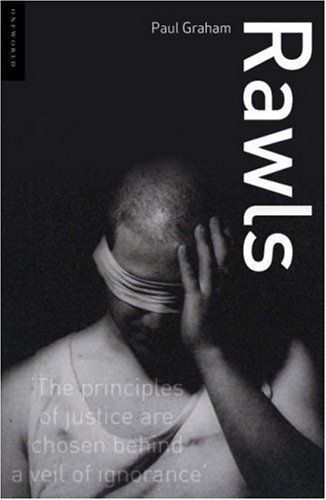
This illuminating guide covers the most interesting and important aspects of Rawls’ work in a stimulating manner, highlighting the foundations that underlie his conception of Justice, and explaining the rationale for his famous starting point, The Veil of Ignorance. Also detailing the criticisms that have met his arguments, this study will prove essential reading for students, scholars, and interested readers alike.
ما از اخلاق چه انتظاری داریم؟ این سوال شاید تاحدودی برای عموم مردم و یا متخصصان این رشته قابل پاسخ باشد؛ اینکه خوب بودن را به ما بیاموزد و در تنظیم روابط فردی م...

جشن کتاب تهران به ایستگاه سی و یکم رسیده است. حال و احوال نشر کتاب خوب نیست و باید فرهنگدوستان را به خرید و هدیه دادن کتاب ترغیب نمود. خانه اخلاقپژوهان جوان ب...

بنیاد کتابهای اخلاق اسلامی عمدتا پالایش جان از آلودگیها و آراستن آن به زیباییها است. اندیشه محوری این قبیل کتابها آن است که انسان فعلی آنی نیست که باید باشد...

-
0 Comments