Notice: تابع WP_Block_Type_Registry::register به طورنادرست فراخوانی شد. نامهای نوع بلوک نباید حروف بزرگ داشته باشند. لطفاً برای اطلاعات بیشتر، اشکال زدایی در وردپرس را مشاهده کنید. (این پیام در نگارش 5.0.0 افزوده شده است.) in /home/ethicsho/public_html/wp-includes/functions.php on line 5313
Warning: Use of undefined constant TDC_PATH_LEGACY - assumed 'TDC_PATH_LEGACY' (this will throw an Error in a future version of PHP) in /home/ethicsho/public_html/wp-content/plugins/td-composer/td-composer.php on line 109
Warning: Use of undefined constant TDSP_THEME_PATH - assumed 'TDSP_THEME_PATH' (this will throw an Error in a future version of PHP) in /home/ethicsho/public_html/wp-content/plugins/td-composer/td-composer.php on line 113 بایگانیهای 698 - خانه اخلاق پژوهان جوان Notice: Trying to access array offset on value of type bool in /home/ethicsho/public_html/wp-content/plugins/wp-ulike/inc/general-functions.php on line 807
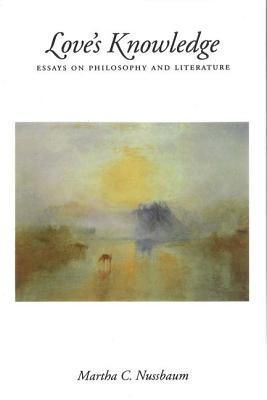
This volume brings together Nussbaum’s published papers on the relationship between literature and philosophy, especially moral philosophy. The papers, many of them previously inaccessible to non-specialist readers, deal with such fundamental issues as the relationship between style and content in the exploration of ethical issues; the nature of ethical attention and ethical knowledge and their relationship to written forms and styles; and the role of the emotions in deliberation and self-knowledge. Nussbaum investigates and defends a conception of ethical understanding which involves emotional as well as intellectual activity, and which gives a certain type of priority to the perception of particular people and situations rather than to abstract rules. She argues that this ethical conception cannot be completely and appropriately stated without turning to forms of writing usually considered literary rather than philosophical. It is consequently necessary to broaden our conception of moral philosophy in order to include these forms. Featuring two new essays and revised versions of several previously published essays, this collection attempts to articulate the relationship, within such a broader ethical inquiry, between literary and more abstractly theoretical elements.
This beautifully written book by one of the world’s leading moral philosophers argues that the key to a fulfilled life is to pursue wholeheartedly what one cares about, that love is the most authoritative form of caring, and that the purest form of love is, in a complicated way, self-love. Harry Frankfurt writes that it is through caring that we infuse the world with meaning. Caring provides us with stable ambitions and concerns; it shapes the framework of aims and interests within which we lead our lives. The most basic and essential question for a person to raise about the conduct of his or her life is not what he or she should care about but what, in fact, he or she cannot help caring about. The most important form of caring, Frankfurt writes, is love, a nonvoluntary, disinterested concern for the flourishing of what is loved. Love is so important because meaningful practical reasoning must be grounded in ends that we do not seek only to attain other ends, and because it is in loving that we become bound to final ends desired for their own sakes. Frankfurt argues that the purest form of love is self-love. This sounds perverse, but self-love–as distinct from self-indulgence–is at heart a disinterested concern for whatever it is that the person loves. The most elementary form of self-love is nothing more than the desire of a person to love. Insofar as this is true, self-love is simply a commitment to finding meaning in our lives.
It’s been more than two decades since the first edition of this landmark book garnered public accolades for its sensitive yet honest and forthright approach to the many disquieting questions surrounding the emotional debate over animal rights. Is moral concern something owed by human beings only to human beings? Drawing upon his philosophical expertise, his extensive experience of working with animal issues all over the world, and his knowledge of biological science, Bernard E Rollin – now widely recognised as the father of veterinary ethics – develops a compelling analysis of animal rights as it is emerging in society.The result is a sound basis for rational discussion and social policy development in this area of rapidly growing concern. He believes that society must elevate the moral status of animals and protect their rights as determined by their natures. His public speaking and published works have contributed to passage of major federal legislation designed to increase the well-being of laboratory animals. This new Third Edition is greatly expanded and includes a new chapter on animal agriculture, plus additional discussions of animal law, companion animal issues, genetic engineering, animal pain, animal research, and many other topics.
Crispin Wright’s Truth and Objectivity brought about a far-reaching reorientation of the metaphysical debates concerning realism and truth. The essays in this companion volume prefigure, elaborate, or defend the proposals put forward in that landmark work. The collection includes the Gareth Evans memorial lecture in which the program of Truth and Objectivity was first announced, as well as all of Wright’s published reactions to the extensive commentary his study provoked; it presents substantial new developments and applications of the pluralistic outlook on the realism debates proposed in Truth and Objectivity, and further pursues its distinctive minimalist conceptions of truth and of truth-aptitude. Among the papers are important discussions of coherence conceptions of truth, of Hilary Putnam’s most recent views on truth, and of the classical debate between correspondence, coherence, pragmatism, and deflationary conceptions of the notion. Others are concerned with Kripke’s famous argument against physicalist conceptions of sensation; the distinction between minimal truth-aptitude and cognitive command; a novel prospectus for a philosophy of vagueness; and a new proposal about the most resilient interpretation of relativism.
ما از اخلاق چه انتظاری داریم؟ این سوال شاید تاحدودی برای عموم مردم و یا متخصصان این رشته قابل پاسخ باشد؛ اینکه خوب بودن را به ما بیاموزد و در تنظیم روابط فردی م...

جشن کتاب تهران به ایستگاه سی و یکم رسیده است. حال و احوال نشر کتاب خوب نیست و باید فرهنگدوستان را به خرید و هدیه دادن کتاب ترغیب نمود. خانه اخلاقپژوهان جوان ب...

بنیاد کتابهای اخلاق اسلامی عمدتا پالایش جان از آلودگیها و آراستن آن به زیباییها است. اندیشه محوری این قبیل کتابها آن است که انسان فعلی آنی نیست که باید باشد...

-
0 Comments