Notice: تابع WP_Block_Type_Registry::register به طورنادرست فراخوانی شد. نامهای نوع بلوک نباید حروف بزرگ داشته باشند. لطفاً برای اطلاعات بیشتر، اشکال زدایی در وردپرس را مشاهده کنید. (این پیام در نگارش 5.0.0 افزوده شده است.) in /home/ethicsho/public_html/wp-includes/functions.php on line 5313
Warning: Use of undefined constant TDC_PATH_LEGACY - assumed 'TDC_PATH_LEGACY' (this will throw an Error in a future version of PHP) in /home/ethicsho/public_html/wp-content/plugins/td-composer/td-composer.php on line 109
Warning: Use of undefined constant TDSP_THEME_PATH - assumed 'TDSP_THEME_PATH' (this will throw an Error in a future version of PHP) in /home/ethicsho/public_html/wp-content/plugins/td-composer/td-composer.php on line 113 بایگانیهای 690 - خانه اخلاق پژوهان جوان Notice: Trying to access array offset on value of type bool in /home/ethicsho/public_html/wp-content/plugins/wp-ulike/inc/general-functions.php on line 807
“Aristotle’s Ethics develops a complex theory of the qualities which make for a good human being and for several decades there has been intense discussion about whether Aristotle’s theory of voluntariness, outlined in the Ethics, actually delineates what modern thinkers would recognize as a theory of moral responsibility. Javier Echeñique presents a novel account of Aristotle’s discussion of voluntariness in the Ethics, arguing – against the interpretation by Arthur Adkins and that inspired by Peter Strawson – that he developed an original and compelling theory of moral responsibility and that this theory has contributed in important ways to our understanding of coercion, ignorance and violence. His study will be valuable for a wide range of readers interested in Aristotle and in ancient ethics more broadly”–
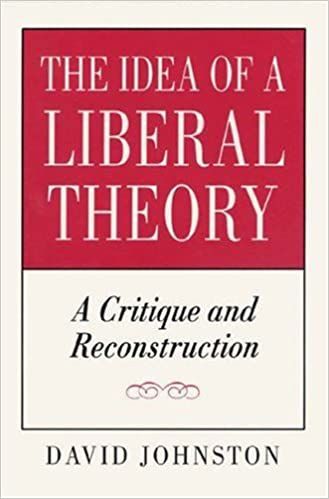
Liberalism, the founding philosophy of many constitutional democracies, has been criticized in recent years from both the left and the right for placing too much faith in individual rights and distributive justice. David Johnston argues for a reinterpretation of liberal principles he contends will restore liberalism to a position of intellectual leadership from which it can guide political and social reforms. He begins by surveying the three major contemporary schools of liberal political thought–rights-based, perfectionist, and political liberalism– and, by weeding out their weaknesses, sketches a new approach he calls humanist liberalism. Valuable not only for its contribution to academic scholarship but also as a means of introducing liberal political thought to serious undergraduate students.–Choice Raises … a tremendous number of criticisms of the standard accounts of liberal politics. The book is novel, built on solid foundations, [and] very powerful, clever, well thought out.–Alan Ryan, Princeton University This clear and useful new work moves through a swift yet thorough critique of three leading liberal philosophies to reach a sketch of a new, improved theory.–Virginia Quarterly Review
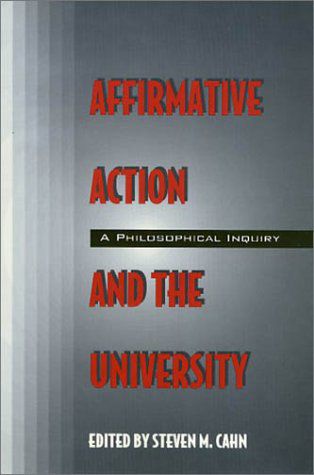
This book is recommended for anyone interested in understanding, questioning, articulating, and acting on the basis of their own and others’ perspectives on sexism, racism, and affirmative action in American higher education. –ChoiceWhile equal opportunity for all candidates is widely recognized as a goal within academia, the implementation of specific procedures to achieve equality has resulted in vehement disputes regarding both the means and ends. To encourage a reexamination of this issue, Cahn asked three prominent American social philosophers–Leslie Pickering Francis, Robert L. Simon, and Lawrence C. Becker–who hold divergent views about affirmative action, to write extended essays presenting their views. Twenty-two other philosophers then respond to these three principal essays. While no consensus is reached, the resulting clash of reasoned judgments will serve to revitalize the issues raised by affirmative action.ContentsIntroduction – Steven M. CahnPart I1. In Defense of Affirmative Action – Leslie Pickering Francis2. Affirmative Action and the University: Faculty Appointment and Preferential Treatment – Robert L. Simon3. Affirmative Action and Faculty Appointments – Lawrence C. BeckerPart II4. What Good Am I? – Laurence Thomas5. Who Counts on Campus? – Ann Hartle6. Reflections on Affirmative Action in Academia – Robert G. Turnbull7. The Injustice of Strong Affirmative Action – John Kekes8. Preferential Treatment Versus Purported Meritocratic Rights – Richard J. Arneson9. Faculties as Civil Societies: A Misleading Model for Affirmative Action – Jeffrie G. Murphy10. Facing Facts and Responsibilities – The White Man’s Burden and the Burden of Proof – Karen Hanson11. Affirmative Action: Relevant Knowledge and Relevant Ignorance – Joel J. Kupperman12. Remarks on Affirmative Action – Andrew Oldenquist13. Affirmative Action and the Multicultural Ideal – Philip L. Quinn14. Affirmative Action in the Cultural Wars – Frederick A. Olafson15. Quotas by Any Name: Some Problems of Affirmative Action in Faculty Appointments – Tom L. Beauchamp16. Are Quotas Sometimes Justified? – James Rachels17. Proportional Representation of Women and Minorities – Celia Wolf-Devine18. An Ecological Concept of Diversity – La Verne Shelton19. Careers Open to Talent – Ellen Frankel Paul20. Some Sceptical Doubts – Alasdair MacIntyre21. Affirmative Action and Tenure Decisions – Richard T. De George22. Affirmative Action and the Awarding of Tenure – Peter J. Markie23. The Case for Preferential Treatment – James P. Sterba24. Saying What We Think – Fred Sommers25. Comments on Compromise and Affirmative Action – Alan H. GoldmanAbout the AuthorsIndex About the Author(s)Steven M. Cahn is Professor of Philosophy and former Provost and Vice President for Academic Affairs at the Graduate Center of the City University of New York. He has published numerous other books, including Morality, Responsibility, and the University (Temple).Contributors: Laurence Thomas, Ann Hartle, Robert G. Turnbull, John Kekes, Richard J. Arneson, Jeffrie G. Murphy, Karen Hanson, Joel J. Kupperman, Andrew Oldenquist, Philip L. Quinn, Frederick A. Olafson, Tom L. Beauchamp, James Rachels, Celia Wolf-Devine, La Verne Shelton, Ellen Frankel Paul, Alasdair MacIntyre, Richard T. De George, Peter J. Markie, James P. Sterba, Fred Sommers, Alan H. Goldman, and the editor.
This handbook describes the broad aspects of risk management involving scientific policy judgment, uncertainty analysis, perception considerations, statistical insights, and strategic thinking. This book presents all the important concepts to enable the reader to “see the big picture.” This ability is extremely important – it allows the decision maker or strategic environmental planner to understand and cope with a wide variety of complex and interlinked pieces of information and data. The text presents environmental problems and, whenever applicable, the methodology required to reach a successful solution. Decisions and policies are examined. The book covers numerous objective and subjective components of environmental risk decision making. It details quantitative and comparative risk, and investigates the cost and feasibility of different decisions. Social pressures, safety, and political, religious, ethical, and psychological issues are addressed. How to evaluate the potential impact on the quality of life also is discussed. Any company doing risk assessment, risk management, or risk communication, as well as those doing environmental decision making will find this reference to be invaluable. It is also suitable as a text for courses in environmental management, environmental science, and risk assessment in the areas of risk management and strategic environmental planning.
This volume is the first English-language book-length text to trace the development of bioethics in the Ibero-American context. Coverage is given to many particular countries within Latin America with an aim to present the historical development of bioethics therein. This history takes place against the backdrop of a tumultuous period of time in the history of Latin America. The volume also discusses the relationship of bioethics in Latin America to questions and issues in Roman Catholic moral theology and philosophy. Moreover, it specifically touches on how these issues affect women in the region.”Ibero-American Bioethics: History and Perspectives” is a landmark work, collecting the voices of those who participated in the founding and development of bioethics in Latin America, the Caribbean, and the Iberian Peninsula. The volume offers the reader a cluster of perspectives on the various births of bioethics in this region. The essays in part are irreplaceable first-person voices that give an account of how bioethics took shape within the Spanish and Portuguese cultures both in Europe and in the Americas. As such, the volume is a collection of primary sources, otherwise not available in English, that presents historical panoramas and explores the new perspectives born of the different phases of bioethics in Ibero-America – from its assimilation of bioethics to its creation of its own authentic voices. The volume also encompasses critical reflections from this region on the quite different ways in which its local bioethics have taken shape. As such, this volume also offers an introduction into the quite different concerns that frame and direct bioethics in the cultural context of Ibero-America.The book gives a rich, deep, broad, and pluralist presentation of Ibero-American bioethics and its contribution to the international phenomenon of bioethics. It is a volume for all readers interested in bioethics, Ibero-American studies, and international approaches to health care policy.
ما از اخلاق چه انتظاری داریم؟ این سوال شاید تاحدودی برای عموم مردم و یا متخصصان این رشته قابل پاسخ باشد؛ اینکه خوب بودن را به ما بیاموزد و در تنظیم روابط فردی م...

جشن کتاب تهران به ایستگاه سی و یکم رسیده است. حال و احوال نشر کتاب خوب نیست و باید فرهنگدوستان را به خرید و هدیه دادن کتاب ترغیب نمود. خانه اخلاقپژوهان جوان ب...

بنیاد کتابهای اخلاق اسلامی عمدتا پالایش جان از آلودگیها و آراستن آن به زیباییها است. اندیشه محوری این قبیل کتابها آن است که انسان فعلی آنی نیست که باید باشد...

-
0 Comments