Notice: تابع WP_Block_Type_Registry::register به طورنادرست فراخوانی شد. نامهای نوع بلوک نباید حروف بزرگ داشته باشند. لطفاً برای اطلاعات بیشتر، اشکال زدایی در وردپرس را مشاهده کنید. (این پیام در نگارش 5.0.0 افزوده شده است.) in /home/ethicsho/public_html/wp-includes/functions.php on line 5313
Warning: Use of undefined constant TDC_PATH_LEGACY - assumed 'TDC_PATH_LEGACY' (this will throw an Error in a future version of PHP) in /home/ethicsho/public_html/wp-content/plugins/td-composer/td-composer.php on line 109
Warning: Use of undefined constant TDSP_THEME_PATH - assumed 'TDSP_THEME_PATH' (this will throw an Error in a future version of PHP) in /home/ethicsho/public_html/wp-content/plugins/td-composer/td-composer.php on line 113 بایگانیهای 634 - خانه اخلاق پژوهان جوان Notice: Trying to access array offset on value of type bool in /home/ethicsho/public_html/wp-content/plugins/wp-ulike/inc/general-functions.php on line 807
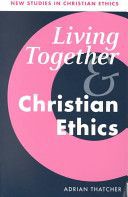
Living Together and Christian Ethics is the first positive, in-depth study of cohabitation outside marriage from a mainstream Christian theological perspective. The book retrieves the traditions of betrothal from the Bible and church history, and shows how these can transform Christian attitudes to living together before marriage. A crucial distinction is made between prenuptial cohabitation where marriage is intended, and nonnuptial cohabitation where it is avoided. Since betrothal was widely understood as a real beginning of marriage, the book argues for a complete pastoral, theological and liturgical renewal that reclaims the riches of forgotten Christian marital traditions and redeploys them in conveying the good news of the faith to women and men who are not yet married. The book takes issue with theologians who marginalize marriage, and suggests that the recognition of marital values can act as a helpful bridge between Christian teaching and people who are not formally married.
At the Roots of Christian Bioethics explores Professor H. Tristram Engelhardt, Jr.s pursuit for the decisive ground of the meaning of human existence and knowledge of appropriate moral choice. Engelhardt has been the most influential, cogent, but critical voice within bioethics of the past several decades. The essays in this volume compass epistemological, methodological and topical contributions to bioethics, political theory, and Christian theology. Each explores Engelhardts diagnosis of the contemporary social and cultural crisis, seeking to make sense of the decidedly post-Christian and often openly anti-Christian ethics that dominates public morality and politic policy.Each author investigates Engelhardts personal and tireless enquiry to secure ultimate moral foundations as well as to recognize the full implications of the results of his investigations: that Christian bioethics does not originate in human reason but in the command of God.
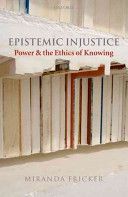
In this exploration of new territory between ethics and epistemology, Miranda Fricker argues that there is a distinctively epistemic type of injustice, in which someone is wronged specifically in their capacity as a knower. Justice is one of the oldest and most central themes in philosophy, but in order to reveal the ethical dimension of our epistemic practices the focus must shift to injustice. Fricker adjusts the philosophical lens so that we see through to the negative space that is epistemic injustice. The book explores two different types of epistemic injustice, each driven by a form of prejudice, and from this exploration comes a positive account of two corrective ethical-intellectual virtues. The characterization of these phenomena casts light on many issues, such as social power, prejudice, virtue, and the genealogy of knowledge, and it proposes a virtue epistemological account of testimony. In this ground-breaking book, the entanglements of reason and social power are traced in a new way, to reveal the different forms of epistemic injustice and their place in the broad pattern of social injustice.
ما از اخلاق چه انتظاری داریم؟ این سوال شاید تاحدودی برای عموم مردم و یا متخصصان این رشته قابل پاسخ باشد؛ اینکه خوب بودن را به ما بیاموزد و در تنظیم روابط فردی م...

جشن کتاب تهران به ایستگاه سی و یکم رسیده است. حال و احوال نشر کتاب خوب نیست و باید فرهنگدوستان را به خرید و هدیه دادن کتاب ترغیب نمود. خانه اخلاقپژوهان جوان ب...

بنیاد کتابهای اخلاق اسلامی عمدتا پالایش جان از آلودگیها و آراستن آن به زیباییها است. اندیشه محوری این قبیل کتابها آن است که انسان فعلی آنی نیست که باید باشد...

-
0 Comments