Notice: تابع WP_Block_Type_Registry::register به طورنادرست فراخوانی شد. نامهای نوع بلوک نباید حروف بزرگ داشته باشند. لطفاً برای اطلاعات بیشتر، اشکال زدایی در وردپرس را مشاهده کنید. (این پیام در نگارش 5.0.0 افزوده شده است.) in /home/ethicsho/public_html/wp-includes/functions.php on line 5313
Warning: Use of undefined constant TDC_PATH_LEGACY - assumed 'TDC_PATH_LEGACY' (this will throw an Error in a future version of PHP) in /home/ethicsho/public_html/wp-content/plugins/td-composer/td-composer.php on line 109
Warning: Use of undefined constant TDSP_THEME_PATH - assumed 'TDSP_THEME_PATH' (this will throw an Error in a future version of PHP) in /home/ethicsho/public_html/wp-content/plugins/td-composer/td-composer.php on line 113 بایگانیهای 585 - خانه اخلاق پژوهان جوان Notice: Trying to access array offset on value of type bool in /home/ethicsho/public_html/wp-content/plugins/wp-ulike/inc/general-functions.php on line 807
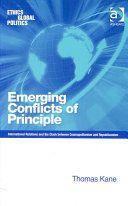
Debates over the ethics of war, economic redistribution, resource consumption and the rights and responsibilities associated with membership of a political community are just some of the major conflicts of principle identified by Thomas Kane which characterize world politics today. According to the author, debates such as these are being drawn towards increasingly polarized positions represented by strongly universalist and particularist moral and political ideologies, such as cosmopolitanism and republicanism. Kane analyzes each of these areas, identifying that the potential for ideologically-driven conflict will constitute the greatest challenge facing scholars and policy makers in the twenty-first century.
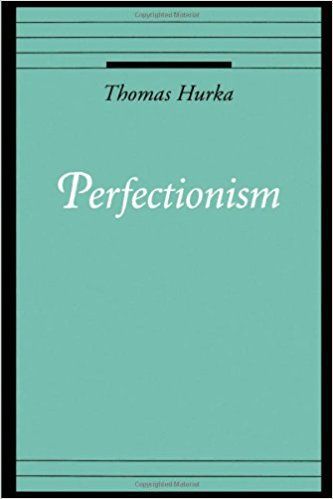
Perfectionism is one of the great moralities of the Western tradition. It holds that certain states of humans, such as knowledge, achievement, and friendship, are good apart from any pleasure they may bring, and that the morally right act is always the one that most promotes these states. Defined more narrowly, perfectionism identifies the human good by reference to human nature: if knowledge and achievement are good, it is because they realize aspects of human nature. This book gives an account of perfectionism, first in the narrower sense, analyzing its central concepts and defending a theory of human nature in which rationality plays a central role. It then uses this theory to construct an elaborate account of the intrinsic value of beliefs and actions that embody rationality, and applies this account to political questions about liberty and equality. The book attempts to formulate the most defensible version of perfectionism, using contemporary analytic techniques. It aims both to regain for perfectionism a central place in contemporary moral debate and to shed light on the writings of classical perfectionists such as Aristotle, Aquinas, Hegel, Marx, Nietzsche, and T.H. Green.
The fox knows many things, the Greeks said, but the hedgehog knows one big thing. In his most comprehensive work the author argues that value in all its forms is one big thing: that what truth is, life means, morality requires, and justice demands are different aspects of the same large question. He develops original theories on a great variety of issues very rarely considered in the same book: moral skepticism, literary, artistic, and historical interpretation, free will, ancient moral theory, being good and living well, liberty, equality, and law among many other topics. What we think about any one of these must stand up, eventually, to any argument we find compelling about the rest. Skepticism in all its forms, philosophical, cynical, or post-modern, threatens that unity. The Galilean revolution once made the theological world of value safe for science. But the new republic gradually became a new empire: the modern philosophers inflated the methods of physics into a totalitarian theory of everything. They invaded and occupied all the honorifics, reality, truth, fact, ground, meaning, knowledge, and being, and dictated the terms on which other bodies of thought might aspire to them, and skepticism has been the inevitable result. The author feels we need a new revolution, and that we must make the world of science safe for value.
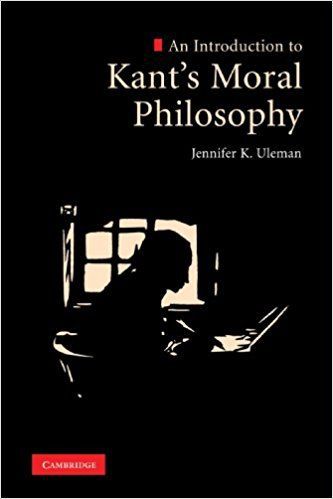
Immanuel Kant’s moral philosophy is one of the most distinctive achievements of the European Enlightenment. At its heart lies what Kant called the ‘strange thing’: the free, rational, human will. This introduction explores the basis of Kant’s anti-naturalist, secular, humanist vision of the human good. Moving from a sketch of the Kantian will, with all its component parts and attributes, to Kant’s canonical arguments for his categorical imperative, this introduction shows why Kant thought his moral law the best summary expression of both his own philosophical work on morality and his readers’ deepest shared convictions about the good. Kant’s central tenets, key arguments, and core values are presented in an accessible and engaging way, making this book ideal for anyone eager to explore the fundamentals of Kant’s moral philosophy.
ما از اخلاق چه انتظاری داریم؟ این سوال شاید تاحدودی برای عموم مردم و یا متخصصان این رشته قابل پاسخ باشد؛ اینکه خوب بودن را به ما بیاموزد و در تنظیم روابط فردی م...

جشن کتاب تهران به ایستگاه سی و یکم رسیده است. حال و احوال نشر کتاب خوب نیست و باید فرهنگدوستان را به خرید و هدیه دادن کتاب ترغیب نمود. خانه اخلاقپژوهان جوان ب...

بنیاد کتابهای اخلاق اسلامی عمدتا پالایش جان از آلودگیها و آراستن آن به زیباییها است. اندیشه محوری این قبیل کتابها آن است که انسان فعلی آنی نیست که باید باشد...

-
0 Comments