Notice: تابع WP_Block_Type_Registry::register به طورنادرست فراخوانی شد. نامهای نوع بلوک نباید حروف بزرگ داشته باشند. لطفاً برای اطلاعات بیشتر، اشکال زدایی در وردپرس را مشاهده کنید. (این پیام در نگارش 5.0.0 افزوده شده است.) in /home/ethicsho/public_html/wp-includes/functions.php on line 5313
Warning: Use of undefined constant TDC_PATH_LEGACY - assumed 'TDC_PATH_LEGACY' (this will throw an Error in a future version of PHP) in /home/ethicsho/public_html/wp-content/plugins/td-composer/td-composer.php on line 109
Warning: Use of undefined constant TDSP_THEME_PATH - assumed 'TDSP_THEME_PATH' (this will throw an Error in a future version of PHP) in /home/ethicsho/public_html/wp-content/plugins/td-composer/td-composer.php on line 113 بایگانیهای 490 - خانه اخلاق پژوهان جوان Notice: Trying to access array offset on value of type bool in /home/ethicsho/public_html/wp-content/plugins/wp-ulike/inc/general-functions.php on line 807
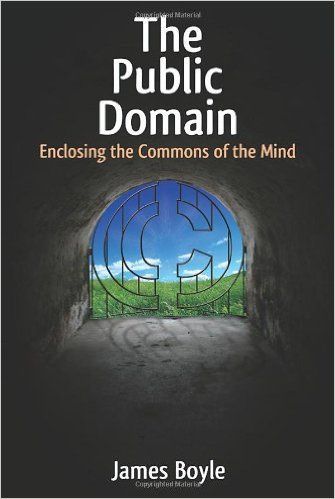
“In this enlightening book, James Boyle describes what he calls the range wars of the information age – today’s heated battles over intellectual property. Boyle argues that just as every informed citizen needs to know at least something about the environment and civil rights, every citizen should also understand intellectual property law. Why? Because intellectual property rights mark out the ground rules of the information society, and today’s policies are unbalanced, unsupported by evidence, and often detrimental to cultural access, free speech, digital creativity, and scientific innovation.” “Boyle identifies as a major problem the widespread failure to understand the importance of the public domain – the realm of material that everyone is free to use and share without permission or fee. The public domain is as vital to innovation and culture as the material protected by intellectual property rights, he asserts, and he calls for a movement akin to the environmental movement to preserve it. With a clear analysis of issues ranging from Jefferson’s philosophy of innovation to musical sampling, synthetic biology, and Internet file sharing, this timely book brings a positive new perspective to important cultural and legal debates. If we continue to enclose the “commons of the mind,” Boyle argues, we will all be the poorer.”–BOOK JACKET.
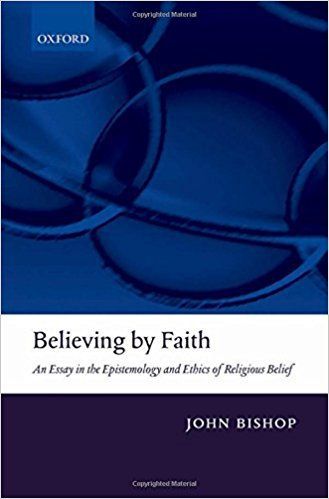
Can it be justifiable to commit oneself ‘by faith’ to a religious claim when its truth lacks adequate support from one’s total available evidence? In Believing by Faith, John Bishop defends a version of fideism inspired by William James’s 1896 lecture ‘The Will to Believe’. By critiquing both ‘isolationist’ (Wittgensteinian) and Reformed epistemologies of religious belief, Bishop argues that anyone who accepts that our publicly available evidence is equally open to theistic and naturalist/atheistic interpretations will need to defend a modest fideist position. This modest fideism understands theistic commitment as involving ‘doxastic venture’ – practical commitment to propositions held to be true through ‘passional’ causes (causes other than the recognition of evidence of or for their truth). While Bishop argues that concern about the justifiability of religious doxastic venture is ultimately moral concern, he accepts that faith-ventures can be morally justifiable only if they are in accord with the proper exercise of our rational epistemic capacities. Legitimate faith-ventures may thus never be counter-evidential, and, furthermore, may be made supra-evidentially only when the truth of the faith-proposition concerned necessarily cannot be settled on the basis of evidence. Bishop extends this Jamesian account by requiring that justifiable faith-ventures should also be morally acceptable both in motivation and content. Hard-line evidentialists, however, insist that all religious faith-ventures are morally wrong. Bishop thus conducts an extended debate between fideists and hard-line evidentialists, arguing that neither side can succeed in establishing the irrationality of its opposition. He concludes by suggesting that fideism may nevertheless be morally preferable, as a less dogmatic, more self-accepting, even a more loving, position than its evidentialist rival.
Craig Paterson discusses assisted suicide and euthanasia from a secular natural law perspective. He analyses important issues that shape the moral quality of an action: intention/foresight, action/omission, action/consequences, killing/letting die, innocence/non-innocence, person/non-person.
ما از اخلاق چه انتظاری داریم؟ این سوال شاید تاحدودی برای عموم مردم و یا متخصصان این رشته قابل پاسخ باشد؛ اینکه خوب بودن را به ما بیاموزد و در تنظیم روابط فردی م...

جشن کتاب تهران به ایستگاه سی و یکم رسیده است. حال و احوال نشر کتاب خوب نیست و باید فرهنگدوستان را به خرید و هدیه دادن کتاب ترغیب نمود. خانه اخلاقپژوهان جوان ب...

بنیاد کتابهای اخلاق اسلامی عمدتا پالایش جان از آلودگیها و آراستن آن به زیباییها است. اندیشه محوری این قبیل کتابها آن است که انسان فعلی آنی نیست که باید باشد...

-
0 Comments