Notice: تابع WP_Block_Type_Registry::register به طورنادرست فراخوانی شد. نامهای نوع بلوک نباید حروف بزرگ داشته باشند. لطفاً برای اطلاعات بیشتر، اشکال زدایی در وردپرس را مشاهده کنید. (این پیام در نگارش 5.0.0 افزوده شده است.) in /home/ethicsho/public_html/wp-includes/functions.php on line 5313
Warning: Use of undefined constant TDC_PATH_LEGACY - assumed 'TDC_PATH_LEGACY' (this will throw an Error in a future version of PHP) in /home/ethicsho/public_html/wp-content/plugins/td-composer/td-composer.php on line 109
Warning: Use of undefined constant TDSP_THEME_PATH - assumed 'TDSP_THEME_PATH' (this will throw an Error in a future version of PHP) in /home/ethicsho/public_html/wp-content/plugins/td-composer/td-composer.php on line 113 بایگانیهای 454 - خانه اخلاق پژوهان جوان Notice: Trying to access array offset on value of type bool in /home/ethicsho/public_html/wp-content/plugins/wp-ulike/inc/general-functions.php on line 807
The adversary professions — law, business, and government among others — typically claim a moral permission to violate persons in ways that if not for the professional role, would be morally wrong. Lawyers advance bad ends and deceive, business managers exploit and despoil, public officials enforce unjust laws, and doctors keep confidences that, if disclosed, would prevent harm. Ethics for Adversaries is a philosophical inquiry into arguments that are offered to defend seemingly wrongful actions performed by those who occupy what Montaigne called “necessary offices”. Applbaum concludes that these arguments are weaker than supposed.
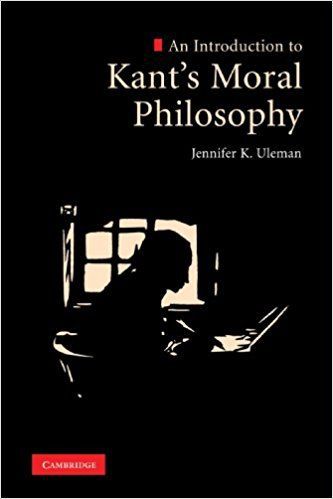
Immanuel Kant’s moral philosophy is one of the most distinctive achievements of the European Enlightenment. At its heart lies what Kant called the ‘strange thing’: the free, rational, human will. This introduction explores the basis of Kant’s anti-naturalist, secular, humanist vision of the human good. Moving from a sketch of the Kantian will, with all its component parts and attributes, to Kant’s canonical arguments for his categorical imperative, this introduction shows why Kant thought his moral law the best summary expression of both his own philosophical work on morality and his readers’ deepest shared convictions about the good. Kant’s central tenets, key arguments, and core values are presented in an accessible and engaging way, making this book ideal for anyone eager to explore the fundamentals of Kant’s moral philosophy.
Film and literature have long been mined for interesting examples and case studies in order to teach biomedical ethics to students. This volume presents a collection of about 80 very brief, accessible essays written by international experts from medicine, social sciences, and the humanities, all of whom have experience using film in their teaching of medical ethics. Each essay focuses on a single scene and the ethical issues it raises, and the volume editors have provided strict guidelines for what each essay must do, while also allowing for some creative freedom. While some of the films are obvious candidates with medical themes — “Million Dollar Baby”, “The Diving Bell and the Butterfly” — some are novel choices, such as “Pan’s Labyrinth” or “As Good as it Gets”. The book will contain several general introductory chapters to major sections, and a complete filmography and cross-index at the end of the book where readers can look up individual films or ethical issues.
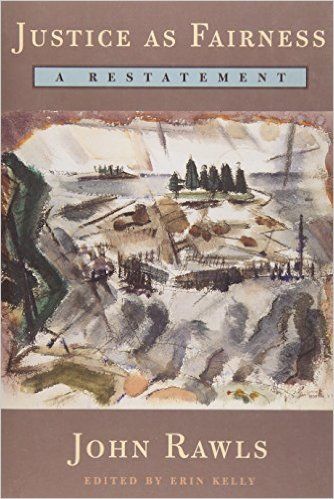
This book originated as lectures for a course on political philosophy that Rawls taught regularly at Harvard in the 1980s. In time the lectures became a restatement of his theory of justice as fairness, revised in light of his more recent papers and his treatise Political Liberalism (1993). As Rawls writes in the preface, the restatement presents “in one place an account of justice as fairness as I now see it, drawing on all [my previous] works.” He offers a broad overview of his main lines of thought and also explores specific issues never before addressed in any of his writings.Rawls is well aware that since the publication of A Theory of Justice in 1971, American society has moved farther away from the idea of justice as fairness. Yet his ideas retain their power and relevance to debates in a pluralistic society about the meaning and theoretical viability of liberalism. This book demonstrates that moral clarity can be achieved even when a collective commitment to justice is uncertain.
ما از اخلاق چه انتظاری داریم؟ این سوال شاید تاحدودی برای عموم مردم و یا متخصصان این رشته قابل پاسخ باشد؛ اینکه خوب بودن را به ما بیاموزد و در تنظیم روابط فردی م...

جشن کتاب تهران به ایستگاه سی و یکم رسیده است. حال و احوال نشر کتاب خوب نیست و باید فرهنگدوستان را به خرید و هدیه دادن کتاب ترغیب نمود. خانه اخلاقپژوهان جوان ب...

بنیاد کتابهای اخلاق اسلامی عمدتا پالایش جان از آلودگیها و آراستن آن به زیباییها است. اندیشه محوری این قبیل کتابها آن است که انسان فعلی آنی نیست که باید باشد...

-
0 Comments