Notice: تابع WP_Block_Type_Registry::register به طورنادرست فراخوانی شد. نامهای نوع بلوک نباید حروف بزرگ داشته باشند. لطفاً برای اطلاعات بیشتر، اشکال زدایی در وردپرس را مشاهده کنید. (این پیام در نگارش 5.0.0 افزوده شده است.) in /home/ethicsho/public_html/wp-includes/functions.php on line 5313
Warning: Use of undefined constant TDC_PATH_LEGACY - assumed 'TDC_PATH_LEGACY' (this will throw an Error in a future version of PHP) in /home/ethicsho/public_html/wp-content/plugins/td-composer/td-composer.php on line 109
Warning: Use of undefined constant TDSP_THEME_PATH - assumed 'TDSP_THEME_PATH' (this will throw an Error in a future version of PHP) in /home/ethicsho/public_html/wp-content/plugins/td-composer/td-composer.php on line 113 بایگانیهای 437 - خانه اخلاق پژوهان جوان Notice: Trying to access array offset on value of type bool in /home/ethicsho/public_html/wp-content/plugins/wp-ulike/inc/general-functions.php on line 807
Book Summary of Moral RealityWe typically assume that the standard for what is beautiful lies in the eye of the beholder. Yet this is not the case when we consider morality; what we deem morally good is not usually a matter of opinion. Such thoughts push us toward being realists about moral properties, but a cogent theory of moral realism has long been an elusive philosophical goal. Paul Bloomfield here offers a rigorous defense of moral realism, developing an ontology for morality that models the property of being morally good on the property of being physically healthy. The model is assembled systematically; it first presents the metaphysics of healthiness and goodness, then explains our epistemic access to properties such as these, adds a complementary analysis of the semantics and syntax of moral discourse, and finishes with a discussion of how we become motivated to act morally. Bloomfield closely attends to the traditional challenges facing moral realism, and the discussion nimbly ranges from modern medical theory to ancient theories of virtue, and from animal navigation to the nature of normativity. Maintaining a highly readable style throughout, Moral Reality yields one of the most compelling theories of moral realism to date and will appeal to philosophers working on issues in metaphysics or moral philosophy.
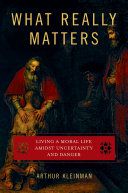
Life can sometimes thrust us into troubling circumstances that threaten to undo our thin mastery over those things that matter most. In this moving and thought-provoking volume, Arthur Kleinman tells the unsettling stories of a handful of men and women, some of whom have lived through some of the most fundamental transitions of the turbulent twentieth century. Here we meet an American veteran of World War II, tortured by the memory of the atrocities he committed while a soldier in the Pacific. A French-American woman aiding refugees in sub-Saharan Africa, facing the utter chaos of a society where life has become meaningless. A Chinese doctor trying to stay alive during Mao’s cultural revolution, discovering that the only values that matter are those that get you beyond the next threat. These individuals have found themselves caught in circumstances where those things that matter most to them–their desires, status, relationships, resources, political and religious commitments, life itself–have been challenged by the society around them. Each is caught up in existential moral experiences that define what it means to be human, with an intensity that makes their life narratives arresting. Their stories reveal just how malleable moral life is, and just how central danger is to our worlds and our livelihood. Indeed, Kleinman offers in this book a groundbreaking approach to ethics, examining “who we are” through some of the most disturbing issues of our time–war, globalization, poverty, social injustice, sex, and religion–all in the context of actual lived moral life. Here then are riveting stories of ordinary men and women, in extraordinary times and threatening situations, making sense of their worlds and facing profound challenges to what matters most in their lives.
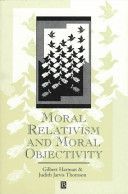
Do moral questions have objective answers? In this great debate, Gilbert Harman explains and argues for relativism, emotivism, and moral scepticism. In his view, moral disagreements are like disagreements about what to pay for a house; there are no correct answers ahead of time, except in relation to one or another moral framework. Independently, Judith Jarvis Thomson examines what she takes to be the case against moral objectivity, and rejects it; she argues that it is possible to find out the correct answers to some moral questions. In her view, some moral disagreements are like disagreements about whether the house has a ghost. Harman and Thomson then reply to each other. This important, lively accessible exchange will be invaluable to all students of moral theory and meta-ethics.
China has the highest levels of copyright piracy and trademark counterfeiting in the world, even though it also provides the highest per capita volume of enforcement. In this original study of intellectual property rights (IPR) in relation to state capacity, Dimitrov analyzes this puzzle by offering the first systematic analysis of all IPR enforcement avenues in China, across all IPR subtypes. He shows that the extremely high volume of enforcement provided for copyrights and trademarks is unfortunately of a low quality, and as such serves only to perpetuate IPR violations. In the area of patents, however, he finds a low volume of high-quality enforcement. In light of these findings, the book develops a theory of state capacity that conceptualizes the Chinese state as simultaneously weak and strong. It also demonstrates that fully rationalized enforcement of domestic and foreign IPR is emerging unevenly and, somewhat counter-intuitively, chiefly in those IPR subtypes that are least subject to domestic or foreign pressure. The book draws on extensive fieldwork in China and five other countries, as well as on 10 unique IPR enforcement datasets that exploit previously unexplored sources, including case files of private investigation firms.
ما از اخلاق چه انتظاری داریم؟ این سوال شاید تاحدودی برای عموم مردم و یا متخصصان این رشته قابل پاسخ باشد؛ اینکه خوب بودن را به ما بیاموزد و در تنظیم روابط فردی م...

جشن کتاب تهران به ایستگاه سی و یکم رسیده است. حال و احوال نشر کتاب خوب نیست و باید فرهنگدوستان را به خرید و هدیه دادن کتاب ترغیب نمود. خانه اخلاقپژوهان جوان ب...

بنیاد کتابهای اخلاق اسلامی عمدتا پالایش جان از آلودگیها و آراستن آن به زیباییها است. اندیشه محوری این قبیل کتابها آن است که انسان فعلی آنی نیست که باید باشد...

-
0 Comments