Notice: تابع WP_Block_Type_Registry::register به طورنادرست فراخوانی شد. نامهای نوع بلوک نباید حروف بزرگ داشته باشند. لطفاً برای اطلاعات بیشتر، اشکال زدایی در وردپرس را مشاهده کنید. (این پیام در نگارش 5.0.0 افزوده شده است.) in /home/ethicsho/public_html/wp-includes/functions.php on line 5313
Warning: Use of undefined constant TDC_PATH_LEGACY - assumed 'TDC_PATH_LEGACY' (this will throw an Error in a future version of PHP) in /home/ethicsho/public_html/wp-content/plugins/td-composer/td-composer.php on line 109
Warning: Use of undefined constant TDSP_THEME_PATH - assumed 'TDSP_THEME_PATH' (this will throw an Error in a future version of PHP) in /home/ethicsho/public_html/wp-content/plugins/td-composer/td-composer.php on line 113 بایگانیهای 375 - خانه اخلاق پژوهان جوان Notice: Trying to access array offset on value of type bool in /home/ethicsho/public_html/wp-content/plugins/wp-ulike/inc/general-functions.php on line 807
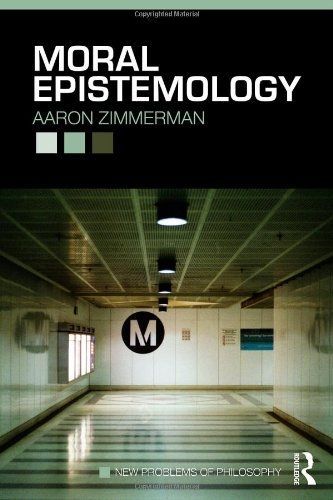
How do we know right from wrong? Do we even have moral knowledge? Moral epistemology studies these and related questions about our understanding of virtue and vice. It is one of philosophy’s perennial problems, reaching back to Plato, Aristotle, Aquinas, Locke, Hume and Kant, and has recently been the subject of intense debate as a result of findings in developmental and social psychology.In this outstanding introduction to the subject Aaron Zimmerman covers the following key topics: What is moral epistemology? What are its methods? Including a discussion of Socrates, Gettier and contemporary theories of knowledgeSkepticism about moral knowledge based on the anthropological record of deep and persistent moral disagreement, including contextualismMoral nihilism, including debates concerning God and morality and the relation between moral knowledge and our motives and reasons to act morallyEpistemic moral scepticism, intuitionism and the possibility of inferring ‘ought’ from ‘is,’ discussing the views of Locke, Hume, Kant, Ross, Audi, Thomson, Harman, Sturgeon and many othersHow children acquire moral concepts and become more reliable judges.Criticisms of those who would reduce moral knowledge to value-neutral knowledge or attempt to replace moral belief with emotion.Throughout the book Zimmerman argues that our belief in moral knowledge can survive sceptical challenges. He also draws on a rich range of examples from Plato’s Meno and Dickens’s David Copperfield to Bernard Madoff and Saddam Hussein.Including chapter summaries and annotated further reading at the end of each chapter, Moral Epistemology is essential reading for all students of ethics, epistemology and moral psychology.
Discussions on akrasia (lack of control, or weakness of will) in Greek philosophy have been particularily vivid and intense for the past two decades. Standard stories that presented Socrates as the philosopher who simply denied the phenomenon, and Plato and Aristotle as rehabilitating it straightforwardly against Socrates, have been challenged in many different ways. Building on those challenges, this collective provides new, and in some cases opposed ways of reading well-known as well as more neglected texts. Its 13 contributions, written by experts in the field, cover the whole history of Greek ethics, from Socrates to Plotinus, through Plato, Aristotle, and the Stoics (Cleanthes, Chrysippus, Epictetus).
When, if ever, is one justified in accepting the premises of an argument? What is the proper criterion of premise acceptability? Providing a comprehensive theory of premise acceptability, this book answers these questions from an epistemological approach that the author calls “common sense foundationalism”. His work will be of interest to specialists in informal logic, critical thinking and argumentation theory as well as to a broader range of philosophers and those teaching rhetoric.
ما از اخلاق چه انتظاری داریم؟ این سوال شاید تاحدودی برای عموم مردم و یا متخصصان این رشته قابل پاسخ باشد؛ اینکه خوب بودن را به ما بیاموزد و در تنظیم روابط فردی م...

جشن کتاب تهران به ایستگاه سی و یکم رسیده است. حال و احوال نشر کتاب خوب نیست و باید فرهنگدوستان را به خرید و هدیه دادن کتاب ترغیب نمود. خانه اخلاقپژوهان جوان ب...

بنیاد کتابهای اخلاق اسلامی عمدتا پالایش جان از آلودگیها و آراستن آن به زیباییها است. اندیشه محوری این قبیل کتابها آن است که انسان فعلی آنی نیست که باید باشد...

-
0 Comments