Notice: تابع WP_Block_Type_Registry::register به طورنادرست فراخوانی شد. نامهای نوع بلوک نباید حروف بزرگ داشته باشند. لطفاً برای اطلاعات بیشتر، اشکال زدایی در وردپرس را مشاهده کنید. (این پیام در نگارش 5.0.0 افزوده شده است.) in /home/ethicsho/public_html/wp-includes/functions.php on line 5313
Warning: Use of undefined constant TDC_PATH_LEGACY - assumed 'TDC_PATH_LEGACY' (this will throw an Error in a future version of PHP) in /home/ethicsho/public_html/wp-content/plugins/td-composer/td-composer.php on line 109
Warning: Use of undefined constant TDSP_THEME_PATH - assumed 'TDSP_THEME_PATH' (this will throw an Error in a future version of PHP) in /home/ethicsho/public_html/wp-content/plugins/td-composer/td-composer.php on line 113 بایگانیهای 363 - خانه اخلاق پژوهان جوان Notice: Trying to access array offset on value of type bool in /home/ethicsho/public_html/wp-content/plugins/wp-ulike/inc/general-functions.php on line 807
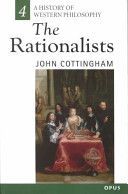
The seventeenth century saw a major revolution in our ways of thinking about such issues as the method appropriate to philosophy and science, the relation between mind and body, the nature of substance, and the place of humanity in nature. While not neglecting the lesser but still influential figures, such as Arnauld and Malebranche, John Cottingham focuses primarily on the three great “rationalists”: Descartes, Spinoza, and Leibniz. He examines how they approached central problems of philosophy, and shows how closely their ideas are related, despite the radically different philosophical systems they produced. He not only places the major thinkers in their historical and philosophical contexts, but engages their ideas in a vigorously critical way, revealing their capacity to throw light on major philosophical topics that are still very much alive today.
Bonnie Steinbock presents The Oxford Handbook of Bioethics –an authoritative, state-of-the-art guide to current issues in bioethics. Thirty-four contributors reflect the interdisciplinarity that is characteristic of bioethics, and its increasingly international character. Thirty topics are covered in original essays written by some of the world’s leading figures in the field, as well as by some newer “up-and-comers.” The essays address both perennial issues, such as the methodology of bioethics, autonomy, justice, death, and moral status, and newer issues, such as biobanking, stem cell research, cloning, pharmacogenomics, and bioterrorism. Other topics concern mental illness and moral agency, the rule of double effect, justice and the elderly, the definition of death, organ transplantation, feminist approaches to commodification of the body, life extension, advance directives, physician-assisted death, abortion, genetic research, population screening, enhancement, research ethics, and the implications of public and global health for bioethics. Anyone who wants to know how the central debates in bioethics have developed in recent years, and where the debates are going, will want to consult this book. It will be an invaluable resource not only for scholars and graduate students in bioethics, but also for those in philosophy, medicine, law, theology, social science, public policy, and public health who wish to keep abreast of developments in bioethics.
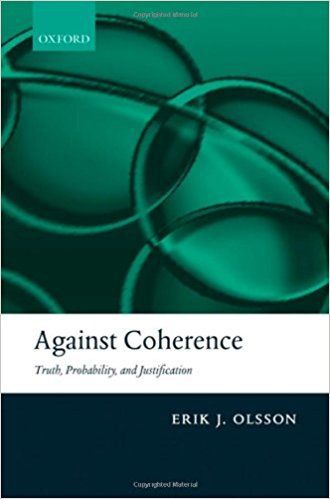
It is tempting to think that, if a person’s beliefs are coherent, they are also likely to be true. This truth conduciveness claim is the cornerstone of the popular coherence theory of knowledge and justification. Erik Olsson’s new book is the most extensive and detailed study of coherence and probable truth to date. Setting new standards of precision and clarity, Olsson argues that the value of coherence has been widely overestimated. Provocative and readable, Against Coherence will make stimulating reading for epistemologists and anyone with a serious interest in truth.
Adam Smith (1723-90) is celebrated all over the world as the author ofThe Wealth of Nationsand the founder of modern economics. A few of his ideas–that of the “invisible hand” of the market and that “It is not from the benevolence of the butcher, the brewer, or the baker that we expect our dinner, but from their regard to their own interest” have become iconic. Yet Smith saw himself primarily as a philosopher rather than an economist and would never have predicted that the ideas for which he is now best known were his most important. This book shows the extent to whichThe Wealth of Nationsand Smith’s other great work,The Theory of Moral Sentiments,were part of a larger scheme to establish a grand “Science of Man,” one of the most ambitious projects of the European Enlightenment, which was to encompass law, history, and aesthetics as well as economics and ethics, and which was only half complete on Smith’s death in 1790. Nick Phillipson reconstructs Smith’s intellectual ancestry and shows what Smith took from, and what he gave to, in the rapidly changing intellectual and commercial cultures of Glasgow and Edinburgh as they entered the great years of the Scottish Enlightenment. Above all he explains how far Smith’s ideas developed in dialogue with those of his closest friend, the other titan of the age, David Hume.
ما از اخلاق چه انتظاری داریم؟ این سوال شاید تاحدودی برای عموم مردم و یا متخصصان این رشته قابل پاسخ باشد؛ اینکه خوب بودن را به ما بیاموزد و در تنظیم روابط فردی م...

جشن کتاب تهران به ایستگاه سی و یکم رسیده است. حال و احوال نشر کتاب خوب نیست و باید فرهنگدوستان را به خرید و هدیه دادن کتاب ترغیب نمود. خانه اخلاقپژوهان جوان ب...

بنیاد کتابهای اخلاق اسلامی عمدتا پالایش جان از آلودگیها و آراستن آن به زیباییها است. اندیشه محوری این قبیل کتابها آن است که انسان فعلی آنی نیست که باید باشد...

-
0 Comments