Notice: تابع WP_Block_Type_Registry::register به طورنادرست فراخوانی شد. نامهای نوع بلوک نباید حروف بزرگ داشته باشند. لطفاً برای اطلاعات بیشتر، اشکال زدایی در وردپرس را مشاهده کنید. (این پیام در نگارش 5.0.0 افزوده شده است.) in /home/ethicsho/public_html/wp-includes/functions.php on line 5313
Warning: Use of undefined constant TDC_PATH_LEGACY - assumed 'TDC_PATH_LEGACY' (this will throw an Error in a future version of PHP) in /home/ethicsho/public_html/wp-content/plugins/td-composer/td-composer.php on line 109
Warning: Use of undefined constant TDSP_THEME_PATH - assumed 'TDSP_THEME_PATH' (this will throw an Error in a future version of PHP) in /home/ethicsho/public_html/wp-content/plugins/td-composer/td-composer.php on line 113 بایگانیهای 3541 - خانه اخلاق پژوهان جوان Notice: Trying to access array offset on value of type bool in /home/ethicsho/public_html/wp-content/plugins/wp-ulike/inc/general-functions.php on line 807
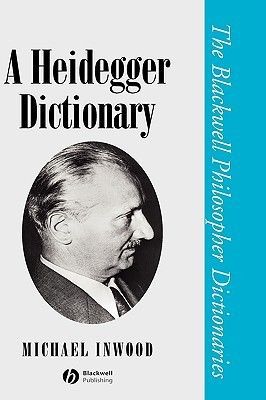
This concise and accessible dictionary explores the central concepts of one of the most significant figures in the history of thought. The author traces the history of 100 concepts from ‘aletheia’ to ‘world’ through Heidegger’s entire career, from the earlier lectures to his later essays and seminars – including many that are not yet translated. The book is extremely user-friendly, containing a full index of the words and concepts discussed, and an introduction explaining Heidegger’s use of language. “A Heidegger Dictionary” enables the student to read Heidegger’s immensely rich and varied works with understanding, and assigns him to his rightful place in both contemporary philosophy and in the history of the subject.
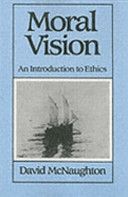
This book introduces the reader to ethics by examining a current and important debate. During the last fifty years the orthodox position in ethics has been a broadly non-cognitivist one: since there are no moral facts, moral remarks are best understood, not as attempting to describe the world, but as having some other function – such as expressing the attitudes or preferences of the speaker. In recent years this position has been increasingly challenged by moral realists who maintain that there are moral facts; there is a truth of the matter in ethics, which is independent of our views, and which we seek to discover. Unfortunately much of this interesting debate found in the work of McDowell, Wiggins, Putnam, Blackburn and others is not easily accessible to undergraduates. McNaughton presents many of the major issues in ethics by way of a clear exposition of both sides of this argument and assumes no prior knowledge of philosophy. Topics discussed include: moral observation, moral motivation, amoralism and wickedness, moral weakness, cultural relativism and utilitarianism. The book concludes that a convincing case can be made out for a radical form of moral realism in which moral virtue is found, not in the following of correct moral principles, but rather in the development of moral sensitivity. Moral Vision is a clear and engaged introduction to an important, and often troubling, debate.
A witty and insightful investigation into the green-eyed monster’s role in our lives Compete, acquire, succeed, enjoy: the pressures of living in today’s materialistic world seem predicated upon jealousy–the feelings of rivalry and resentment for possession of whatever the other has. But while our newspapers abound with stories of the sometimes droll, sometimes deadly consequences of sexual jealousy, Peter Toohey argues in this charmingly provocative book that jealousy is much more than the destructive emotion it is commonly assumed to be. It helps as much as it harms. Examining the meaning, history, and value of jealousy, Toohey places the emotion at the core of modern culture, creativity, and civilization–not merely the sexual relationship. His eclectic approach weaves together psychology, art and literature, neuroscience, anthropology, and a host of other disciplines to offer fresh and intriguing contemporary perspectives on violence, the family, the workplace, animal behavior, and psychopathology. Ranging from the streets of London to Pacific islands, and from the classical world to today, this is an elegant, smart, and beautifully illustrated defense of a not-always-deadly sin.
According to the author of “After Virtue, ” to flourish, humans need to develop virtues of independent thought and acknowledged social dependence. This book presents the moral philosopher’s comparison of humans to other animals and his exploration of the impact of these virtues.
For decades, Engelhardt has alluded to the ethics that binds moral friends. While his ‘Foundations of Bioethics’ explored the sparse ethics binding moral strangers, this long-awaited volume addresses the morality at the foundations of Christian bioethics. The volume opens with an analysis of the marginalization of Christian bioethics in the 1970s and the irremedial shortcomings of secular ethics in general. Drawing on the Christianity of the first millennium, Engelhardt provides the ontological and epistemological foundations for a Christian bioethics that can remedy the onesidedness of a secular bioethics and supply the bases for a Christian bioethics. The volume then addresses issues from abortion, third-party-assisted reproduction, and cloning, to withholding and withdrawing treatment, physician-assisted suicide, and euthanasia. Practices such as free and informed consent are relocated within a traditional Christian morality. Attention is also given to the allocation of scarce resources in health care, and to the challenge of maintaining the Christian identity of physicians, nurses, patients, and health care institutions in a culture that is now post-Christian.
ما از اخلاق چه انتظاری داریم؟ این سوال شاید تاحدودی برای عموم مردم و یا متخصصان این رشته قابل پاسخ باشد؛ اینکه خوب بودن را به ما بیاموزد و در تنظیم روابط فردی م...

جشن کتاب تهران به ایستگاه سی و یکم رسیده است. حال و احوال نشر کتاب خوب نیست و باید فرهنگدوستان را به خرید و هدیه دادن کتاب ترغیب نمود. خانه اخلاقپژوهان جوان ب...

بنیاد کتابهای اخلاق اسلامی عمدتا پالایش جان از آلودگیها و آراستن آن به زیباییها است. اندیشه محوری این قبیل کتابها آن است که انسان فعلی آنی نیست که باید باشد...

-
0 Comments