Notice: تابع WP_Block_Type_Registry::register به طورنادرست فراخوانی شد. نامهای نوع بلوک نباید حروف بزرگ داشته باشند. لطفاً برای اطلاعات بیشتر، اشکال زدایی در وردپرس را مشاهده کنید. (این پیام در نگارش 5.0.0 افزوده شده است.) in /home/ethicsho/public_html/wp-includes/functions.php on line 5313
Warning: Use of undefined constant TDC_PATH_LEGACY - assumed 'TDC_PATH_LEGACY' (this will throw an Error in a future version of PHP) in /home/ethicsho/public_html/wp-content/plugins/td-composer/td-composer.php on line 109
Warning: Use of undefined constant TDSP_THEME_PATH - assumed 'TDSP_THEME_PATH' (this will throw an Error in a future version of PHP) in /home/ethicsho/public_html/wp-content/plugins/td-composer/td-composer.php on line 113 بایگانیهای 3511 - خانه اخلاق پژوهان جوان Notice: Trying to access array offset on value of type bool in /home/ethicsho/public_html/wp-content/plugins/wp-ulike/inc/general-functions.php on line 807
From the preface: ” The materialist conception of history is not only important because it allows us to explain history better than has been done up to now, but also because it enables us to make history better than has been hitherto done. And the latter is more important than the former. From the progress of the practice our theoretical knowledge grows and in the progress of the practice our theoretical progress is proved. No world-conception has been in so high a degree a philosophy of deeds as the dialectical materialism. Not only upon research but upon deeds do we rely to show the superiority of our philosophy. ” Karl Kautsky (1854-1938), compiler of Karl Marx’s Theories of Surplus Value (1905-10), has been rightly considered the successor of Engels in the intellectual leadership of the Marxian School. Kautsky was the founder of Die Neue Zeit and a political leader of the German Social Democrats. He denounced both Germany’s aggression in World War I as well as the conduct of Russian Bolshevism after the 1917 Revolution. This book was originally published in 1906.
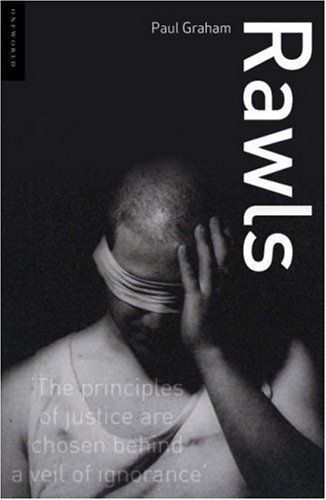
This illuminating guide covers the most interesting and important aspects of Rawls’ work in a stimulating manner, highlighting the foundations that underlie his conception of Justice, and explaining the rationale for his famous starting point, The Veil of Ignorance. Also detailing the criticisms that have met his arguments, this study will prove essential reading for students, scholars, and interested readers alike.
This non-technical introduction to ethics explores how we find true or reasonable moral principles, applicable to current concerns and issues. The reader is presented with seven radically different basic moral theories. Each theory attempts to provide an ultimate answer to the question of what ought to be done and why. Each theory is carefully described, put into historical perspective and critically assessed. The theories covered are: utilitarianism, egoism, deontological ethics, the ethics of rights, virtue ethics, feminist ethics, environmental or ecological ethics.
Being Apart from Reasons deals with the question of how we should go about using reasons to decide what to do. More particularly, the book presents objections to the most common response given by contemporary legal and political theorists to the moral complexity of decision-making in modern societies, namely: the attempt to release public agents from their argumentative burden by insulating a particular set of reasons from the general pool of reasons and assigning the former systematic priority over all other reasons. If those attempts succeed, public agents should not reason comprehensively, taking into account all reasons and weighing them against one another. Some reasons would be excluded from decision-making by kind. That strategy is apparent both in Rawls’ claim that reasons concerning the right are systematically prior to reasons concerning the good and in Raz’s claim that pre-emptive reasons are systematically prior to first-order reasons. The same strategy is also instantiated by certain arguments for the procedural value of law, such as Jeremy Waldron’s. In the book, each of those arguments for the insulation of reasons is objected to in order to defend the thesis the reasoning by public agents must always be as comprehensive as possible.In order to reach that conclusion a particular picture of public decision-making in needed. That picture in provided by the comparison between the use of reasons in public and private decision-making which is carried out in the first two chapters of the book. That comparison brings to light peculiar features of public decision-making that imply the need for public agents to reason comprehensively before deciding. The remaining chapters object to those arguments mentioned above which aim at justifying the exclusion of certain reasons from public agent’s decision-making.
ما از اخلاق چه انتظاری داریم؟ این سوال شاید تاحدودی برای عموم مردم و یا متخصصان این رشته قابل پاسخ باشد؛ اینکه خوب بودن را به ما بیاموزد و در تنظیم روابط فردی م...

جشن کتاب تهران به ایستگاه سی و یکم رسیده است. حال و احوال نشر کتاب خوب نیست و باید فرهنگدوستان را به خرید و هدیه دادن کتاب ترغیب نمود. خانه اخلاقپژوهان جوان ب...

بنیاد کتابهای اخلاق اسلامی عمدتا پالایش جان از آلودگیها و آراستن آن به زیباییها است. اندیشه محوری این قبیل کتابها آن است که انسان فعلی آنی نیست که باید باشد...

-
0 Comments