Notice: تابع WP_Block_Type_Registry::register به طورنادرست فراخوانی شد. نامهای نوع بلوک نباید حروف بزرگ داشته باشند. لطفاً برای اطلاعات بیشتر، اشکال زدایی در وردپرس را مشاهده کنید. (این پیام در نگارش 5.0.0 افزوده شده است.) in /home/ethicsho/public_html/wp-includes/functions.php on line 5313
Warning: Use of undefined constant TDC_PATH_LEGACY - assumed 'TDC_PATH_LEGACY' (this will throw an Error in a future version of PHP) in /home/ethicsho/public_html/wp-content/plugins/td-composer/td-composer.php on line 109
Warning: Use of undefined constant TDSP_THEME_PATH - assumed 'TDSP_THEME_PATH' (this will throw an Error in a future version of PHP) in /home/ethicsho/public_html/wp-content/plugins/td-composer/td-composer.php on line 113 بایگانیهای 3449 - خانه اخلاق پژوهان جوان Notice: Trying to access array offset on value of type bool in /home/ethicsho/public_html/wp-content/plugins/wp-ulike/inc/general-functions.php on line 807
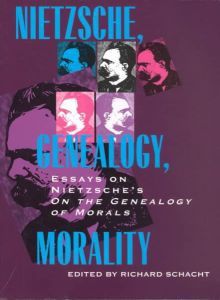
Written at the height of the philosopher’s intellectual powers, Friedrich Nietzsche’s On the Genealogy of Morals has become one of the key texts of recent Western philosophy. Its essayistic style affords a unique opportunity to observe many of Nietzsche’s persisting concerns coming together in an illuminating constellation. A profound influence on psychoanalysis, antihistoricism, and poststructuralism and an abiding challenge to ethical theory, Nietzsche’s book addresses many of the major philosophical problems and possibilities of modernity.In this unique collection focusing on the Genealogy, twenty-five notable philosophers offer diverse discussions of the book’s central themes and concepts. They explore such notions as ressentiment, asceticism, “slave” and “master” moralities, and what Nietzsche calls “genealogy” and its relation to other forms of inquiry in his work. The book presents a cross section of contemporary Nietzsche scholarship and philosophical investigation that is certain to interest philosophers, intellectual and cultural historians, and anyone concerned with one of the master thinkers of the modern age. Written at the height of the philosopher’s intellectual powers, Friedrich Nietzsche’s On the Genealogy of Morals has become one of the key texts of recent Western philosophy. Its essayistic style affords a unique opportunity to observe many of Nietzsche’s persisting concerns coming together in an illuminating constellation. A profound influence on psychoanalysis, antihistoricism, and poststructuralism and an abiding challenge to ethical theory, Nietzsche’s book addresses many of the major philosophical problems and possibilities of modernity.In this unique collection focusing on the Genealogy, twenty-five notable philosophers offer diverse discussions of the book’s central themes and concepts. They explore such notions as ressentiment, asceticism, “slave” and “master” moralities, and what Nietzsche calls “genealogy” and its relation to other forms of inquiry in his work. The book presents a cross section of contemporary Nietzsche scholarship and philosophical investigation that is certain to interest philosophers, intellectual and cultural historians, and anyone concerned with one of the master thinkers of the modern age.
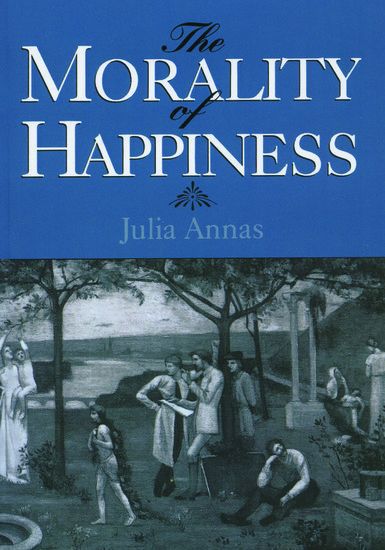
Ancient ethical theories, based on the notions of virtue and happiness, have struck many as an attractive alternative to modern theories. But we cannot find out whether this is true until we understand ancient ethics–and to do this we need to examine the basic structure of ancient ethical theory, not just the details of one or two theories. In this book, Annas brings together the results of a wide-ranging study of ancient ethical philosophy and presents it in a way that is easily accessible to anyone with an interest in ancient or modern ethics. She examines the fundamental notions of happiness and virtue, the role of nature in ethical justification and the relation between concern for self and concern for others. Her careful examination of the ancient debates and arguments shows that many widespread assumptions about ancient ethics are quite mistaken. Ancient ethical theories are not egoistic, and do not depend for their acceptance on metaphysical theories of a teleological kind. Most centrally, they are recognizably theories of morality, and the ancient disputes about the place of virtue in happiness can be seen as akin to modern disputes about the demands of morality.
To be responsible for their acts, agents must both perform those acts voluntarily and in some sense know what they are doing. Of these requirements, the voluntariness condition has been much discussed, but the epistemic condition has received far less attention. In Who Knew? George Sher seeks to rectify that imbalance. The book is divided in two halves, the first of which criticizes a popular but inadequate way of understanding the epistemic condition, while the second seeks to develop a more adequate alternative. It is often assumed that agents are responsible only for what they are aware of doing or bringing about–that their responsibility extends only as far as the searchlight of their consciousness. The book criticizes this “searchlight view” on two main grounds: first, that it is inconsistent with our attributions of responsibility to a broad range of agents who should but do not realize that they are acting wrongly or foolishly, and, second, that the view is not independently defensible. The book’s positive view construes the crucial relation between an agent and his failure to recognize the wrongness or foolishness of what he is doing in causal terms: the agent is responsible when, and because, his failure to respond to his reasons for believing that he is acting wrongly or foolishly has its origins in the same constitutive psychology that generally does render him reason-responsive.
ما از اخلاق چه انتظاری داریم؟ این سوال شاید تاحدودی برای عموم مردم و یا متخصصان این رشته قابل پاسخ باشد؛ اینکه خوب بودن را به ما بیاموزد و در تنظیم روابط فردی م...

جشن کتاب تهران به ایستگاه سی و یکم رسیده است. حال و احوال نشر کتاب خوب نیست و باید فرهنگدوستان را به خرید و هدیه دادن کتاب ترغیب نمود. خانه اخلاقپژوهان جوان ب...

بنیاد کتابهای اخلاق اسلامی عمدتا پالایش جان از آلودگیها و آراستن آن به زیباییها است. اندیشه محوری این قبیل کتابها آن است که انسان فعلی آنی نیست که باید باشد...

-
0 Comments