Notice: تابع WP_Block_Type_Registry::register به طورنادرست فراخوانی شد. نامهای نوع بلوک نباید حروف بزرگ داشته باشند. لطفاً برای اطلاعات بیشتر، اشکال زدایی در وردپرس را مشاهده کنید. (این پیام در نگارش 5.0.0 افزوده شده است.) in /home/ethicsho/public_html/wp-includes/functions.php on line 5313
Warning: Use of undefined constant TDC_PATH_LEGACY - assumed 'TDC_PATH_LEGACY' (this will throw an Error in a future version of PHP) in /home/ethicsho/public_html/wp-content/plugins/td-composer/td-composer.php on line 109
Warning: Use of undefined constant TDSP_THEME_PATH - assumed 'TDSP_THEME_PATH' (this will throw an Error in a future version of PHP) in /home/ethicsho/public_html/wp-content/plugins/td-composer/td-composer.php on line 113 بایگانیهای 3400 - خانه اخلاق پژوهان جوان Notice: Trying to access array offset on value of type bool in /home/ethicsho/public_html/wp-content/plugins/wp-ulike/inc/general-functions.php on line 807
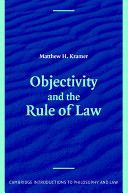
What is objectivity? What is the rule of law? Are the operations of legal systems objective? If so, in what ways and to what degrees are they objective? Does anything of importance depend on the objectivity of law? These are some of the principal questions addressed by Matthew H. Kramer in this lucid and wide-ranging study that introduces readers to vital areas of philosophical enquiry.
Whether firms can be said to be moral agents and to have the capacity for moral responsibility has significant practical consequences. In most legal systems in the world, business firms are recognized as persons with the ability to own property, to maintain and defend lawsuits, and to self-organize governance structures. To recognize that these business persons can also act morally or immorally as organizations, however, would justify the imposition of other legal constraints and normative expectations on organizations. In the criminal law, for example, the idea that an organized firm may itself have criminal culpability is accepted in many countries (such as the United States) but rejected in others (such as Germany). This book collects new contributions by leading business scholars in business ethics, philosophy, and related disciplines to extend our understanding of the moral responsibility of firms.
Critical Reasoning in Ethics is an accessible introduction that will enable students, through practical exercises, to develop their own skills in reasoning about ethical issues such as:* analysing and evaluating arguments used in discussions of ethical issues* analysing and evaluating ethical concepts, such as utilitarianism* making decisions on ethical issues* learning how to approach ethical issues in a fair minded wayEthical issues discussed include the arguments about abortion, euthanasia, capital punishment, animal rights, the environment and war.The book will be essential reading for philosophy, health, social work and nursing courses.
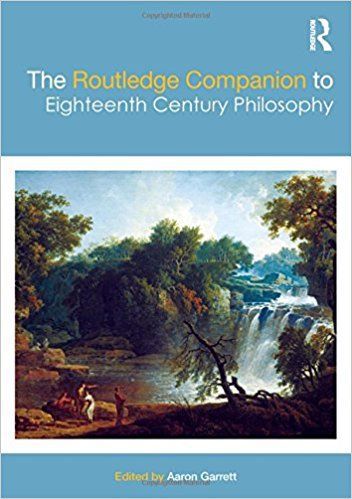
“The Eighteenth century is one of the most important periods in the history of Western philosophy, witnessing the philosophical, scientific, religious, and social and political change of the Enlightenment on a massive scale. In spite of this, there are few overviews of the philosophy of the period as a whole. The Routledge Companion to Eighteenth Century Philosophy is an authoritative survey and assessment of this momentous period, covering major thinkers, topics and movements in Eighteenth century philosophy. The thirty-six specially commissioned chapters by a team of international contributors offer an extensive treatment of the Enlightenment, metaphysics and religion, mind, knowledge, perception, passions, morals, politics and aesthetics. A section on Philosophy and the Arts and Sciences shows the connections between philosophy and other areas of inquiry, and the final part is devoted to major figures of the period: Hume, Kant, and Rousseau. The Routledge Companion to Eighteenth Century Philosophy provides students of philosophy and those from related disciplines with an outstanding and accessible guide to this fascinating period in the history of philosophy”–
Accessible to students with no background in the subject, A Contemporary Introduction to Free Will provides an extensive and up-to-date overview of all the latest views on this central problem of philosophy. Opening with a concise introduction to the history of the problem of free will–and its place in the history of philosophy–the book then turns to contemporary debates and theories about free will, determinism, and related subjects like moral responsibility, coercion,compulsion, autonomy, agency, rationality, freedom, and more. Classical compatibilist and new compatibilist theories of free will are considered along with the latest incompatibilist or libertarian theories and the most recent skeptical challenges to free will. Separate chapters are devoted to the relation offree will to moral responsibility and ethics; to modern science; and to religious questions about predestination, divine foreknowledge, and human freedom. Numerous down-to-earth examples and challenging thought experiments enliven the the text. The book is an ideal addition to introduction to philosophy, metaphysics, and free will courses.
ما از اخلاق چه انتظاری داریم؟ این سوال شاید تاحدودی برای عموم مردم و یا متخصصان این رشته قابل پاسخ باشد؛ اینکه خوب بودن را به ما بیاموزد و در تنظیم روابط فردی م...

جشن کتاب تهران به ایستگاه سی و یکم رسیده است. حال و احوال نشر کتاب خوب نیست و باید فرهنگدوستان را به خرید و هدیه دادن کتاب ترغیب نمود. خانه اخلاقپژوهان جوان ب...

بنیاد کتابهای اخلاق اسلامی عمدتا پالایش جان از آلودگیها و آراستن آن به زیباییها است. اندیشه محوری این قبیل کتابها آن است که انسان فعلی آنی نیست که باید باشد...

-
0 Comments