Notice: تابع WP_Block_Type_Registry::register به طورنادرست فراخوانی شد. نامهای نوع بلوک نباید حروف بزرگ داشته باشند. لطفاً برای اطلاعات بیشتر، اشکال زدایی در وردپرس را مشاهده کنید. (این پیام در نگارش 5.0.0 افزوده شده است.) in /home/ethicsho/public_html/wp-includes/functions.php on line 5313
Warning: Use of undefined constant TDC_PATH_LEGACY - assumed 'TDC_PATH_LEGACY' (this will throw an Error in a future version of PHP) in /home/ethicsho/public_html/wp-content/plugins/td-composer/td-composer.php on line 109
Warning: Use of undefined constant TDSP_THEME_PATH - assumed 'TDSP_THEME_PATH' (this will throw an Error in a future version of PHP) in /home/ethicsho/public_html/wp-content/plugins/td-composer/td-composer.php on line 113 بایگانیهای 3225 - خانه اخلاق پژوهان جوان Notice: Trying to access array offset on value of type bool in /home/ethicsho/public_html/wp-content/plugins/wp-ulike/inc/general-functions.php on line 807
In Between Facts and Norms Jurgen Habermas works out the legal and political implications of his Theory of Communicative Action (1981), bringing to fruition the project announced with his publication of The Structural Transformation of the Public Sphere in 1962. This new work is a major contribution to recent debates on the rule of law and the possibilities of democracy in postindustrial societies, but it is much more.The introduction by William Rehg succinctly captures the special nature of the work, noting that it offers a sweeping, sociologically informed conceptualization of law and basic rights, a normative account of the rule of law and the constitutional state, an attempt to bridge normative and empirical approaches to democracy, and an account of the social context required for democracy. Finally, the work frames and caps these arguments with a bold proposal for a new paradigm of law that goes beyond the dichotomies that have afflicted modern political theory from its inception and that still underlie current controversies between so- called liberals and civic republicans.The book includes a postscript written in 1994, which restates the argument in light of its initial reception, and two appendixes, which cover key developments that preceded the book.Habermas himself was actively involved in the translation, adapting the text as necessary to make it more accessible to English-speaking readers.
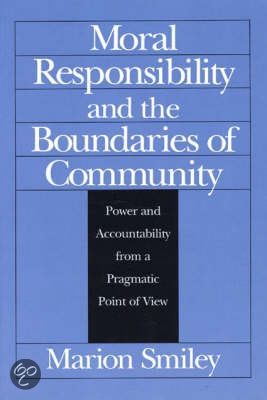
The question of responsibility plays a critical role not only in our attempts to resolve social and political problems, but in our very conceptions of what those problems are. Who, for example, is to blame for apartheid in South Africa? Is the South African government responsible? What about multinational corporations that do business there? Will uncovering the “true facts of the matter” lead us to the right answer? In an argument both compelling and provocative, Marion Smiley demonstrates how attributions of blame–far from being based on an objective process of factual discovery–are instead judgments that we ourselves make on the basis of our own political and social points of view. She argues that our conception of responsibility is a singularly modern one that locates the source of blameworthiness in an individual’s free will. After exploring the flaws inherent in this conception, she shows how our judgments of blame evolve out of our configuration of social roles, our conception of communal boundaries, and the distribution of power upon which both are based. The great strength of Smiley’s study lies in the way in which it brings together both rigorous philosophical analysis and an appreciation of the dynamics of social and political practice. By developing a pragmatic conception of moral responsibility, this work illustrates both how moral philosophy can enhance our understanding of social and political practices and why reflection on these practices is necessary to the reconstruction of our moral concepts.
By contributing a few hundred dollars to a charity like UNICEF, a prosperous person can ensure that fewer poor children die, and that more will live reasonably long, worthwhile lives. Even when knowing this, however, most people send nothing, and almost all of the rest send little. What is the moral status of this behavior? To such common cases of letting die, our untutored response is that, while it is not very good, neither is the conduct wrong. What is the source of this lenient assessment? In this contentious new book, one of our leading philosophers argues that our intuitions about ethical cases are generated not by basic moral values, but by certain distracting psychological dispositions that all too often prevent us from reacting in accord with our commitments. Through a detailed look at how these tendencies operate, Unger shows that, on the good morality that we already accept, the fatally unhelpful behavior is monstrously wrong. By uncovering the eminently sensible ethics that we’ve already embraced fully, and by confronting us with empirical facts and with easily followed instructions for lessening serious suffering appropriately and effectively, Unger’s book points the way to a compassionate new moral philosophy.
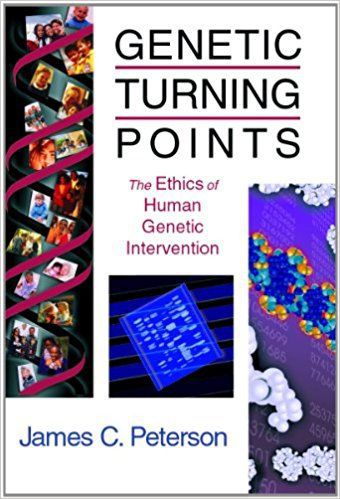
This timely volume clearly lays out the central ethical questions raised by today’s rapid advances in biotechnology. James Peterson sorts through the maze of clinical decisions occasioned by human genetic intervention, organizing the range of moral considerations that now face us and exploring their practical impact on individuals, families, and communities.
ما از اخلاق چه انتظاری داریم؟ این سوال شاید تاحدودی برای عموم مردم و یا متخصصان این رشته قابل پاسخ باشد؛ اینکه خوب بودن را به ما بیاموزد و در تنظیم روابط فردی م...

جشن کتاب تهران به ایستگاه سی و یکم رسیده است. حال و احوال نشر کتاب خوب نیست و باید فرهنگدوستان را به خرید و هدیه دادن کتاب ترغیب نمود. خانه اخلاقپژوهان جوان ب...

بنیاد کتابهای اخلاق اسلامی عمدتا پالایش جان از آلودگیها و آراستن آن به زیباییها است. اندیشه محوری این قبیل کتابها آن است که انسان فعلی آنی نیست که باید باشد...

-
0 Comments