Notice: تابع WP_Block_Type_Registry::register به طورنادرست فراخوانی شد. نامهای نوع بلوک نباید حروف بزرگ داشته باشند. لطفاً برای اطلاعات بیشتر، اشکال زدایی در وردپرس را مشاهده کنید. (این پیام در نگارش 5.0.0 افزوده شده است.) in /home/ethicsho/public_html/wp-includes/functions.php on line 5313
Warning: Use of undefined constant TDC_PATH_LEGACY - assumed 'TDC_PATH_LEGACY' (this will throw an Error in a future version of PHP) in /home/ethicsho/public_html/wp-content/plugins/td-composer/td-composer.php on line 109
Warning: Use of undefined constant TDSP_THEME_PATH - assumed 'TDSP_THEME_PATH' (this will throw an Error in a future version of PHP) in /home/ethicsho/public_html/wp-content/plugins/td-composer/td-composer.php on line 113 بایگانیهای 3171 - خانه اخلاق پژوهان جوان Notice: Trying to access array offset on value of type bool in /home/ethicsho/public_html/wp-content/plugins/wp-ulike/inc/general-functions.php on line 807
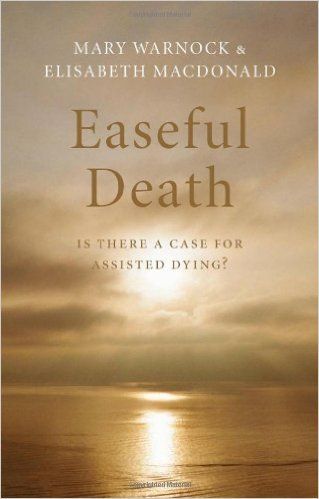
For decades assisted dying and euthanasia have sparked fierce public debate. The recent case of Terri Schiavo, and the firestorm of controversy it provoked, placed the issue in dramatic fashion before the American people once again, raising a host of complex legal, medical-ethical, religious, and individual liberties questions. Now, in Easeful Death, Mary Warnock and Elisabeth Macdonald offer a clearly reasoned, even-handed assessment of arguments both for and against the legalization of assisted suicide and euthanasia. The authors take as their starting point the attempts in Britain and other countries to bring compassion into the rules governing the end of a patient’s life. Drawing on the experience of the Netherlands, Belgium, and the state of Oregon in the US, where either assisted dying or euthanasia have been legalized, the authors explore the philosophical and ethical views on both sides of the debate, and examine how different legislative proposals would affect different members of society, from the very young to the very old. They describe the practical, medical processes of palliative care, self-denial of food and water, assisted dying and euthanasia, and ultimately conclude that the public is ready to embrace a more compassionate approach to assisted dying and that the dying themselves deserve a greater say in the timing and manner of their deaths. Written with sensitivity, grace, and level-headed authority, Easeful Death is essential reading for caregivers, doctors, medical ethicists, and anyone concerned with their own or a loved one’s end of life decisions. It argues persuasively that whatever the results of the legislative debate, compassion must be the guiding principle in the way we treat people who are dying or want to die.
This monograph is based on qualitative and inductive research. All the cases treated in it are based on current events and try to find the common aspects and basic rules that govern the wrongdoing to the minority shareholders. In the four cases of US, French and Israeli companies, most of them in high tech, the minority shareholders lose almost all their investment. Those are not pervert cases but the norm in many companies, which is illustrated by qualitative cases, without being able of course to quantify them. Case studies are the preferred strategy when “how” and “why” questions are being posed. The purpose of this monograph is therefore to analyze why and how companies do not act ethically towards their minority shareholders, not how many, not which, not to what degree and not where.
Human rights have been generally understood as juridical products, organizational outcomes or abstract principles that are realized through formal means such as passing laws, creating institutions or formulating ideals. In this book, Fuyuki Kurasawa argues that we must reverse this ‘top-down’ focus by examining how groups and persons struggling against global injustices construct and enact human rights through five transnational forms of ethico-political practice: bearing witness, forgiveness, foresight, aid and solidarity. From these, he develops a new perspective highlighting the difficult social labour that constitutes the substance of what global justice is and ought to be, thereby reframing the terms of debates about human rights and providing the outlines of a critical cosmopolitanism centred around emancipatory struggles for an alternative globalization.
Purchase of this book includes free trial access to www.million-books.com where you can read more than a million books for free. This is an OCR edition with typos. Excerpt from book: when completely formed. Many of our most important perceptions through the eye are universally acknowledged to be acquired. But they are as general as the original perceptions of that organ; they arise as independently of our will, and human nature would be quite as imperfect without them. An adult who did not immediately see the different distances of objects from his eye, would be thought by every one to be as great a deviation from the ordinary state of man as if he were incapable of distinguishing the brightest sunshine from the darkest midnight. Acquired perceptions and sentiments may therefore be termed natural, as much as those which are more com- monly so called, if they be as rarely found wanting. Ethical theories can never be satisfactorily discussed by those who do not constantly bear in mind, that the question concerning the existence of a moral faculty in man which immediately approves or disapproves without reference to any further object, is perfectly distinct, on the one hand, from that which inquires into the qualities thus approved or disapproved; and on the other, from an inquiry whether that faculty be derived from other parts of our mental frame, or be itself one of the ultimate constituent principles of human nature. SECTION II. Retrospect of Ancient Ethics. Inquiries concerning the nature of mind, the first principles of knowledge, the origin and government of the world, appear to have been among the earliest objects which employed the understanding of civilized men. Fragments of such speculation are handed down fromthe legendary age of Greek philosophy. In the remaining monuments of that more ancient form of civilization which sprung up in Asia, we see clearly that the Bra- minical philosophers, in times perhaps before the dawn of western history, …
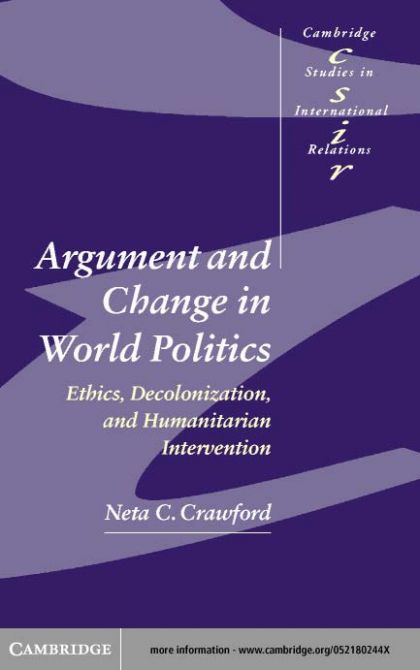
Arguments have consequences in world politics that are as real as the military forces of states or the balance of power among them. Neta Crawford reveals how ethical arguments, not power politics or economics, explain decolonization, the greatest change in world politics to occur over the last five hundred years. The book also analyzes how argument might be used to to remake contemporary world politics, suggesting how such arguments apply to the issue of humanitarian intervention.
ما از اخلاق چه انتظاری داریم؟ این سوال شاید تاحدودی برای عموم مردم و یا متخصصان این رشته قابل پاسخ باشد؛ اینکه خوب بودن را به ما بیاموزد و در تنظیم روابط فردی م...

جشن کتاب تهران به ایستگاه سی و یکم رسیده است. حال و احوال نشر کتاب خوب نیست و باید فرهنگدوستان را به خرید و هدیه دادن کتاب ترغیب نمود. خانه اخلاقپژوهان جوان ب...

بنیاد کتابهای اخلاق اسلامی عمدتا پالایش جان از آلودگیها و آراستن آن به زیباییها است. اندیشه محوری این قبیل کتابها آن است که انسان فعلی آنی نیست که باید باشد...

-
0 Comments